

Description
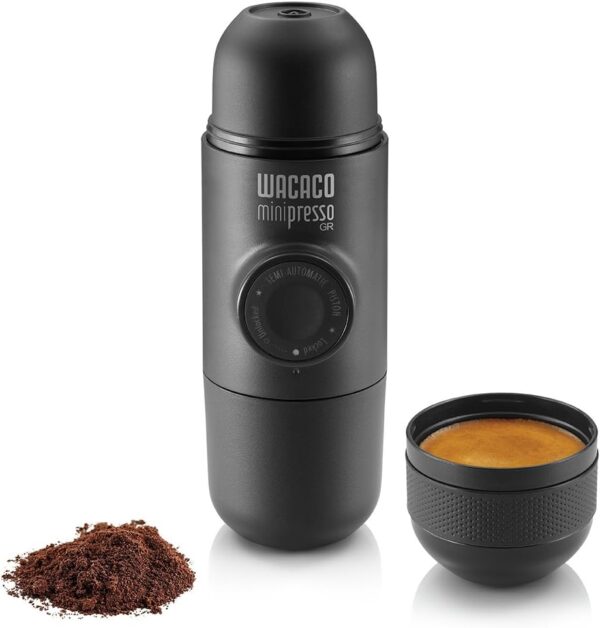
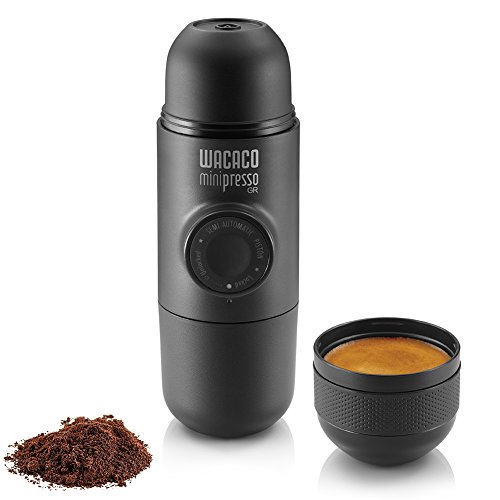
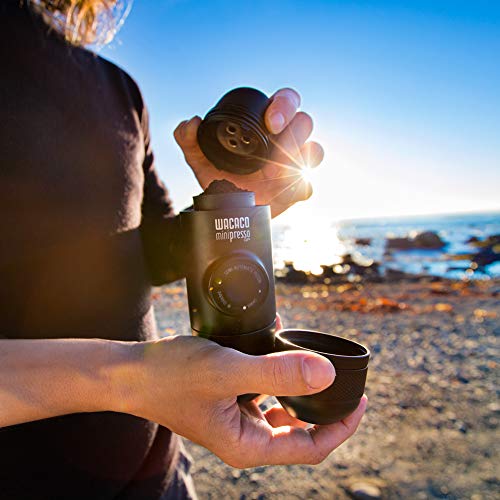
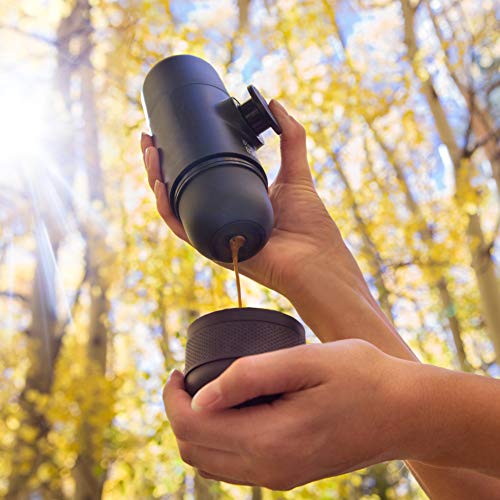
The WACACO Minipresso GR is a hand operated espresso maker. There is no motor, no boiler and no plug: the operator loads ground coffee into a small basket, pours hot water into a chamber, and pumps a piston by hand until the shot comes through. The listing records a manual operation mode, a reusable filter, a body 2.76 inches deep by 2.36 inches wide by 6.89 inches high, a weight of 12.7 ounces and the model name MPGR100.
Against the other espresso formats this site covers, this is the only one that works without electricity. A pump machine plugs into the wall and holds pressure electrically, a stovetop pot needs a hob, and a capsule machine needs both power and capsules. The Minipresso needs a source of hot water and a working arm, which is why the listing files it under camping. That independence is the entire reason to own one, and everything else about the design is a consequence of it.
Pumping, Pressure and Hand Effort
Pressure here is generated by the person using it. The piston is unlocked, then worked in short strokes, and the coffee is forced through the bed by whatever force the hand applies. That has an honest consequence the marketing rarely states: pressure is not a fixed rating on this device, it is an output of technique and grip strength, so two people using the same coffee will not get the same shot. Published owner feedback consistently notes that the pumping takes real effort, and anyone with reduced grip strength or joint pain should treat that as a genuine barrier rather than a quibble. The specification block publishes no pressure figure at all.
Grind sensitivity is the flip side of hand pumping. Because the operator supplies the force, a grind slightly too fine turns into a shot that cannot be pushed at all, while a grind that is too coarse gushes through with no resistance and produces a thin cup. On an electric machine the pump absorbs some of that error; here the hand feels it directly, which is either useful feedback or a nuisance depending on temperament. A burr grinder helps considerably, and the listing states no recommended grind setting and no dose weight to work from. Those two numbers are the first thing a new owner ends up establishing by trial.
Dose, Water and Shot Size
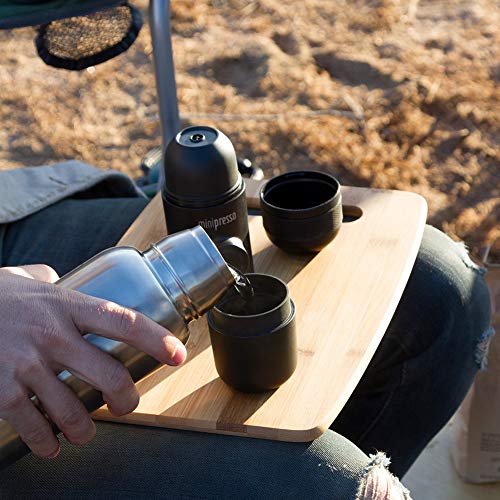
The unit brews one small shot per fill, which is the ceiling set by the size of the water chamber and the basket. That makes it a single serving device in the strictest sense: a second drink means emptying the puck, rinsing, refilling and pumping again. It also cannot heat water, so a kettle, a camp stove or a hotel tap that runs genuinely hot is a prerequisite. A traveller pairing it with something like the DEZIN GLH-200A travel kettle has a complete system; a traveller carrying it alone has half of one.
Water temperature is the other uncontrolled variable. The chamber is small and the body is plastic, so water poured in at boiling point loses heat while the coffee is being loaded and the piston unlocked. Anyone brewing outdoors in cold conditions will lose more. The usual response is to pour water that has just boiled and to work quickly, and preheating the chamber with a first pour of plain water helps. None of that appears in the specification data, which gives no target temperature at all.
Build, Weight and Cleaning
At 12.7 ounces and under seven inches tall the unit slips into a bag without argument, and the outer shell doubles as the cup, so no separate vessel is needed. The body is largely moulded plastic, which is why the weight is what it is; a metal equivalent would be more durable and considerably less pleasant to carry. Cleaning is a rinse of the basket, the chamber and the cup, all of which come apart by hand. The limitation is the outlet path inside the body, which is not designed to be opened, so coffee oils accumulate somewhere the owner cannot reach. Running hot water through the assembly after use is the accepted mitigation rather than a documented service procedure.
Packing is a small practical matter with a real consequence. The unit locks closed for transport and the integrated cup screws onto the body, which keeps the assembly together in a bag. Residual water left in the chamber after a rinse is the usual cause of a damp rucksack, so it pays to shake it out and leave it open to dry before packing. The listing describes the packaging as a flat pack shipping format, which is a logistics detail rather than a feature of the product, and it says nothing about a carrying case. A soft pouch is the accessory most owners add, and it is not in the box.
What the Listing Gets Wrong
The item model number field reads MINIPRESSO GR FBA. The letters FBA are a fulfilment code describing how the item is warehoused, not part of any model designation; the real one, MPGR100, sits in the model name field instead. The record also gives a first availability date of January 2011 alongside a manufacture year of 2023, and those two fields cannot both be describing the same unit. Included components reads Cups, in the plural, on a product with one integrated cup. The operation mode field, unusually for this catalogue, is correct: Manual is exactly what this is, and it deserves credit for being one of the few fields that matches the product.
What the Specifications Do Not Settle
The water chamber volume is never stated, and on a hand pump maker that is the number that decides the size of the shot. Nor is the basket dose in grams, the recommended grind, the working pressure, or the water temperature the device is designed around. Seals are the wearing part on any piston device and the listing says nothing about whether gaskets are replaceable or sold separately, which matters on a design that has been on sale for many years. No warranty term appears. Buyers who want published pressure and temperature figures will find more of them on the plug in models throughout the espresso machines covered on this site.
Who It Suits and Who Should Buy Another Format
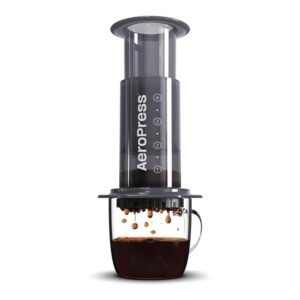
This suits a traveller, a camper, an office worker with a kettle and no machine, and anyone who wants a concentrated shot in places where an appliance is not an option. It suits people who enjoy the mechanical process, because pumping a shot by hand is part of the appeal rather than a cost. It does not suit anyone making two or three drinks in a row, anyone who wants milk drinks, or anyone with limited hand strength. Those buyers should consider the Wacaco Nanopresso portable espresso maker for an easier pumping action, the AeroPress Original for a larger and gentler manual brew, or the Bialetti Moka Express stovetop pot where a hob is available and volume matters more than crema.