Description
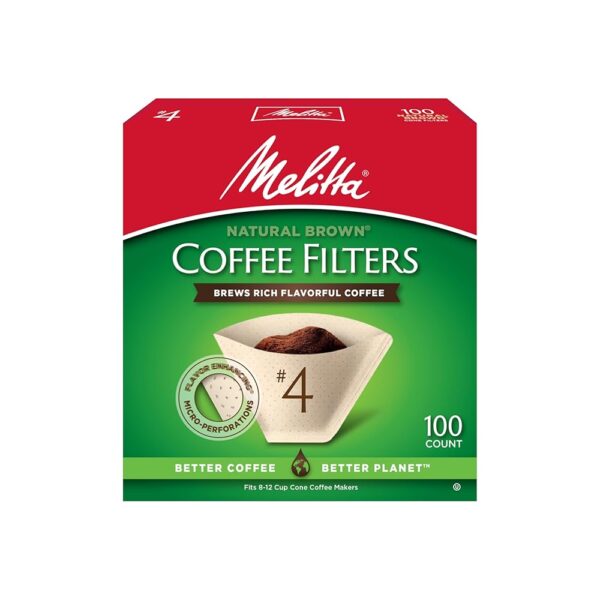
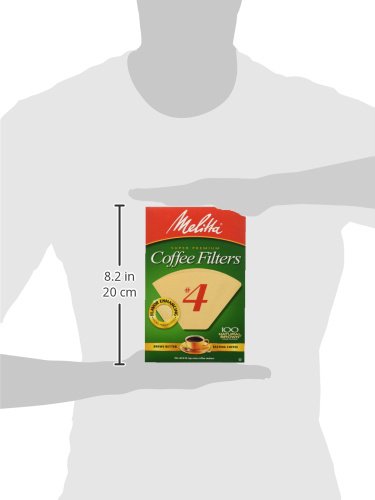
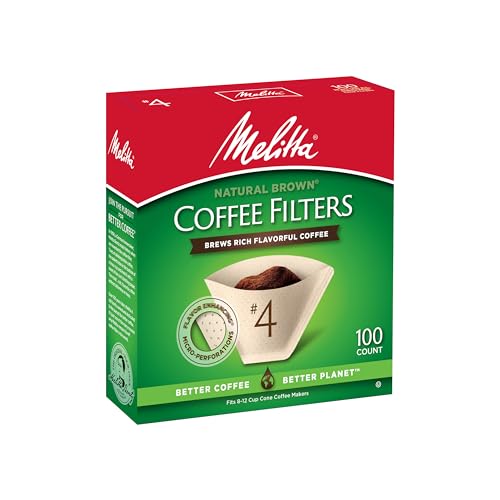
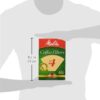
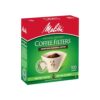
This is a case of six packs of Melitta number 4 cone coffee filters in natural brown, one hundred filters per pack for six hundred in total, listed at 22.74 dollars. That is roughly three point eight cents a filter. Melitta gives the country of origin as the USA and describes the paper as compostable, with microfine perforations and a double crimped seam.
Melitta invented the paper coffee filter. Melitta Bentz patented the idea in 1908 after punching holes in a brass pot and lining it with a sheet of her son’s blotting paper, and the company has been making filters ever since. That history is not a reason to buy them, but it does explain why number 4 is a standard rather than a proprietary size, and why the shape fits brewers from dozens of manufacturers.
Cone Shape, Size 4 and What It Fits
Number 4 is the most common cone size, designed for 8 to 12 cup drip machines with a conical brew basket, and Melitta also lists it as fitting most pour over brewers that take a number 4 filter. Cone filters are folded flat and open into a point, as opposed to basket filters which are flat bottomed with fluted walls, and the two are not interchangeable in either direction.
The shape changes the brew as well as the fit. A cone concentrates the bed of grounds towards a single exit point, which means water passes through a deeper column of coffee near the tip and a shallower one at the edges. A flat bottomed basket spreads the bed evenly. Cone brewing tends to give more clarity and a slightly longer contact time in the centre; flat bed brewing tends to be more even overall. Neither is better and both are used by good machines. If your brewer takes a flat bottomed filter, the basket filters covered here are the shape you need instead.
Natural Brown, and Whether Rinsing Matters
Natural brown means unbleached. The paper has not been whitened, which is the only substantive difference between these and the white version of the same filter, and it changes two things.
The first is taste. Unbleached paper carries a more noticeable papery character on the first pass of water, and the standard remedy is to rinse the filter with hot water before adding the coffee. That takes ten seconds, it also preheats the brewer and the carafe, and it makes a difference you can taste on a light roast. With bleached paper the papery note is fainter and skipping the rinse is more forgiving.
The second is process. Bleaching food grade paper today uses oxygen or chlorine dioxide rather than elemental chlorine, so the concern people remember from decades ago has largely been engineered out. Choosing unbleached is now closer to a preference about processing than a safety decision.
The Double Crimped Seam
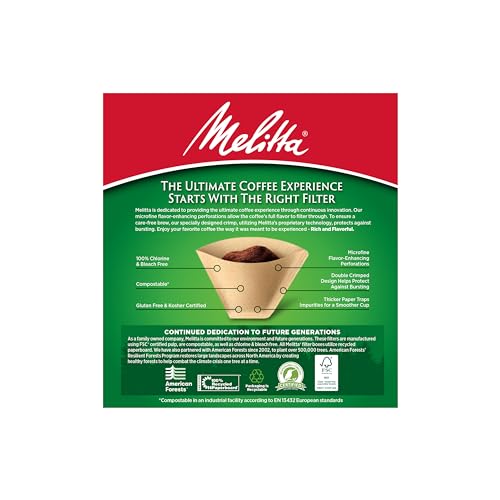
Melitta’s most concrete construction claim is the double crimped filter design, which it says protects against bursting. This is the join that runs down the side and along the bottom of a cone filter, and it is the point of failure.
A cone filter holds a wet, heavy column of grounds, and the entire load bears on that seam. A single crimp is a single mechanical fold; a double crimp adds a second, which roughly doubles the resistance to the seam pulling apart under load. When a cheap filter fails, it fails there, and the result is a basket of grounds in the carafe and a pot to throw away. The claim is specific, mechanical and checkable in ordinary use, which puts it well ahead of most of the language on this page.
The microfine perforations claim is looser. Melitta says they allow the full coffee flavour to filter through while trapping more bitter oils. Perforation density genuinely does govern flow rate and therefore contact time, so the claim describes a real design variable, but no figure is given for it and the flavour language around it is marketing rather than specification.
Cost, and How It Compares
Six hundred filters at 22.74 dollars is about three point eight cents each. Brewing one pot a day, that is thirteen or fourteen dollars a year and the case lasts around twenty months.
The comparison worth making is against supermarket own brand paper, which sells for around a cent and a quarter per filter, roughly a third of this price. On a daily pot the difference is nine or ten dollars a year, which is not nothing but is small against the cost of the coffee. What you are paying the difference for is the seam construction, the unbleached paper if you want it, and a consistent supply of a size that fits. Whether that is worth three times the price is a judgement, and buying one pack rather than a case of six is the cheap way to find out.
Against a permanent mesh filter the sums change again. A reusable cone costs ten to twenty dollars and lasts years, so on economics alone it wins within two. It also produces a different cup, with the oils that paper removes, and it needs periodic degreasing or it turns rancid. The reusable filter listings cover that side of the choice.
Specification Fields That Do Not Belong
The care instructions field on this listing reads Dishwasher Safe. These are single use paper filters. There is nothing to wash and nothing that would survive a dishwasher, and the entry is the clearest example on this site of a category template being applied without a glance at the product.
Assembly required reads No and batteries required reads No, both on a sheet of paper. Number of pieces reads 6, which counts the retail packs rather than the filters, while unit count correctly reads 600 and the included components field spells it out as six packs of one hundred each. Product dimensions of 13.3 by 10.7 by 8.5 inches and a weight of 3 pounds describe the shipping carton, not a filter, and the filter’s own dimensions appear nowhere.
The description also ends with a long paragraph about storing coffee in an airtight container away from light and heat. It is sound advice with nothing to do with filters, and it reads as boilerplate appended across Melitta’s whole range.
What the Specifications Do Not Settle
There is no filter dimension, no paper basis weight and no perforation figure, so the three specifications that would actually distinguish one paper filter from another are all absent. There is no statement of whether the paper is chlorine free processed or simply unbleached, which are related but not identical.
The compostable claim is made without qualification, unlike some competitors who footnote it, and no composting conditions are given. There is no shelf life, which matters mildly since paper picks up odours from a cupboard. Melitta also describes itself as the number one coffee filter brand in the world, which is a marketing position rather than a measured one and should be read as such, and states that its filters produce coffee which is never bitter, which no filter can guarantee since bitterness is a function of grind, dose and temperature rather than paper. Owners of cone brewers such as the Cuisinart Brew Central DCC-1200 will find these fit the standard number 4 basket directly.
Who It Suits and Who Should Look Elsewhere
This suits a household that brews daily on a cone machine, prefers unbleached paper, and would rather buy filters once every twenty months than every couple of months. The double crimped seam is a real construction feature rather than a slogan, number 4 is the most widely supported cone size there is, and a case of six hundred removes the problem from your shopping list for a long time. The Revelook coffee filters are another unbleached pack to compare.
It suits you poorly if your machine takes a flat bottomed basket, since the shapes do not substitute. It suits you poorly if you never rinse a filter and are sensitive to papery flavours, in which case the bleached version of the same product is the better choice. And it suits you poorly if six hundred filters is more than you will use before they pick up a cupboard smell. Anyone brewing on a paperless design from the pour over range does not need these at all. The Primula Brew Buddy reusable filter is one paperless option.