Description
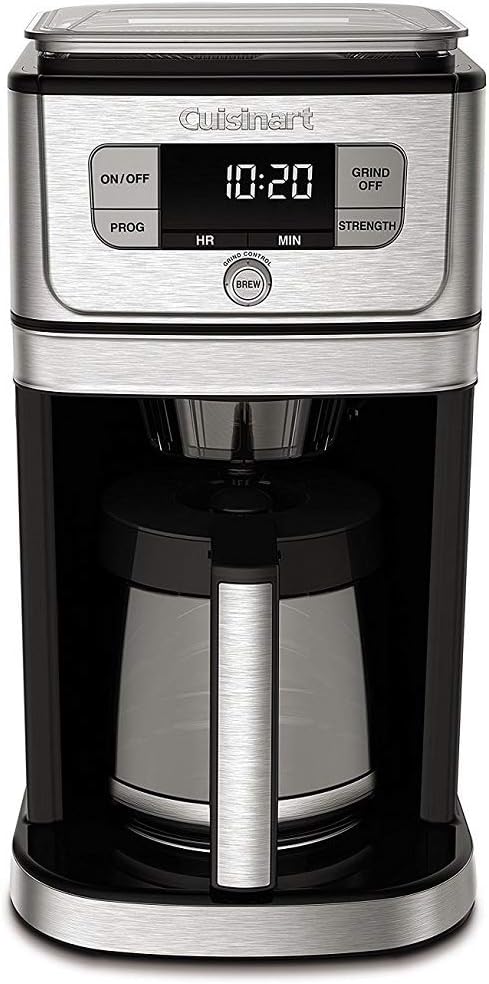
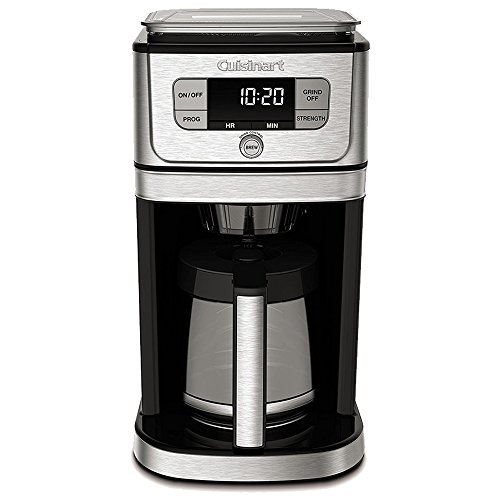
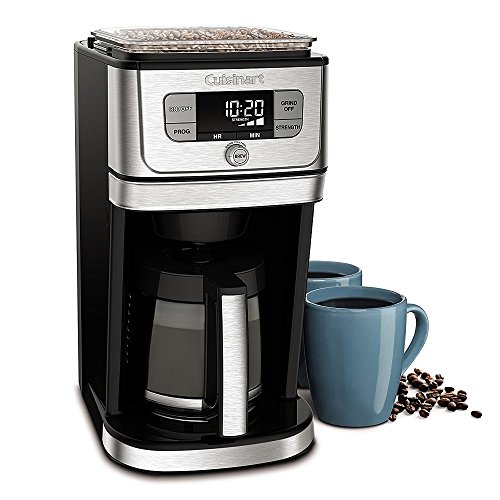
The DGB-800 is Cuisinart’s fully automatic burr grind and brew machine with a 12 cup glass carafe. Whole beans go into a hopper, a burr grinder mills them immediately before brewing, a DirectFlow assembly moves the grounds into the brew basket, and an AutoRinse function clears the residue afterwards. Flavour strength is selectable from regular through to extra bold.
This review comes with an unusual caveat about its source. The imported description for this listing contains no feature text at all; the entire stored description reads as an instruction to refer to the user guide. Everything described below comes from the specification fields and the summary bullets attached to the product, not from a manufacturer feature list, so treat the detail as thinner than usual and confirm anything decisive with Cuisinart’s own documentation.
The Burr Grinder and Why It Matters
Grinding immediately before brewing is the single largest quality improvement available to a domestic drip machine. Ground coffee loses its volatile aromatics within days; whole beans hold them for weeks. A machine that grinds at the moment of brewing turns an ordinary bag of beans into something noticeably better than the same beans ground on Sunday and used all week.
Burrs rather than blades matter for a second reason. A blade grinder chops randomly, producing a mix of dust and boulders in the same dose, so the dust over extracts into bitterness while the boulders never extract at all. Burrs crush to a set gap and give a consistent particle size. The listing does not state the burr type, the burr material, the number of grind settings or the hopper capacity, all of which would be useful on a machine sold specifically on its grinder.
DirectFlow and AutoRinse
The two named mechanisms both address the same weakness, which is what happens between the grinder and the basket. On grind and brew machines the transfer is where things go wrong: grounds stick in the chute, static scatters them, and yesterday’s residue sits in the path collecting oils that taint today’s coffee.
DirectFlow is described as moving the grounds directly into the brew basket to minimise mess, and AutoRinse as clearing leftover grounds automatically. Both are worth having and both are worth checking in practice, because a grinder chute that is not kept clean is the usual reason an owner decides their grind and brew machine has stopped tasting right. Even with an automatic rinse, the chute and burr chamber will need occasional attention by hand.
Strength Control and Filters
Flavour strength runs from regular to extra bold. On a grind and brew machine that setting normally changes the dose rather than the flow, since the machine controls how much it grinds, which is a more direct way to alter strength than slowing the water. The coffee input type field records whole beans, and there is no mention anywhere of a bypass for pre ground coffee, which is a real limitation: it matters for decaf in the evening and for a guest who wants something different.
Published owner feedback makes one practical point worth passing on. An owner comparing this against a competing grind and brew machine notes that it needs decent quality paper filters of the correct size, and that cheap ones cause problems. That is a common issue on grind and brew machines, where wet grounds arriving from a chute can collapse a flimsy filter and cause an overflow. The listing does not state the filter size, so establish it early.
Footprint, Weight and Controls
Recorded dimensions are 8.74 inches deep, 16.34 inches wide and 11.96 inches high, at 15 pounds. That is a wide machine rather than a tall one, which is unusual for a grind and brew unit and means it will fit under a wall cabinet where taller rivals will not, at the cost of a long stretch of counter. Fifteen pounds is heavy, which is a good sign on a machine with a grinder in it: motor and burr assemblies have real mass, and weight keeps the machine still while it grinds.
Control is by buttons on a front panel. One published owner review describes the panel as a little challenging to work out when programming, while being satisfied once it was set. That is a common verdict on multi function drip machines and it is worth knowing that the setup is a sit down with the manual rather than a two minute job.
What Owners Report About Reliability
The published feedback on this listing is split in a way that needs stating rather than averaging. Positive accounts describe it as easier to set up than a competing machine, quieter and faster at grinding, and producing more and stronger coffee. Another owner describes it as making coffee precisely and consistently regardless of the number of cups selected.
Against that, one detailed owner account describes going through three units. The first arrived with a fault, the second developed the same fault, and the third eventually began grinding the same amount of beans regardless of the setting before stopping brewing altogether, all inside a year and with the machine maintained properly. That is one owner’s experience and not a failure rate, and it was not verified here. But grind and brew machines have more moving parts than any other drip design, and a grinder that ignores its setting is a specific enough symptom to be worth watching for in recent feedback before buying.
What the Specifications Do Not Settle
There is no wattage, no brew temperature, no brew time, no hopper capacity, no grind setting count and no carafe volume in ounces. The included components field reads coffemaker and carafe, with the spelling error left in, and the UPC field contains two different codes run together. The exterior finish reads painted and the recommended uses field reads office and home. Twelve cups here follows the usual five ounce convention, so a full carafe is around 60 ounces.
Who It Suits and Who Should Look Elsewhere
This suits a household that drinks a full pot daily, buys whole beans, and wants the freshness benefit without keeping a separate grinder on the counter. The wide low body is a genuine advantage under wall cabinets, and the strength range from regular to extra bold covers most preferences. The Cuisinart DGB-450 is the smaller machine on the same grind and brew platform.
Look elsewhere if you want to brew pre ground coffee sometimes, since no bypass is documented, or if the reliability reports concern you. The more conservative route is to keep the grinder separate from the brewer, which removes the machine’s most failure prone part; a standalone unit from our burr grinder section paired with a simple brewer will outlast any combined machine. Within the range, the Cuisinart DGB-400 and the Cuisinart DGB-550 cover the same idea at different sizes, and the Cuisinart DGB-2 puts the grinder on a single serve machine instead. The Bonavita BV1900TS is a good example of that simpler brewer.