

Description
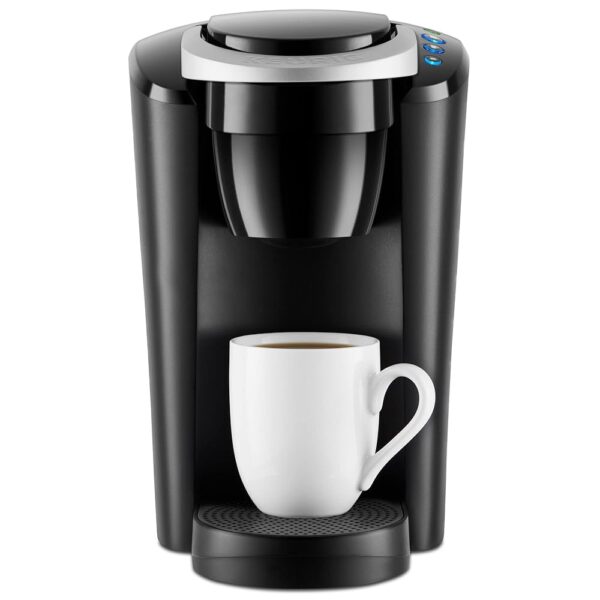
The Keurig K-Slim sits at the narrow end of the pod brewer range, built around a slim body, a removable rear reservoir and three button sized pours. It is a single serve machine in the strictest sense: one pod, one cup, no carafe, no grinder and no milk system. Everything it does is aimed at getting a hot cup out of a sealed K-Cup pod with as little counter space and as little decision making as possible.
That places it in a specific spot among the formats this site covers. It does not compete with a twelve cup drip machine on volume or with a pump espresso machine on extraction control. It competes with other pod brewers on footprint and tank size. If you already know you want pods, the questions worth asking are about the reservoir, the cup sizes and the space the machine occupies.
A Naming Conflict You Should Know About
The imported listing data for this product does not agree with itself. The page carries the K-Slim name and the K-Slim identifier, while the Amazon title captured by the importer reads Keurig K-Compact Single-Serve K-Cup Pod Coffee Maker with 3 Brew Sizes, Smart Start Feature, 36oz Removable Reservoir, Black. The K-Slim and the K-Compact are two genuinely different Keurig models, and the specifications recorded here belong to the K-Compact listing.
We are not going to paper over that. The safe reading is that every number on this page describes a 36 ounce reservoir Keurig with three brew sizes and Smart Start, and that you should confirm which body you are ordering before you commit.
Brewing System and Cup Sizes
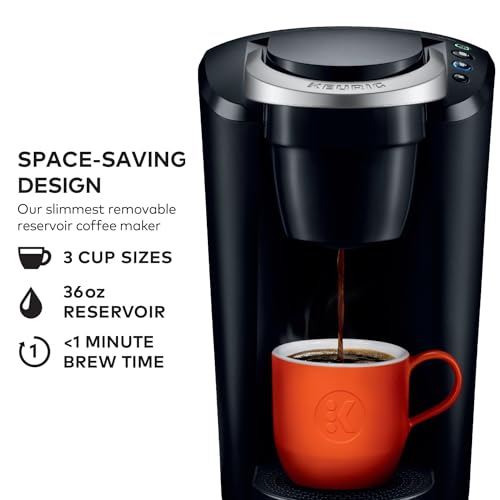
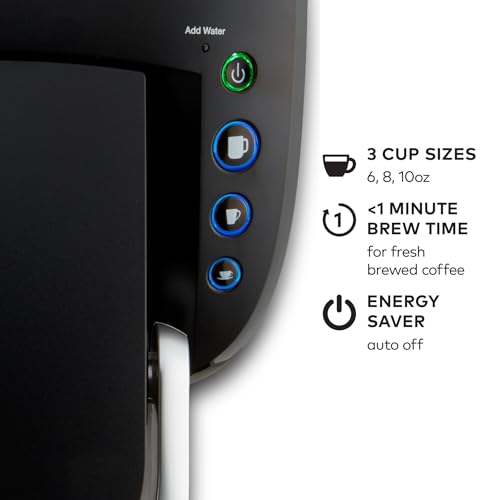
Three pours are offered: 6, 8 and 10 ounces. Keurig is unusually direct about what that means for strength, stating that the 6 ounce size produces the strongest cup. That is not a hidden brew strength setting, it is simply less water through the same fixed dose of grounds sealed in the pod. There is no bold or strong brew button on this configuration, so the 6 ounce pour is your only lever on concentration.
The listing claims a cup in under a minute once the machine is warm. Smart Start folds the heating step into the brew cycle, so you choose the size and the machine heats and pours as one action. The brewer will also dispense plain hot water: open and close the handle with no pod loaded, then select a size, which makes it usable for tea bags or oatmeal.
Water Tank and Daily Handling
The 36 ounce reservoir is removable, which matters more than the capacity number. A removable tank means you fill it at the sink rather than pouring from a jug into a fixed well, and it means you can rinse it out properly when it starts to look cloudy. At 36 ounces you get roughly three to five brews depending on the size you pick, so a two coffee household refills every day or two rather than every cup.
That is a meaningful gap over the smallest pod machines. The Keurig K-Mini Plus and its single cup reservoir ask you to measure fresh water for every single brew, which is fine for one person and tiresome for two. If you want to go the other way and hold six cups of water at a time, the Keurig K-Cafe with its 60 ounce tank is the larger sibling.
Build, Footprint and the Dimension Problem
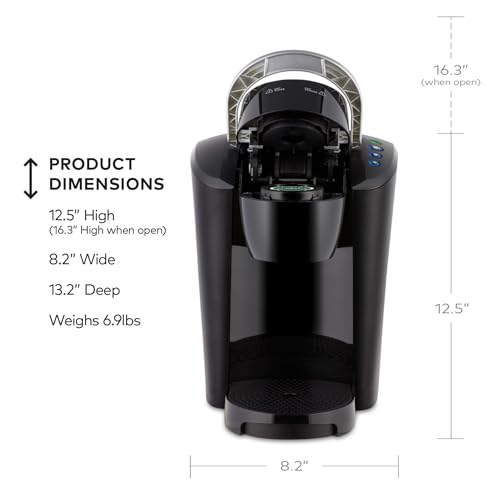
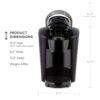
The recorded product dimensions are 13.2 inches deep, 8.2 inches wide and 12.5 inches high, with an item weight of 7.85 pounds. The width figure is the useful one for a cramped counter, and 8.2 inches is genuinely narrow for a machine holding this much water. Bear in mind you also need clearance above for the handle to swing up when you load a pod, so the 12.5 inch height is not the height you need to allow.
The attribute table has two rows that were scraped badly. One reads Capacity 2.3 Pounds with the value repeated as the field name, and another does the same with Item Weight 7.85 Pounds. These are malformed rows where the importer wrote the label into both columns, not two separate specifications, and the 2.3 pound figure has no clear meaning for a pod brewer at all. A third row lists the Coffee Maker Type as Espresso Machine, which is simply wrong. There is no pump, no portafilter and no pressurised extraction here; it is a gravity fed pod brewer.
Pods, Filters and Running Costs
The ongoing cost of a pod brewer is the pods, and that is where the real money goes over a year. Any standard K-Cup pod fits, which opens up a wide field of roasts and price points. If you buy in volume, the difference between a supermarket house blend and a named roaster is substantial across a hundred cups, and the pod and capsule selection we track is worth reading before you settle into a repeat order.
Keurig also sells a My K-Cup style reusable filter that lets you load your own grounds into a refillable basket. The listing for this machine mentions the universal reusable filter as a separate purchase rather than an included accessory, so budget for it if grinding your own is part of the plan. Descaling is the other recurring cost, and mineral scale is the single most common reason a pod brewer starts brewing short or slow.
Cleaning and Descaling
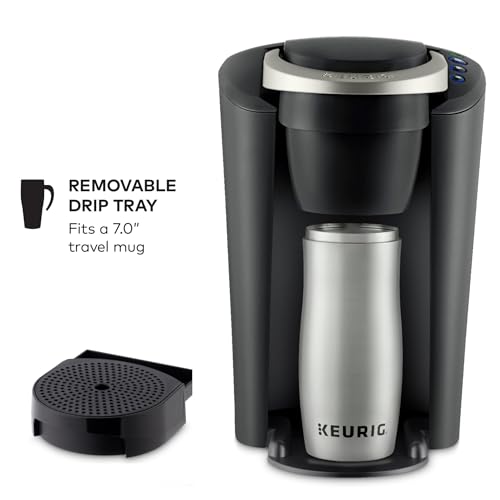
The drip tray is removable and holds a full accidental brew, which saves an annoying cleanup when you forget the mug. Removing it also clears space for travel mugs up to 7 inches tall. The exit needle in the head is the part that clogs with grounds.
Scale is the real maintenance job. Keurig machines run hot water through a narrow internal path, and hard water deposits will slow the pour and eventually stall it. A descaling cycle every three to six months is the manufacturer guidance across the range, and the Keurig three month brewer maintenance kit bundles the solution with rinse pods for that schedule. Generic descalers work too, and the cleaning and descaling products we cover lay out the alternatives.
What the Specifications Do Not Settle
The listing does not state the brew temperature, which is the number that matters most for extraction and the one Keurig consistently withholds across the range. It does not give a wattage. It does not say whether the reservoir has a low water sensor or simply stops. It does not clarify whether the auto off delay is adjustable, only that it triggers two hours after the last brew. And because of the K-Slim versus K-Compact conflict described above, it does not reliably settle which chassis you are buying.
None of those gaps are unusual here, but they do mean the choice between near identical pod brewers comes down to tank size, width and price.
Who It Suits
This is a sensible pick for a one or two coffee household that wants pods, wants a narrow machine and does not want to refill water at every brew. The three cup sizes cover most of what people actually drink, and the 6 ounce pour gives you a genuinely stronger cup when you want one. Office kitchens and rental units are the natural home for it.
Look elsewhere if you want milk drinks, if you want to control the grind and dose, or if you regularly need to serve more than two people at once. A carafe machine from the drip coffee makers we cover will be cheaper per cup and far better for a table full of guests, and anyone chasing real espresso should be looking at a pump machine rather than any pod brewer.


