


Description
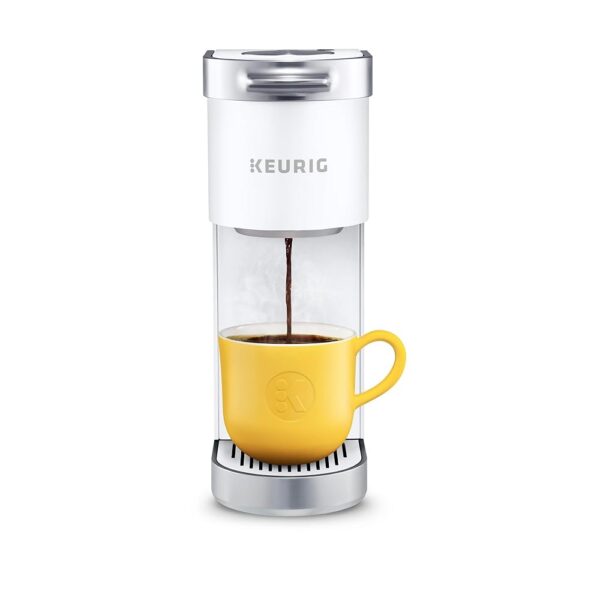
The Keurig K-Mini Plus is the narrowest machine Keurig sells, built for people whose limiting factor is counter width rather than anything to do with coffee. It brews one cup from one K-Cup pod, it has no carafe, no clock and no display, and the water reservoir holds exactly one brew. Everything about the design trades capacity away in exchange for a footprint you can slide into a gap beside a toaster.
Against the other formats this site covers, it is the least ambitious machine on the list and the most honest about it. There is no attempt at milk drinks, no attempt at a second brewing method, and no programming. If you want a machine that does one thing in a very small space, this is the shape that argument takes.
Brewing System and Cup Sizes
The brew range runs from 6 to 12 ounces, and Keurig describes it as any size in that window rather than fixed presets. In practice you control the pour by how much water you put in the reservoir, because the machine brews whatever you give it. That is a genuinely different interaction from the button sized pours on larger Keurig machines, and it is the direct consequence of the single cup tank.
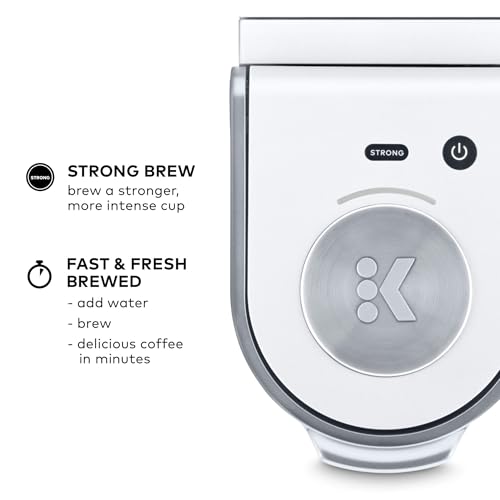
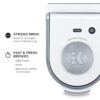
The strong brew button is the one real extraction control on board. It slows the water through the pod so more is pulled from the same fixed dose. At the 12 ounce end of the range you will want it on, because pushing twelve ounces through a standard K-Cup produces a thin cup otherwise. At 6 ounces the coffee is already concentrated and the button matters much less.
Water Tank and Daily Handling
The single cup reservoir is the defining compromise. You measure fresh water for every brew, pour it in, and the machine uses all of it. There is no buffer, no reserve and nothing left standing warm. The upside is real: nothing sits in a tank going stale, cleaning is trivial because the reservoir comes out and rinses in seconds, and there is no scale reservoir to grow film in.
The downside is equally real. Two people in a hurry each go through the fill and brew sequence separately, and there is no way to queue a second cup. If that sounds tiresome, the Keurig K-Classic with its 48 ounce reservoir is the same brewing idea with a proper tank, and the slimmer K-Slim body with a 36 ounce tank splits the difference on width.
Build, Footprint and the Dimension Problem
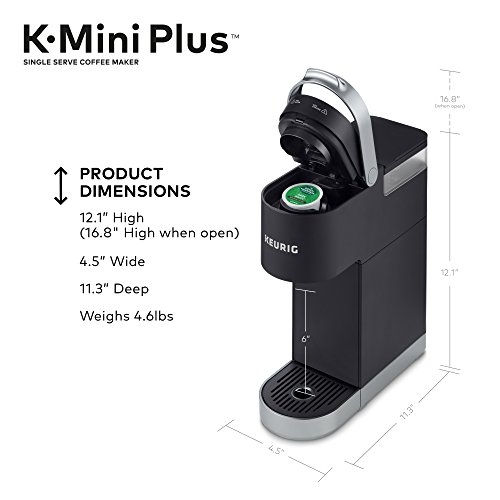
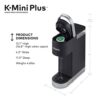
Keurig states the machine is less than 5 inches wide, and that claim is the whole reason this model exists. The imported dimension field, however, reads 11.3 inches deep, 12.1 inches wide and 4.5 inches high, which contradicts the marketing claim directly. The resolution is straightforward: the width and height figures have been transposed. The machine is 4.5 inches wide and roughly 12 inches tall, not the other way round. A 4.5 inch tall pod brewer would not fit a mug underneath it.
The recorded item weight is 6.6 pounds and the first availability date is December 23, 2019, both of which look sound. Two other fields do not. The Coffee Maker Type is listed as Espresso Machine, which is wrong in every sense: there is no pump, no pressure and no portafilter. And the operation mode is recorded as Manual on a machine whose entire pitch is one button automation. The UPC field also contains two separate numbers run together, which is an importer artefact rather than a product fact.
Pod Storage and Portability
The pod storage unit is the feature that distinguishes the Plus from the base K-Mini. It holds up to nine K-Cup pods and slots into the brewer body itself rather than sitting beside it, so the machine and a few days of coffee travel as one object. Combined with the cord storage, that makes this one of the few countertop brewers that genuinely packs for a trip.
That portability is the case for it in a dorm room, a small office, a caravan or a holiday rental. It is worth noting that nine pods is roughly three days for a two cup a day habit, so the storage is a convenience rather than a supply. If you buy pods in bulk you will still need somewhere to keep the box.
Pods, Filters and Running Costs
Any standard K-Cup pod works, which is the practical advantage of buying into the most widely supported pod format on the market. The cost per cup varies enormously across brands, and over a year that difference dwarfs the price of the machine itself. It is worth reading through the K-Cup pods and capsules we cover before locking into a subscription with whichever brand happened to be on the shelf.
The filter type is recorded as reusable, which refers to the Keurig My K-Cup style refillable basket rather than anything included in the box. That accessory lets you load your own grounds and is sold separately. Given the single cup reservoir, this machine is actually a reasonable candidate for it, because you are already measuring water by hand for every brew.
Cleaning and Descaling
Cleaning is unusually simple here purely because there is so little machine. The reservoir lifts out, the drip tray is removable and holds a full accidental brew, and removing the tray clears space for travel mugs up to 7 inches tall. The pod holder pulls out for rinsing and the exit needle is the part that eventually clogs with fine grounds.
Descaling still applies. Even with fresh water every brew, mineral scale builds in the heater and narrows the flow path over time, and a slow or short pour is almost always scale rather than a failed pump. A descaling cycle two to four times a year is the standard guidance, and the descaling products we track cover both the branded Keurig kits and cheaper generic solutions that do the same job.
What the Specifications Do Not Settle
Brew temperature is not stated. Wattage is not stated. There is no figure for how long the machine takes to heat from cold, which matters more on this model than on most because there is no reservoir holding pre warmed water. The listing does not say whether the strong brew setting changes flow rate, contact time or both. And the dimension field is wrong as recorded, so plan your counter space around the 4.5 inch width claim rather than the transposed table.
Who It Suits
This is for one person in a small space who wants pod coffee and has decided that width is the constraint that matters. Dorm rooms, single offices, caravans and tiny apartment kitchens are where it makes obvious sense, and the pod storage plus cord storage make it the most travel ready countertop brewer in the range.
Skip it if more than one person drinks coffee in the morning, because refilling for every cup gets old quickly. Skip it too if you want milk drinks, programming or a carafe. A machine from the drip coffee makers we cover will serve a household far better and cost less per cup, and anyone who wants control over grind and dose should be looking at a manual method instead.