


Description
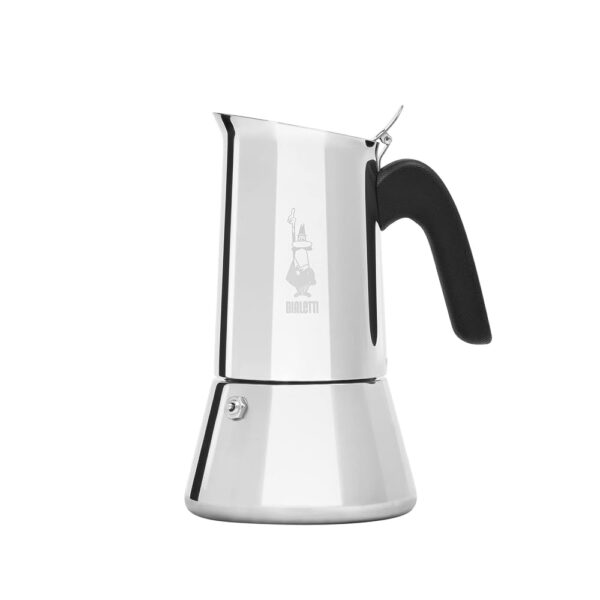
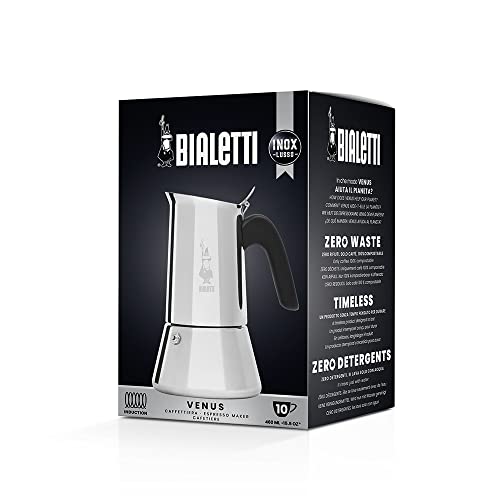
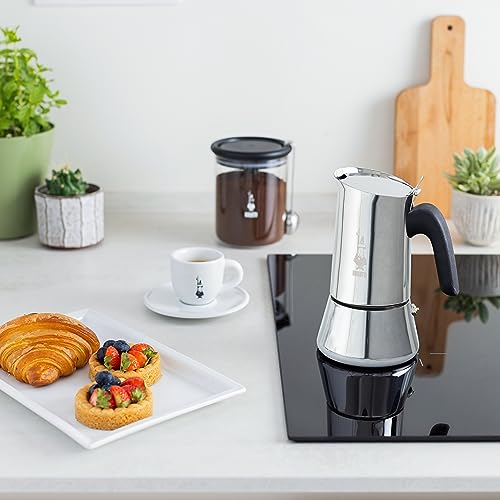
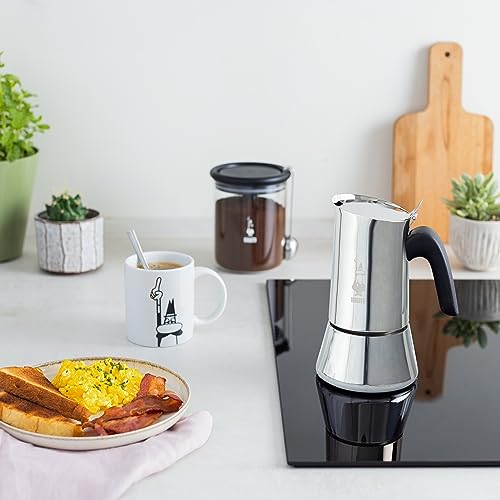
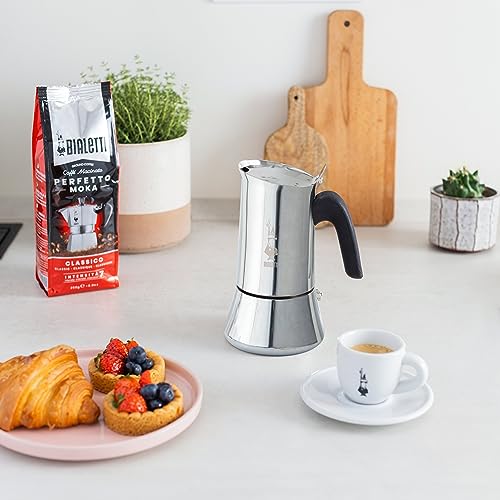
The Bialetti Venus is a stovetop moka pot made from 18/10 stainless steel rather than the aluminium Bialetti is better known for, and that single material change is what makes it work on an induction hob. It brews 15.5 ounces, described by Bialetti as 10 espresso cups, and it has no electrics, no moving parts and nothing to program.
A moka pot is not an espresso machine and it is worth settling that before anything else. Water in the base is heated until steam pressure pushes it up through a basket of ground coffee and into the upper chamber. The working pressure is somewhere around one to two bars, against the nine bars a pump espresso machine produces. What comes out is strong, concentrated, slightly bitter coffee that is excellent in its own right and is not espresso, and it will not produce meaningful crema.
Why Stainless Steel Changes Things
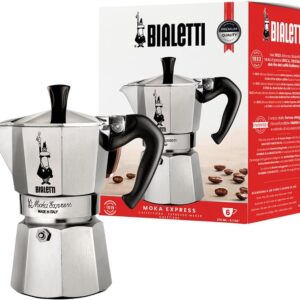
The classic Bialetti Moka Express is aluminium, and aluminium is not magnetic, so it does not work on induction hobs at all. That has become a genuine problem as induction has replaced gas in kitchens, and the Venus exists to solve it.
Stainless steel brings two other advantages beyond induction compatibility. It is inert, so it does not react with the acids in coffee the way aluminium does over time, and it tolerates cleaning agents that would strip an aluminium pot back to bare metal. The trade is that stainless conducts heat less evenly than aluminium and costs more. Bialetti states the grade as 18/10, which is a chromium and nickel stainless used for its corrosion resistance and finish. If induction is not a constraint in your kitchen, the aluminium Bialetti Moka Express is the cheaper traditional option, and the moka pots we cover include both materials.
Capacity and What A Cup Means
Ten cups sounds like a lot until you read the volume beside it. The pot yields 15.5 ounces in total, so a Bialetti cup is around 1.55 ounces, which is a demitasse rather than a mug.
Bialetti is explicit about this, noting that sizes are measured in espresso cups and that the coffee can be drunk from espresso cups or in larger containers. In practice 15.5 ounces is two decent sized milk drinks or five or six small strong cups. That is worth understanding before buying, because a 10 cup moka pot is not the equivalent of a 10 cup drip machine, which would hold around three times as much. Note also that moka pots do not brew well part filled: the basket and the base are sized to each other, and running a large pot half full produces weak, over extracted coffee. Buy the size you will actually use rather than the largest one available.
Method and Grind
Bialetti gives the method in one sentence, and it is the same method used by every pot in the format including the Easyworkz Diego: fill with ground coffee, close the pot, place it on the stovetop, and as soon as it starts to gurgle turn the heat off, because the coffee is ready. That gurgle is the audible signal that the water in the base has run out and steam is following the coffee up the tube, and leaving it on past that point is what produces the burnt taste moka pots are unfairly blamed for.
Grind is the variable the listing does not mention and the one that matters most. A moka pot wants a grind finer than drip and coarser than espresso. Too fine and the basket chokes, pressure builds and the safety valve becomes the relief path. Too coarse and the water rushes through without extracting. The basket is filled level and never tamped: tamping is for espresso machines, where a pump provides the pressure to overcome the resistance, and a tamped puck will simply stall a moka pot.
Cleaning, and an Instruction Worth Following
Bialetti gives an unusually firm cleaning instruction: rinse every component with water only, use no detergent, and do not put it in the dishwasher, on the grounds that both damage the product and the taste of the coffee.
That is stricter than the advice from other stainless moka pot makers, several of which describe their pots as dishwasher safe. The reasoning behind rinse only is traditional and partly about the seasoning that builds up in a well used pot, and partly about protecting the gasket and the finish. Whether you follow it is your decision, but it is the manufacturer instruction for this specific product and ignoring it is a warranty question. The one part that genuinely needs attention regardless is the rubber gasket under the funnel plate, which hardens with use and is the first component to fail on any moka pot. Replacements are cheap and widely available, and Bialetti records an EU spare part availability period of two years for this model.
Specification Fields That Cannot Be True
The attribute table for this product contains some of the clearest importer errors in this catalogue, and they are worth setting out rather than reading past.
The batteries field states that one lithium ion battery is required. This is a stainless steel pot that sits on a hob. It has no battery compartment, no electronics and no way to use a battery. The voltage field reads 220, which is equally impossible on an appliance that never touches a socket. The recorded product dimensions are 2.25 inches deep, 3.67 inches wide and 2.02 inches high, and a pot that yields 15.5 ounces cannot be two inches tall; a 10 cup Venus stands somewhere around nine inches. The human interface input reads Buttons, of which there are none. The unit count reads 17.637 ounces against a stated yield of 15.5. And the language field lists English five times over.
One further nuance is worth reading carefully rather than dismissing. The description refers to a Made in Italy taste, while the country of origin field records China. Those are not in direct conflict, because the phrase is about the style of coffee rather than the place of manufacture, but anybody reading Bialetti and assuming Italian production should note what the origin field actually says.
What the Specifications Do Not Settle
No grounds dose is given for a full basket, which is the number you would need to brew it consistently. No brew time. No handle material, which determines how hot it gets on a gas ring. No statement of whether the pot is suitable for a halogen or ceramic hob as well as induction, although stainless generally is. No gasket replacement interval.
The specific uses field lists espresso, iced coffee, americano, mocha, latte and cappuccino. Of those the pot produces a strong concentrated coffee that can serve as the base for an americano or a milk drink, but it makes no espresso and has no milk system, so most of that list describes what you might build from the output rather than what the pot does.
Who It Suits
This is the moka pot to buy if your hob is induction, which rules out most of the traditional aluminium pots entirely. Stainless also suits anyone who wants a pot that will not react with the coffee or stain over years of use, and 15.5 ounces is a sensible size for a household making two milk based drinks at a time. The Primula Classic stovetop espresso maker is the aluminium version of the same shape.
Skip it if you want espresso with crema, because a moka pot does not produce it and a pump machine from the espresso machines we cover is the different appliance for that. Skip it too if you want volume, since 15.5 ounces is a fraction of what a drip machine makes. And if induction is not a constraint, the aluminium version of the same idea costs considerably less. The LAOION electric moka pot is the option for a kitchen with no hob at all.