

Description
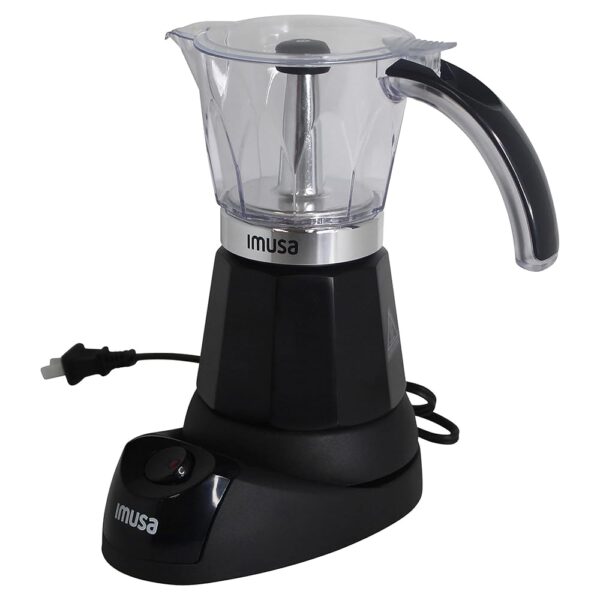
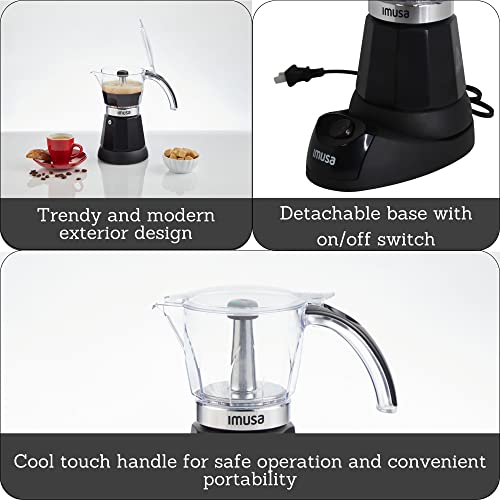
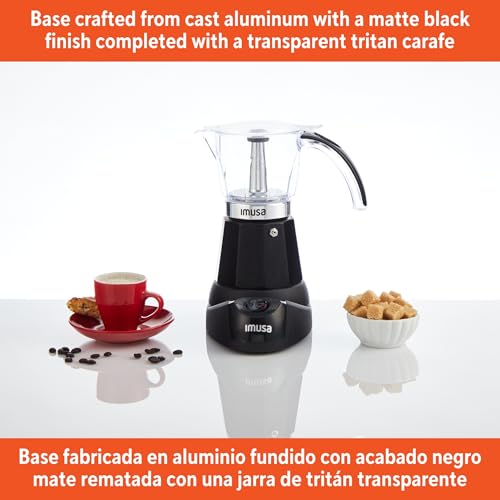
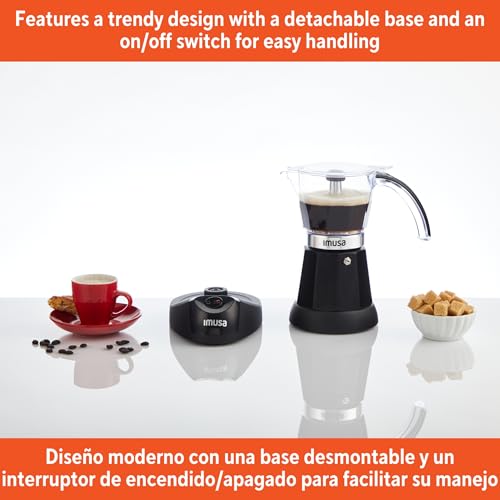
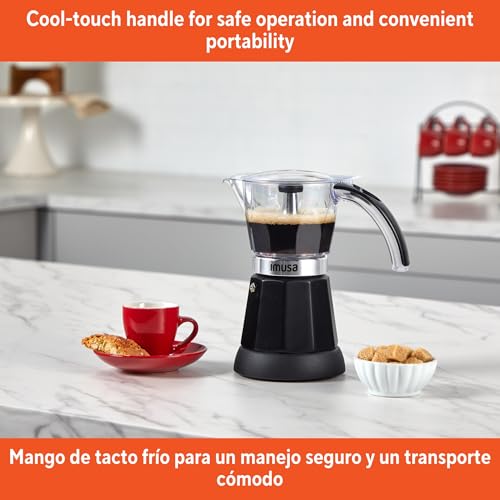
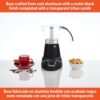
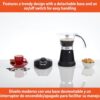
The Imusa GAU-18234 is an electric moka pot, sold as an espresso maker. It brews either three or six demitasse servings at 1.5 ounces each, using a cast aluminium base with a heating element built in and a detachable power base with an on and off switch. The carafe is a brown tinted plastic top chamber and the whole thing weighs under three pounds.
The most useful thing this review can do is settle what it is, because both the product title and the site category say espresso machine and that will mislead people. This is a moka brewer with a plug on it. Understanding that difference is the difference between being pleased with it and returning it.
Why This Is Not An Espresso Machine
Espresso is defined by pressure. A pump espresso machine forces water through a compacted puck of finely ground coffee at around nine bars, which is what produces crema and the thick syrupy body that defines the drink. That requires a pump, a portafilter and a group head, and none of those are present here.
A moka pot works completely differently. Water in the bottom chamber is heated until steam pressure pushes it up through a basket of grounds and into the top chamber. The working pressure is somewhere in the region of one to two bars, which is a fraction of what an espresso machine produces. The result is a strong, concentrated, slightly bitter coffee that is excellent in its own right and is not espresso. It will not produce meaningful crema and it will not make a latte that tastes like one from a cafe. If pressure extraction is what you want, the pump machines we cover are a different category of appliance, and the attribute table entry reading Coffee Maker Type: Espresso Machine on this product is simply wrong. The Amazon breadcrumb captured for it, which reads Coffee Makers rather than Espresso Machines, is closer to the truth.
Capacity and What A Cup Means Here
The listing says 6 or 3 espresso cups at 1.5 ounces each. That is the crucial clarification, because a moka pot cup is a demitasse rather than a mug. Six cups is nine fluid ounces in total, which is a bit over one large mug of coffee, not six mugs.
That is not a criticism, it is how the format works, and it is why moka coffee is drunk in small quantities or used as a base for a milk drink. But anyone reading six cups and picturing a carafe machine is going to be surprised. If you want six actual mugs of coffee, a drip machine such as the Hamilton Beach 49980 is the correct format. The three cup option is there because moka pots do not brew well when partially filled, so a smaller basket exists rather than a fill line.
Electric Versus Stovetop
The whole argument for this machine over a classic stovetop moka pot comes down to the base. Instead of standing over a hob and judging when to take it off the heat, there is an on and off switch, a visual brewing indicator, and a detachable base so the pot lifts away from the power when it is done.
That solves the main problem beginners have with moka brewing, which is leaving it on the heat too long. Once the top chamber is full, continued heat pushes steam through the grounds and produces the burnt, bitter finish that gives moka coffee a bad reputation. An electric base that manages the cycle removes that judgement. What you give up is control: a stovetop pot such as the Bialetti Moka Express or the Bialetti Venus lets you moderate the heat through the brew, which is how experienced moka drinkers get a cleaner result. The stovetop moka pots we cover are the comparison to make.
Materials and the Aluminium Question
The base is cast aluminium and the listing includes an unusually detailed elemental disclosure, naming aluminium alongside iron, chromium, nickel, manganese, copper, magnesium, zinc, carbon, phosphorus, sulfur, titanium and tin, with a reference to the manufacturer website for more information. That is a chemical content disclosure of the kind required in some jurisdictions, and it is worth reading rather than skipping.
Aluminium is the traditional moka pot material and Bialetti has used it for the better part of a century. It conducts heat well and it is light. It also reacts with acidic liquids over time, which is why aluminium moka pots are washed with water rather than detergent and why they develop a patina. Stainless steel alternatives exist for anyone who prefers to avoid aluminium contact entirely. The top carafe here is described as brown tinted, which from the description appears to be plastic rather than glass or metal, and no material is stated for it.
Grind, Dose and Getting A Good Result
The listing says nothing about grind size, which is the single most important variable in moka brewing. A moka pot wants a grind finer than drip and coarser than espresso. Too fine and the basket chokes, the pressure builds and the safety valve becomes the relief path. Too coarse and the water rushes through without extracting, giving a weak and sour cup.
The basket is filled level and not tamped. Tamping is for espresso, where the pump provides pressure to overcome the resistance; in a moka pot the steam pressure is limited and a tamped puck will simply stall it. The listing describes the machine as suitable for espresso, Cuban coffee, Italian coffee and moka, which are four names for broadly the same brewing process with different serving traditions rather than four different capabilities.
What the Specifications Do Not Settle
No wattage is given for the heating element. No brew time is stated. No material is given for the carafe. No indication of whether the gasket and filter plate are replaceable, which determines whether this is a repairable appliance or a disposable one, since gaskets are the first thing to fail on any moka pot. No grind guidance. No dishwasher safety statement.
The attribute table also contradicts itself, recording the operation mode as Manual while listing the human interface input as Buttons. The reality is a single on and off switch, which is neither. And the recorded dimensions of 7.1 inches deep, 4.72 inches wide and 9.3 inches high describe the pot on its base, which is compact by any measure.
Who It Suits
This suits somebody who wants strong concentrated coffee in the Italian or Cuban style, likes the simplicity of a moka pot, and would rather not stand over a hob managing the heat. It is cheap, it is small, it is light enough to travel with, and the detachable base makes it usable anywhere there is a socket rather than requiring a hob.
It is the wrong purchase if you want espresso with crema, if you want milk drinks that taste like cafe drinks, or if you want more than about nine ounces of coffee at a time. It is also the wrong purchase for a moka traditionalist who wants control over the heat curve, since a stovetop pot and a gas ring will always allow more finesse than a fixed electric element.