Description
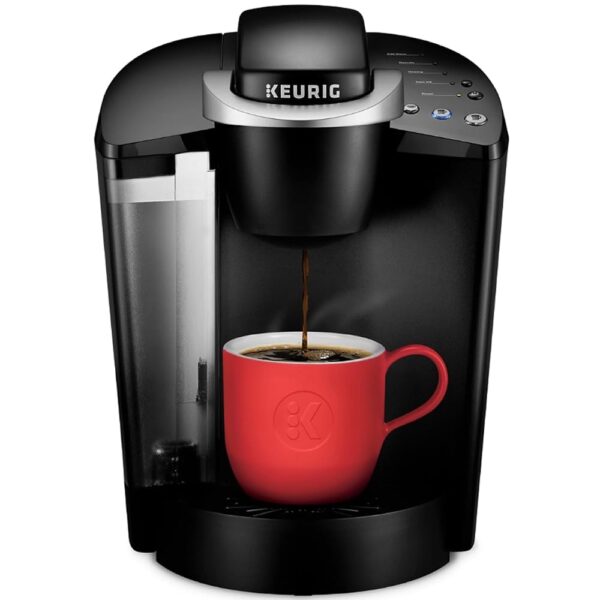
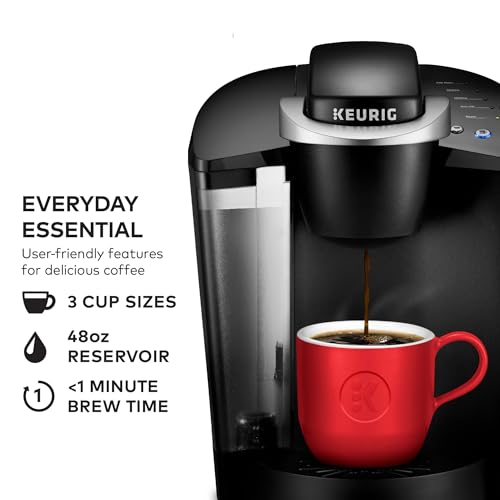
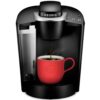
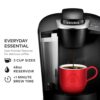
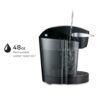
The Keurig K-Classic is the machine most people picture when they picture a Keurig. It has been on sale since late 2015, it brews three cup sizes from a standard K-Cup pod, and it holds 48 ounces of water in a removable side tank. There is no milk system, no strength button, no clock and no screen. It is the reference version of the format, and its long production run is the main thing distinguishing it from newer siblings.
Against the other formats this site covers, it is a convenience machine with no ambitions beyond that. It does not compete with a carafe brewer on cost per cup and it does not compete with any pressure machine on extraction. What it offers is a hot cup in under a minute from a sealed pod, with a reservoir large enough that a household is not refilling constantly.
Brewing System and Cup Sizes
Three pours are offered: 6, 8 and 10 ounces. Keurig states plainly that the 6 ounce size gives the strongest cup, which is simply a matter of less water passing through the same fixed dose sealed in the pod. There is no strong brew button on this model, unlike several newer Keurig machines, so the 6 ounce pour is your only control over concentration. If you drink from a large mug, be aware that a 10 ounce pour through a standard K-Cup is a mild cup by design.
Operation is button controls only. Insert a pod, close the handle, choose a size. Keurig claims a cup in under a minute once the machine has reached temperature, and the K-Classic does hold water hot in the reservoir path so the first cup of the morning takes longer than subsequent ones.
The Espresso Text in the Listing
The imported listing data for this product opens with a paragraph that has nothing to do with the machine. It warns that too coarse a grind, too little coffee, or insufficient tamping of the grounds before brewing can lead to inadequate pressure for a proper brew, and that the amount of espresso extracted will vary with grind size and dose.
None of that applies to a K-Cup brewer. There is no tamping because there is no puck. There is no grind decision because the coffee arrives sealed and pre ground. There is no pressure because this is a gravity assisted drip through system with a small pump that moves water rather than compressing it. That paragraph is boilerplate copied from an espresso machine listing and it should be ignored entirely. The specific uses field compounds the error by reading Espresso, and the special feature field lists an Auto Clean Function when what Keurig actually documents for this model is a manual descaling procedure. A real espresso machine is a different category of appliance altogether.
Water Tank and Daily Handling
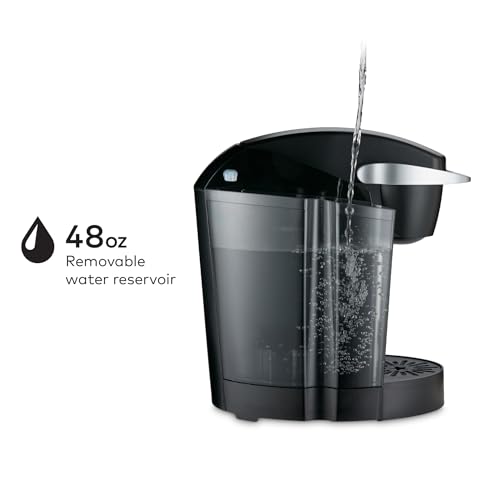
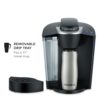
The 48 ounce reservoir is removable and Keurig rates it at six or more cups between refills. That is a genuinely useful capacity for a household. It removes the main irritation of the smallest pod machines, where every cup starts with measuring water. The reservoir lifting out matters as much as the volume, because it lets you fill at the tap and rinse the tank properly when film starts to form.
For comparison across the range, the K-Mini Plus holds a single cup, the slimmer K-Slim body holds 36 ounces and the K-Cafe holds 60 ounces. The K-Classic sits comfortably in the middle and that is most of its appeal.
Build and Footprint
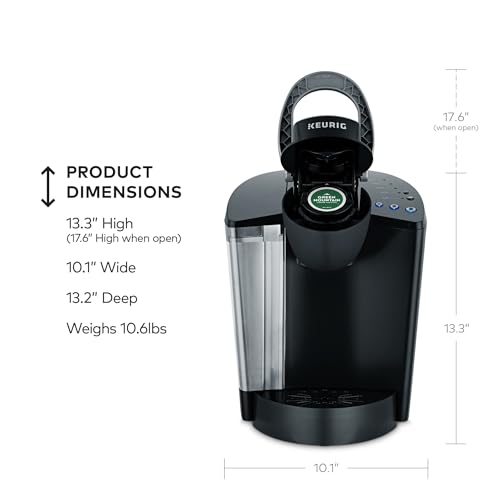
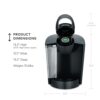
Recorded dimensions are 9.8 inches deep, 13.3 inches wide and 13 inches high, with an item weight of 9 pounds. The width figure includes the side mounted reservoir, which is why this machine is wider than the newer models that put the tank behind the body. Allow clearance above for the handle to lift when you load a pod, so the 13 inch height is not the full space requirement.
Nine pounds is on the heavier side for a pod brewer, and the item model number is recorded as K-50, which is the identifier this machine is often sold under. One field in the attribute table reads Fabric type: Plastic, which is meaningless on a coffee maker and is a scraping artefact rather than a specification. The first availability date of December 2, 2015 is the most useful figure here, because a decade on the market means a very deep body of published owner feedback exists for anyone who wants to research reliability before buying.
Cleaning and Descaling
Keurig gives descaling unusual prominence in this listing, describing it as an important part of cleaning the brewer and explaining that it removes calcium deposits that build up inside the machine over time. That emphasis is well placed. On a machine that has been in production this long, the overwhelming majority of failure reports across the pod brewer category trace back to scale rather than to component failure.
A slow pour, a short cup or a machine that stops mid brew is almost always scale narrowing the internal flow path. Descaling every three to six months is the standard guidance, more often with hard water. The Keurig three month brewer maintenance kit packages the solution with rinse pods to that schedule, and the cleaning and descaling products we cover include cheaper generic alternatives that do the same chemistry.
The other maintenance point is the exit needle in the brew head, which collects fine grounds and eventually restricts flow. It clears with the supplied tool or a straightened paperclip.
Pods, Filters and Running Costs
Any standard K-Cup pod fits, and the long production run of the K-Classic means it is the machine most third party pod makers have tested against. The reusable filter option lets you load your own grounds, sold separately, which is the only way to bring the cost per cup down meaningfully on a machine like this. Across a year the pod choice matters far more than the machine choice, and prices per cup vary widely between brands.
What the Specifications Do Not Settle
Keurig does not publish a brew temperature or a wattage for this model. The listing does not state how long the machine takes to heat from cold. It does not clarify whether the auto off interval is adjustable beyond the two hour default. The auto clean claim in the feature list is not supported by anything in the description. And the espresso paragraph described above means the listing text cannot be read at face value.
Who It Suits
This is the sensible default for a household that has decided on pods and wants the version with the fewest surprises. The 48 ounce tank suits two or three drinkers, the three cup sizes cover normal drinking, and a decade of production means parts, pods and published owner feedback are all abundant.
Skip it if you want milk drinks, a strong brew setting or iced coffee handled properly, all of which the newer models in the single serve brewer range address. Skip it too if cost per cup is your main concern, because a carafe drip machine will always be cheaper to run.