Description
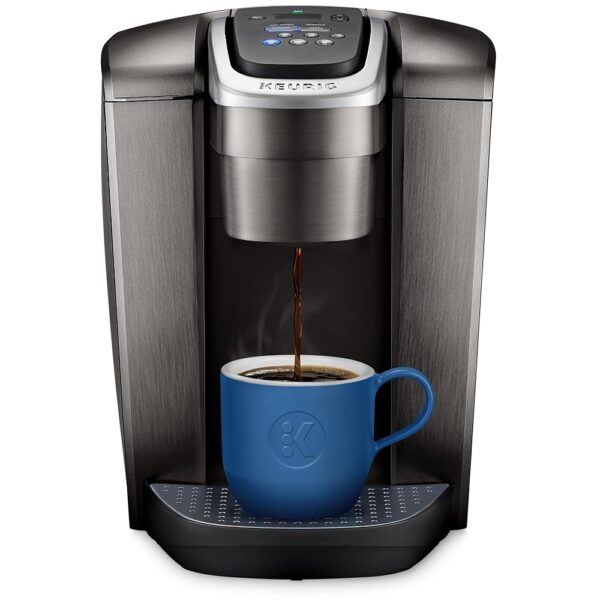
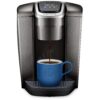
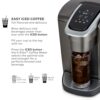
The Keurig K-Elite is the model where Keurig started giving owners something to adjust. It is a single serve K-Cup pod brewer with a 75 ounce removable reservoir, a Strong Brew button, an iced setting, a hot water dispenser and, unusually for the category, a brew temperature you can change. It is listed at 130 dollars, weighs 6.6 pounds, measures 9.9 inches deep by 13.1 wide by 12.7 high, and has been on this listing since February 2018.
Pod brewing exists to remove decisions. You drop in a sealed capsule, press a button and get a cup with no grinding, no dosing and no cleanup. What you give up is control over the coffee itself, since the dose and the grind were set at the factory, and cost per cup, which is several times what ground coffee costs. The K-Elite gives back two of those decisions, strength and temperature, which is what separates it from the cheaper machines in the single serve brewer range.
Brew Temperature, and Why the Range Matters
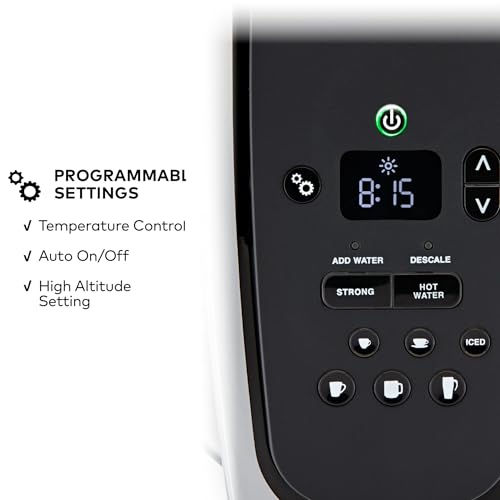
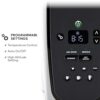
Keurig states the temperature is adjustable between 187 and 192 degrees Fahrenheit. That is a genuine control and almost no competitor offers it. It is also worth reading carefully, because the Specialty Coffee Association benchmark for brewing is 195 to 205 degrees, and the top of this machine’s range sits three degrees below the bottom of that band.
The practical consequence is that even at its hottest setting the K-Elite brews cooler than the recognised standard. Water below 195 degrees extracts less, which tends to leave a cup that reads as weaker and slightly more sour rather than bitter. That is not a fault so much as a design choice: pod brewers hold water in a heated tank and lower temperatures reduce scale and shorten heat up time. But anyone buying this for the temperature control should know the whole range sits under the benchmark, and that the adjustment is a five degree window rather than a wide one.
Brew Sizes, Dose and the Strong Brew Button
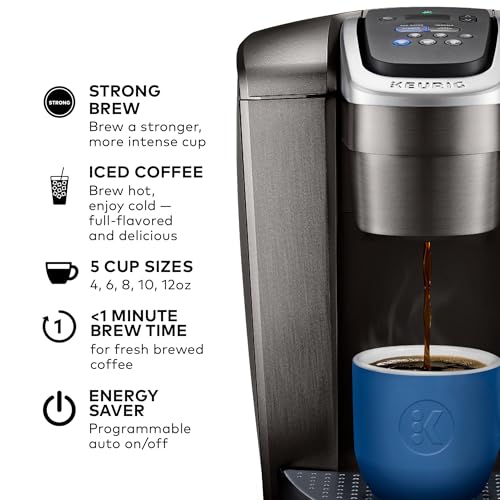
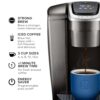
The product title says the brew size range is 8 to 12 ounces. The manufacturer description on the same page says the machine brews 4, 6, 8, 10 and 12 ounce cups. Those are not the same claim, and the difference matters: a 4 ounce option is what you would use for a concentrated cup or as a base for milk, and a buyer relying on the title would not know it exists. The five size version is almost certainly correct, since it matches the button layout Keurig used across this generation, but the page never resolves it.
What the sizes do not change is the dose. Every K-Cup pod holds the same amount of coffee regardless of which size you select, so a 12 ounce brew is the same coffee as a 4 ounce brew with three times the water. That is why the Strong Brew button exists. Mechanically it slows the brew, giving water longer contact with the grounds rather than adding more coffee, which raises extraction and produces a heavier cup. It has a limit: extending contact time on a fixed dose eventually pulls bitter compounds rather than body. If you consistently want a strong 12 ounce cup, two smaller brews or a reusable pod filled to your own dose works better, and the reusable pod filters covered here are what make that possible.
Reservoir, Cup Clearance and Daily Handling
The 75 ounce reservoir is the largest in Keurig’s domestic range and it is removable, which matters more than the capacity: a fixed reservoir means carrying the whole machine to the tap. Keurig says it allows eight cups before refilling, which implies an average draw of roughly nine ounces per brew and is a fair working figure.
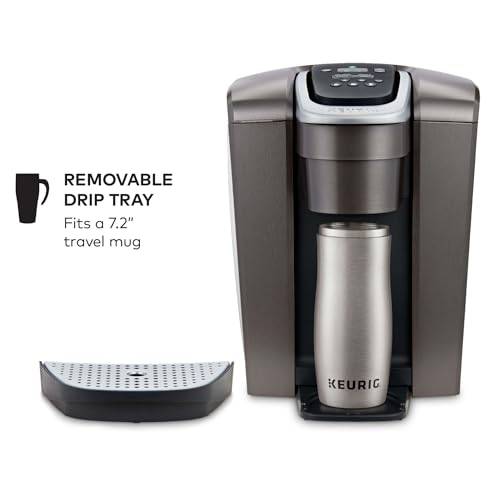
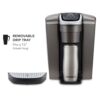
The removable drip tray takes travel mugs up to 7.2 inches tall, which covers most commuter mugs but not the tallest insulated bottles. Keurig also notes the tray holds a full accidental brew, meaning if you press the button with no cup in place the tray catches it rather than the counter. There is a hot water on demand button as well, which dispenses plain heated water for dried soup, oatmeal or tea without running a pod through.
Water Filter, Descaling and Running Costs
The box includes a water filter handle and one charcoal filter, and the machine carries a maintenance reminder that alerts you when descaling is due. That reminder is a genuinely useful feature on a pod brewer, because these machines hold heated water in a sealed tank continuously and scale builds whether you brew or not. Ignoring it is the most common reason a Keurig slows down and then stops.
Running costs come in three parts: the pods, which are the dominant expense at several times the price of ground coffee per cup; the charcoal water filters, which are consumables on a schedule; and descaling solution. Owners planning to keep the machine several years should budget for all three, and the Keurig maintenance kit listings bundle the filters and descaler together. Pod cost is the one worth thinking about hardest, and the K-Cup pod reviews cover the price spread across brands.
Specification Errors on This Listing
Three fields are wrong. Coffee maker type reads Drip Coffee Machine. This is a single serve pod brewer; it has no carafe, no basket and no drip cycle in the conventional sense. Specific uses for product reads Espresso. The K-Elite cannot make espresso. It has no pump and no pressure system, and every drink it produces is filtered coffee at atmospheric pressure regardless of what pod goes in.
Voltage reads 100120 Volts, which is the range 100 to 120 volts with the separator lost. Filter type reads Reusable, which is true only of the charcoal water filter and is misleading about the coffee, since K-Cup pods are single use and disposable. A buyer reading that field as a promise of no consumables would be badly misled about the running cost of this machine.
What the Specifications Do Not Settle
There is no wattage figure, no brew time for any cup size, and no pressure or flow rate, so nothing on the page supports a claim about extraction quality beyond the temperature range. The listing does not say whether the machine is compatible with reusable pod filters, which is the single most consequential question for anyone worried about pod cost.
Nothing states the descaling interval in cups or months, only that a reminder exists. Nothing gives the charcoal filter replacement schedule. There is no statement of whether the machine handles the larger K-Carafe pods, and no cup clearance figure other than the 7.2 inch travel mug limit. Country of origin is China and the warranty length is not given anywhere on the page.
Who It Suits and Who Should Look at Another Format
The K-Elite suits a household where people drink at different times, want different things, and value never having to clean anything. The large removable reservoir and the descaling reminder make it the most livable machine in Keurig’s range, and the temperature and strength controls are real adjustments that the cheaper models do not offer. As an office machine it is close to ideal.
It suits you poorly if cost per cup matters, since pods are several times the price of ground coffee and that gap compounds daily. It suits you poorly if you want coffee brewed within the recognised temperature band, because the machine tops out below it. And it suits you poorly if you drink more than two cups at a sitting, in which case a carafe machine from the Keurig K-Duo range, which brews both pods and a full pot, answers the problem this one cannot.