
Description
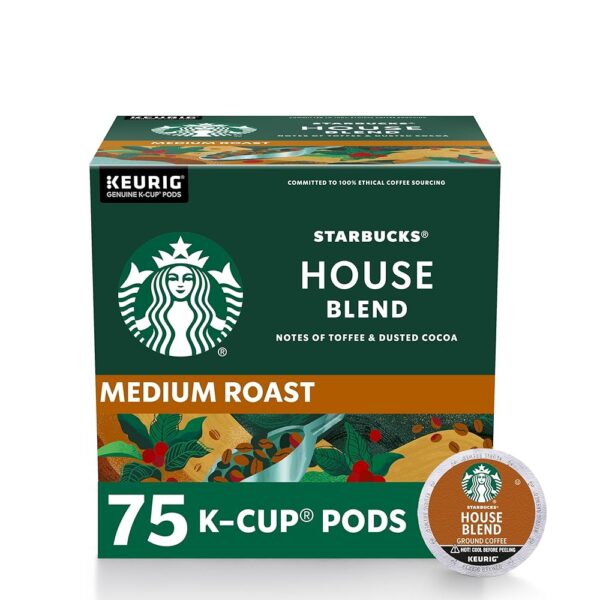
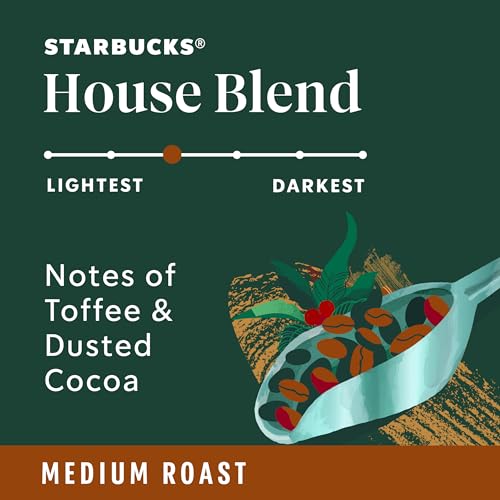
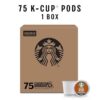
This is Starbucks House Blend in Keurig K-Cup format, a box of 75 pods listed at 39.99 dollars, described as a medium roast made from 100 percent Arabica coffee. House Blend is the oldest blend Starbucks sells, and putting it in a pod is the company’s attempt to move its most familiar product into the format most American households actually brew with.
Seventy five pods at 39.99 dollars works out at just over 53 cents a cup. That number is the single most useful thing to hold in mind when buying any pod, because it is what the format costs you. The same coffee bought as whole beans and ground at home runs at roughly a quarter of that. What the extra buys is the removal of every step between wanting coffee and having it, which is a genuine value to many households and no value at all to others. Anyone weighing it should also look at the refillable pod filters, which let you keep the machine and drop the pod premium.
What House Blend Is Meant to Taste Like
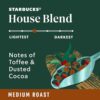
The product highlights describe rich, balanced flavour with notes of toffee and cocoa, and call it versatile enough to drink black or with milk. Those descriptors are consistent with what a Latin American blend at a medium roast level typically produces: sweetness towards the caramel and chocolate end rather than the fruit end, moderate acidity, and enough body to survive milk without disappearing.
It is worth noting that Starbucks calls its medium roast level Medium and most of the rest of the industry would call the same colour a medium to medium dark. Starbucks roasts darker than the American speciality average across its whole range, and House Blend sits at the lighter end of the Starbucks scale rather than the lighter end of coffee generally. If you find most Starbucks coffee too dark, this is the one to try, but it will still read darker than a comparable medium from a smaller roaster.
The Pod Format and What It Fixes at 12 Ounces
A standard K-Cup holds somewhere between nine and twelve grams of ground coffee, and that quantity is fixed at the factory. Your machine’s brew size button changes the water, not the coffee. That means a 12 ounce brew from this pod is the same dose as a 6 ounce brew with twice the water, and it will taste correspondingly thinner.
The practical consequence is that the coffee to water ratio you get depends entirely on which button you press. For a pod dosed at around ten grams, an 8 ounce brew is close to a conventional filter coffee strength and anything above 10 ounces is noticeably weak. Machines with a strength control, such as the Keurig K-Elite, slow the brew to compensate, which helps but cannot add coffee that is not in the pod. If you drink large mugs, buying pods marked Extra Bold is a more effective answer than turning up the strength setting.
A Listing With Almost Nothing On It
This page has one manufacturer bullet. It reads that Starbucks is committed to 100 percent ethical coffee sourcing in partnership with Conservation International. Everything else in the description field is blank.
That is unusual even by the standards of this catalogue, and it means the tasting notes, the roast profile and the pack contents all come from the product title and the site’s own highlight text rather than from Starbucks. The specification block adds five entries, all of them category labels: brand, item form, flavour, caffeine content and roast level. There is no weight, no dimensions, no date, no country of origin and no ingredient statement.
What survives is worth taking at face value. The Conservation International partnership is real and long running, and 100 percent ethically sourced under Starbucks’ own C.A.F.E. Practices programme is a verifiable corporate commitment rather than a vague gesture. But a single bullet is a thin basis for a forty dollar purchase, and every other pod reviewed in the pod section of this site carries more information than this one.
What Is Missing About the Pod Itself
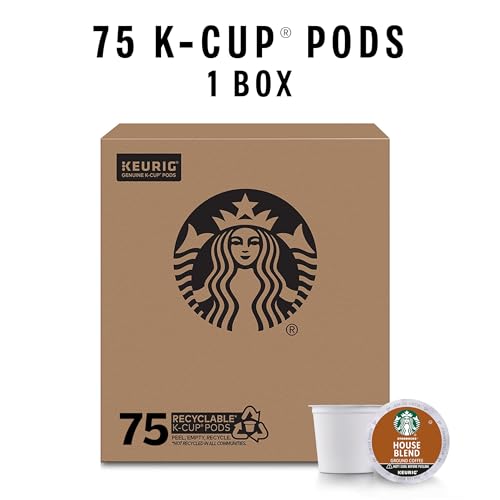
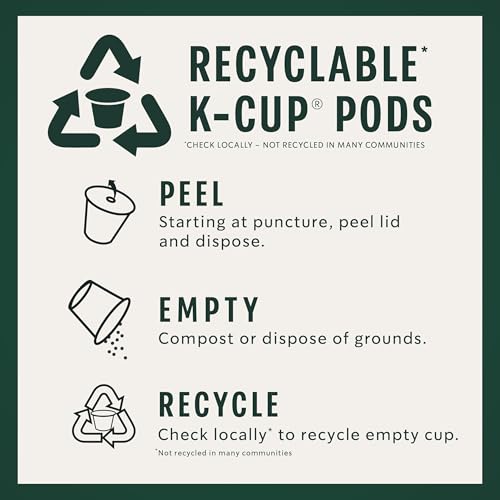
Nothing on this page addresses recyclability, which is the question most pod buyers now ask first. Competing brands state explicitly whether their pod body is made from recyclable material and instruct owners to peel the lid, empty the grounds and recycle the cup, usually with a caveat that not all local schemes accept it. This listing says none of that.
Nor is there a kosher certification, which several competing brands state, or any allergen or ingredient statement. There is no roast date, no best before guidance and no explanation of the packaging. Pods are individually sealed and flushed to displace oxygen, which is what gives them a long shelf life, but the listing does not confirm that either. A buyer wanting recyclability documented should look at brands that state it plainly, several of which appear in the same category.
Cost Per Cup Against the Rest of the Category
Across the pods covered on this site, cost per pod runs from around 39 cents to around 73 cents. At 53 cents this box sits in the upper middle. The brands that come in cheapest are generally the ones selling in boxes of 96 or 128, and the most expensive are the small 32 pod boxes and the premium single origins.
Seventy five is an odd count and it is the reason this box looks cheaper in absolute terms than a 96 pod box while costing more per cup than several of them. Comparing pod boxes on sticker price is close to useless; the only meaningful comparison is price divided by count. It is also worth checking whether the same coffee is sold in a larger box, since across this category the larger pack is almost always cheaper per pod, sometimes by a quarter.
Who It Suits and Who Should Look Elsewhere
This suits a household that already likes Starbucks coffee, owns a Keurig machine and wants the familiar cup without the shop. House Blend is the most approachable thing Starbucks makes, it holds up with milk, and 75 pods is around two and a half months for a single daily drinker. The ethical sourcing commitment is real and better documented than most. The Starbucks Sumatra dark roast pods are the heavier cup from the same brand.
It suits you poorly if you prefer a lighter roast than Starbucks generally offers, in which case the light roast options in the same category are a better fit. It suits you poorly if you want the listing to tell you about recyclability, certification or origin, because it tells you almost nothing. And it suits you poorly if cost per cup is your main concern, since 53 cents a cup is around four times what the same coffee costs ground. Anyone brewing several cups a day should at least consider whether a carafe machine from the drip coffee maker range would serve them better. The Solimo light roast breakfast blend pods are one of them.