Description
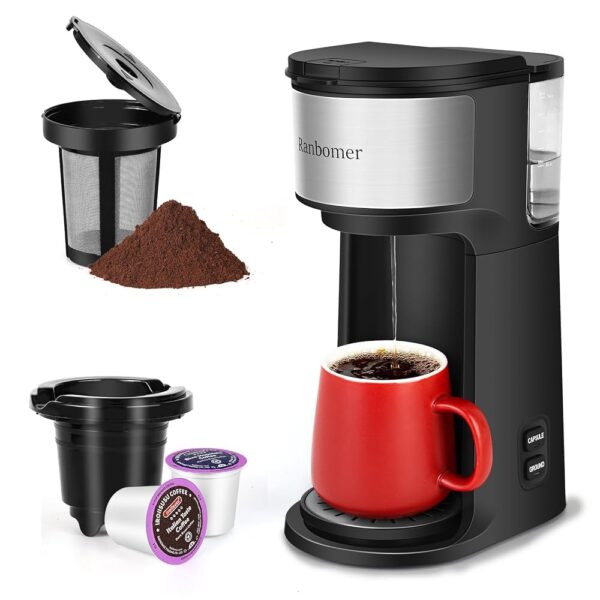
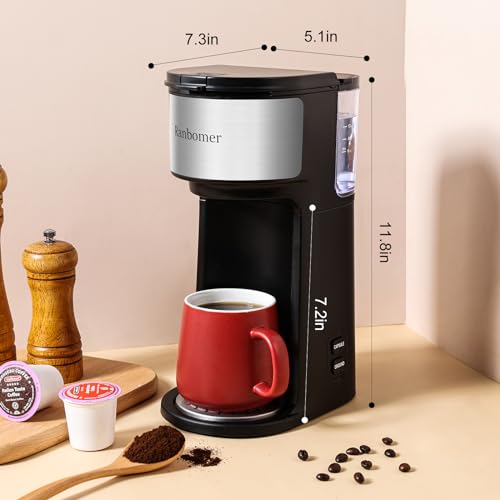
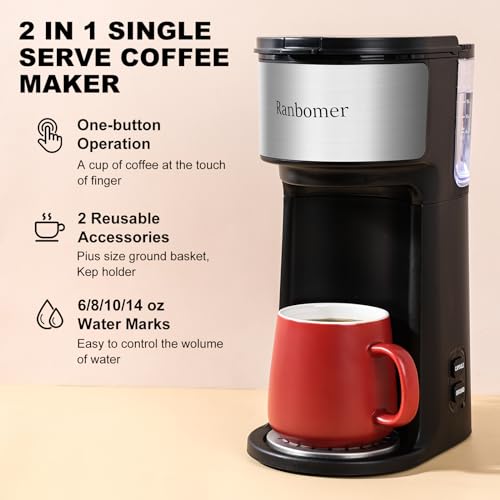
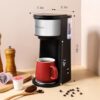
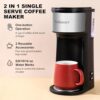
The Ranbomer CMK1030 is a compact single serve brewer that takes either a K-Cup style pod or loose ground coffee in a reusable basket, brews between 6 and 14 ounces, and runs a self cleaning cycle. It is listed at 44.99 dollars, measures 5.1 inches deep by 7.3 wide by 11.8 high, and draws 1000 watts. Beyond those figures the listing is unusually thin, and several of the fields that should carry the rest have broken.
The two way design is the reason to consider it. A pod only machine locks you into buying capsules at several times the price of ground coffee, and a ground only machine loses the convenience that makes single serve brewing appealing in the first place. A brewer that accepts both lets you use pods when speed matters and your own coffee when cost does, which is the sensible compromise for most households. The same idea appears across the single serve brewer range at a range of prices.
Brew Sizes and What the Listing Gets Wrong About Them
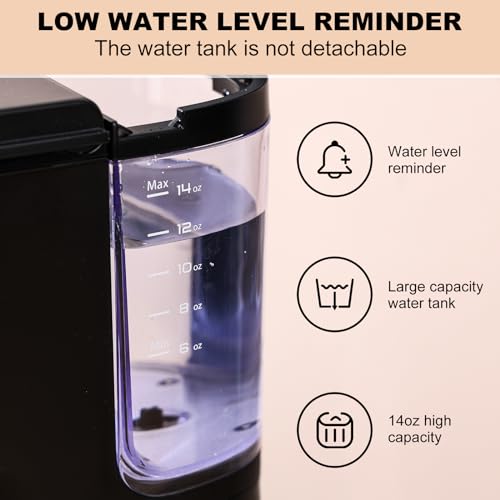
Brew sizes run from 6 to 14 ounces. Fourteen ounces is generous for a single serve machine, enough for a large mug or a travel cup, and the 6 ounce low end suits a concentrated cup or a base for milk.
The listing then explains the feature incorrectly. It says the water reservoir capacity ranges from 6 to 14 ounces, enabling you to adjust the brew strength to suit your taste. Two things are conflated there. Reservoir capacity and brew size are not the same thing, and on machines of this design you generally pour in the water you want brewed rather than drawing from a standing tank. More importantly, changing brew size does not adjust strength in the way the sentence implies: the coffee dose stays the same, so a 14 ounce brew from the same pod is weaker than a 6 ounce one, not stronger. The relationship is real but it is the opposite of a strength control.
Pods, Grounds and Running Costs
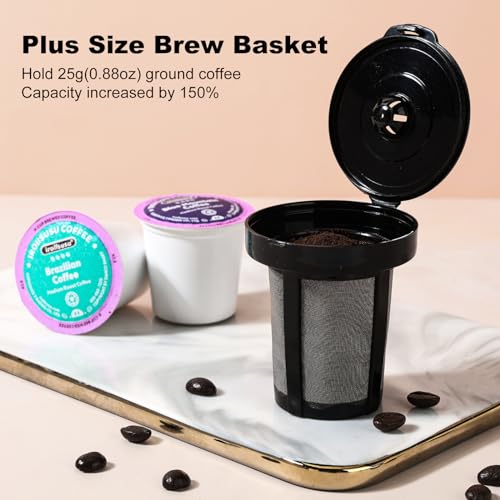
Using pods, you get the convenience and the cost. A single K-Cup style capsule holds around ten to twelve grams of coffee and sells for several times what the same coffee costs loose. Using the ground coffee basket, you dose it yourself, which means you control both the amount and the grind, and the cost per cup falls by roughly three quarters.
The ground coffee side is also where the 14 ounce brew size becomes useful rather than dilute. A pod cannot be topped up, so a large brew from a pod is thin. A basket can take a larger dose, which is the only real way to make a strong 14 ounce cup on a machine of this type. The listing does not state the basket capacity in grams or tablespoons, which is the number that would tell you how far it stretches. Owners who want to use their own coffee in pod form should also look at the refillable pod filters, which fit many machines of this shape.
The Self Cleaning Function
Ranbomer lists a self cleaning function and describes it as removing built up residue. On a machine of this kind that generally means a cycle that runs water through the brew path without a pod in place, which flushes out coffee oils and loose grounds. It is a useful convenience and it is not the same as descaling.
Descaling removes mineral deposits from the heater and the water path, and no rinse cycle does that. The listing does not mention descaling anywhere, gives no interval and does not say whether the machine has a descale indicator. On a 1000 watt heater that boils water on every brew, scale is the failure mode that ends these machines, and in a hard water area it can do so within a year. Budgeting for a descaler from the machine cleaning section from the outset is the sensible approach.
Size, Power and Footprint
At 5.1 inches deep by 7.3 wide by 11.8 high, this is genuinely compact. The 5.1 inch depth is the useful number, since it means the machine will sit on a narrow counter or in a caravan galley without overhanging. The 11.8 inch height is the one to check, because the lid has to open upward to load a pod and that needs clearance above.
The 1000 watt rating is normal for a single serve brewer that heats water on demand rather than holding a hot tank. Heat on demand means a wait of a minute or two per cup, but it also means no standby power draw and far less scale accumulation than a permanently heated tank design. That is a real advantage over pod machines that hold water hot, even though the listing never presents it as one.
A Specification Block That Broke
Two entries on this page have failed in an obvious way. One reads Capacity 14 ounces equals Capacity 14 ounces. Another reads Wattage 1000 watts equals Wattage 1000 watts. The field name has been written into the value as well as the label, so each line states its own name twice. The figures are readable, which is lucky, but it means the specification block was assembled by a script that nobody reviewed.
The special feature field is worse. It contains the entire product title, comma separated, and then the words See more, which is the label of a marketplace expansion link. A user interface element has been scraped into a product specification. Coffee maker type reads Drip Coffee Machine, which is wrong for a single serve pod brewer with no carafe and no drip basket in the conventional sense.
What the Specifications Do Not Settle
The omissions here are more serious than the errors. There is no weight, no country of origin, no date first available, no included components list and no warranty statement. A buyer cannot tell what arrives in the box, whether a reusable ground coffee basket is included or sold separately, or who to contact if it fails.
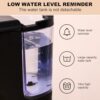
There is no brew temperature, no brew time and no statement of whether the machine holds a reservoir or is filled per brew, which is the basic question about how you use it day to day. There is no maximum cup height, which matters given the claim that it fits a travel mug. There is no pod compatibility statement beyond K-Cup style, so whether it accepts the taller or wider capsule formats is unknown. And nothing says whether the ground coffee basket is dishwasher safe. Against a fully documented brewer such as the Keurig K-Elite, this page is close to empty.
Who It Suits and Who Should Look Elsewhere
This suits someone who wants pod convenience without pod dependence, has limited counter space, and is comfortable buying a lightly documented product from a brand with no track record. Dual brewing plus a 14 ounce maximum plus a compact footprint at 45 dollars is a reasonable package on paper, and heating water on demand rather than holding a hot tank is the better engineering choice for longevity.
It suits you poorly if you want to know what you are buying before it arrives, since the listing omits weight, contents and warranty entirely. It suits you poorly if you need certainty about pod compatibility. And it suits you poorly if you brew for more than one person at a time. Anyone wanting the same dual capability with a documented specification and a stocked parts supply should compare it against the mainstream machines in the Keurig K-Duo Essentials class instead.