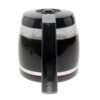
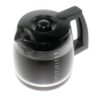
Description
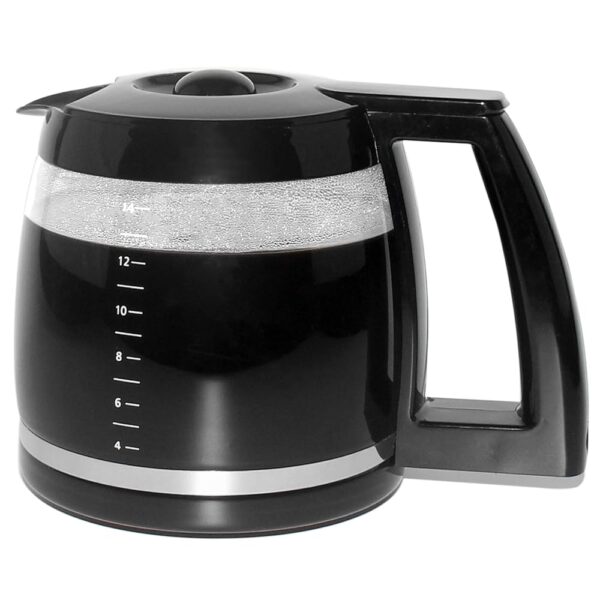
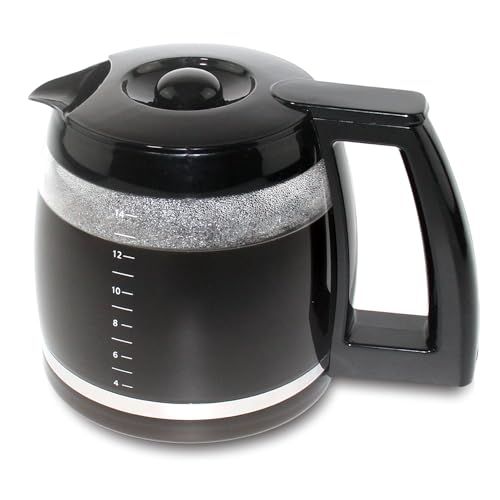
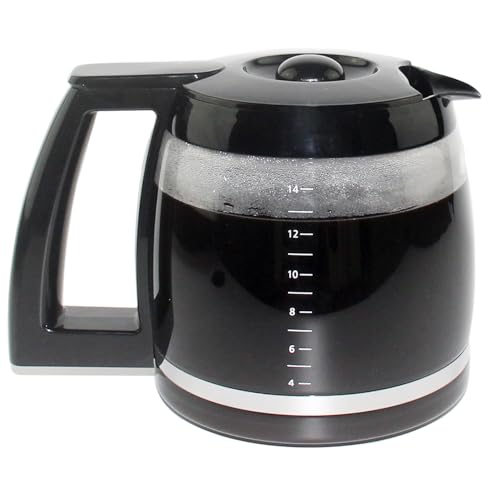
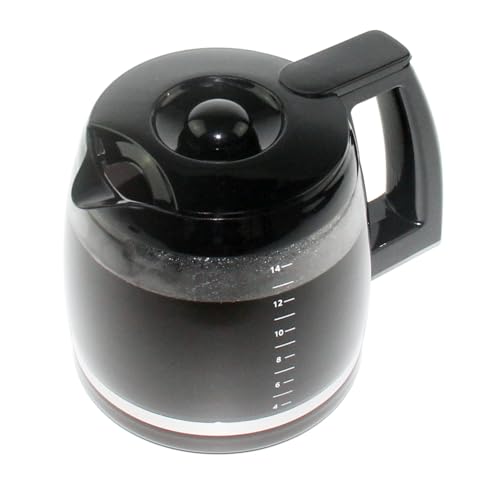
The Srempat GRCC002 is not a coffee maker. It is a 14 cup replacement glass carafe built to fit a specific list of Cuisinart drip machines, listed at 20.99 dollars with a first availability date of August 16, 2024. It appears in this site’s coffee maker listings because of how the importer classified it, but the only sensible way to review it is as a spare part, and the only questions that matter are whether it fits, whether it pours cleanly and whether it lasts.
Replacement carafes are a category most people meet on a bad morning. Glass carafes break, and a broken carafe turns a working 150 dollar machine into a paperweight. The relevant comparison is therefore not against other coffee makers but against the manufacturer’s own spare, and in this case that is the Cuisinart DCC-2200RC replacement carafe, which covers the same machines at a higher price.
Compatibility and a Discrepancy in the List
Srempat gives two compatibility lists on the same page and they do not match. The product title names DCC-3200, DCC-3200P1, DCC-2200, DCC-2600, DCC-2800 and CBC-7000PCFR. The description repeats those and adds CBC-6400PC. That is not a trivial difference if you happen to own a CBC-6400PC, because the title is the field most buyers read.
The title also carries the string Model# DCC-2200RC, which is Cuisinart’s own part number for its OEM carafe. Srempat’s actual model number is GRCC002, listed further down the page. Using a competitor’s part number as a search term in your own title is standard practice in the replacement parts market, but it means a buyer skimming quickly could believe they are buying the Cuisinart part. They are not. Anyone who wants the genuine article should read the OEM listing directly, and anyone who owns a 12 cup Cuisinart rather than a 14 cup should check the replacement carafe section for the correct volume before ordering.
Capacity, Dimensions and What 14 Cups Means
Fourteen cups on a Cuisinart carafe is 112 fluid ounces, using the five ounce cup that every drip manufacturer uses and no drinker does. The carafe is not designed to be a jug you fill to the brim; the top marking is the machine’s maximum brew volume.
Dimensions are given as 7 inches wide by 6.65 inches high, with no depth figure, which is an incomplete specification for a round object where width and diameter should be the same measurement. More usefully, those figures sit below the OEM carafe’s stated 8.3 inches wide by 7.25 inches high for the same claimed 14 cup capacity and the same machine list. A carafe that is a full inch narrower and half an inch shorter than the part it replaces, while holding the same volume, is a combination the listing does not explain. It may be a difference in how each brand measures, or it may mean the two carafes are genuinely different shapes. The data as published does not resolve it, and that is a real risk to weigh on a part whose entire job is to fit an existing brew basket and hot plate.
Glass, Build and the Borosilicate Claim
Srempat’s central material claim is borosilicate glass, described as stronger and more durable than other glass coffee pots and resistant to condensation. Borosilicate is a genuine thing and the claim is meaningful: it has a much lower coefficient of thermal expansion than ordinary soda lime glass, which is why it tolerates rapid temperature change better. A carafe that goes from a hot plate to a cold tap is exactly the use case borosilicate suits.
The resistant to condensation phrasing is looser. Condensation on a carafe is a function of temperature difference and humidity, not glass chemistry, so that part of the claim does not mean much. The listing also says the carafe is manufactured without BPA, which is a curious thing to advertise about glass and applies properly to the black plastic handle and lid. Included components are given as black handle and lid, and the colour field reads Black even though the carafe itself is clear, which is the handle colour leaking into the wrong field.
Pouring, the Spout and Everyday Handling
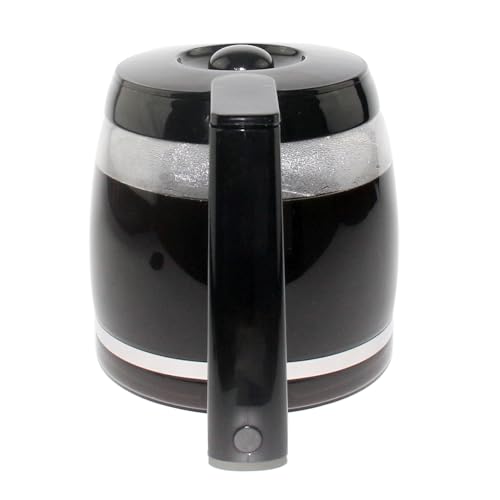
The spout is described as dripless and the handle as a comfort grip with a smart shape for pouring. Dripless is the most tested claim any carafe makes, in the sense that a buyer discovers within one pour whether it is true. What the design is trying to do is arc the stream away from the lip so surface tension does not pull the last of the pour back down the outside of the glass. Some carafes manage it. Many do not, and the geometry that makes it work is fussy enough that a copy of a shape is not guaranteed to copy the behaviour.
The wide mouth and detachable lid are the more reliably useful part. A carafe you can reach into is a carafe you can actually clean, and coffee oils build a film on glass that rinsing does not remove. Srempat says the carafe is dishwasher safe but recommends hand washing, which is the standard hedge and probably good advice for the printed markings.
What the Specifications Do Not Settle
Weight is listed twice, as 16 ounces and as 1 pounds. Those are the same figure written two ways, so unlike many listings in this catalogue this is a duplication rather than a contradiction, but it is still an unchecked field. The OEM part is listed at 1.35 pounds, so this carafe is roughly a quarter lighter, which is consistent with either thinner glass or a smaller vessel and the listing does not say which.
Nothing states whether the carafe carries brew volume markings, which is the single most important functional detail on a replacement carafe and the one the OEM listing explicitly does document. Nothing states whether the lid is the Brew Through type that Cuisinart machines require, where hot coffee must pass through the closed lid during brewing. That is a fit critical feature. A lid that does not admit the drip stream correctly will overflow the basket. There is no warranty statement, no glass thickness figure, no temperature rating and no confirmation that the handle is heat resistant to any particular level.
Who It Suits and Who Should Buy the OEM Part
This suits an owner of one of the named Cuisinart machines who has broken a carafe, wants the machine working again for around twenty dollars, and is prepared to accept some risk on exact fit. At roughly forty percent less than the manufacturer’s part, the saving is real, and borosilicate is a legitimate material advantage over the plain glass many cheap replacements use. The Cestlaive PLD-12 replacement carafe is another aftermarket option for the same machines.
It suits you poorly if your machine is not on the list, if you own a CBC-6400PC and are relying on the description rather than the title, or if you need certainty rather than a saving. In those cases the OEM carafe is the right purchase, and the same logic applies to owners of the machines these carafes serve, such as the Cuisinart PerfecTemp DCC-3200. It also suits you poorly if what you actually want is to stop breaking carafes, in which case a thermal carafe machine from the drip coffee maker range removes the problem rather than servicing it. The Cuisinart DCC-1170 is one thermal carafe machine inside the same brand.