Description
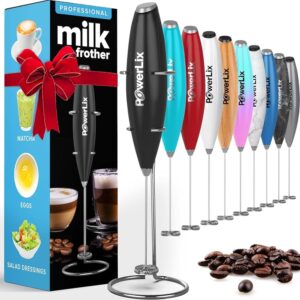
The BASECENT BC021 is a battery powered handheld frother sold with a small pouring jug, which makes it a two piece starter kit rather than a bare wand. The specification lists a cordless body running on three cells, a single speed setting, a detachable whisk and a 350 milliliter pitcher. Its role in a coffee setup is narrow and useful: it aerates already heated milk for cappuccino style drinks made on machines that have no steam arm at all.
One field on the listing outweighs every other consideration and it is easy to miss. Is Discontinued By Manufacturer reads Yes. Whatever the rest of the specification says, this is a product that is no longer in production, so remaining stock is old inventory and there is no expectation of spare whisks, replacement jugs or ongoing support. That single data point reframes the entire purchase, and it is stated nowhere in the marketing copy that surrounds it.
The Wand, Its Single Speed and Foam Quality
Number of settings is listed as one, so the only control is an on and off button. The manufacturer’s marketing quotes a motor speed above twenty thousand revolutions per minute, which is at the upper end of the handheld class and higher than most competing wands claim. Speed alone does not decide foam quality. Depth of milk, the shape of the vessel and the milk itself matter more, and published owner feedback for this model repeats the pattern seen across the category: whole milk builds the firmest head, the whisk must stay fully submerged to avoid throwing droplets, and roughly a dozen seconds of running produces a stiff cappuccino style foam rather than the pourable microfoam a steam wand makes. The detachable whisk is the useful part of the design, because it can be rinsed on its own.
Heat is the operator’s responsibility on any handheld wand, because the tool adds air and nothing else. The usual routine is to warm the milk first, then whip it, and to stop while the foam is still glossy rather than stiff and dry. Plant milks behave differently again: published owner feedback across the whole handheld category reports that barista formulations of oat and soy hold a head far better than standard cartons, because they carry added protein and fat for exactly this purpose. Cold milk froths just as readily with the same tool, which is how iced drinks are made without any heat at all.
The Included 350 Milliliter Pitcher
Included Components lists a pitcher, and Capacity is given as 350 milliliters. That capacity figure belongs to the jug rather than to the frother, which is worth stating plainly because a handheld wand has no capacity of its own. A 350 milliliter jug is a sensible size for this job: it is tall enough to keep the whisk submerged and narrow enough to stop milk climbing the walls, and it holds enough for one large milk drink or two small ones. What the listing never confirms is what the jug is made of or whether it is single or double walled, which decides whether it can be heated on a hob or in a microwave. Anyone who wants a jug specified properly should look at a dedicated vessel such as the ZOWIE KING stainless frothing pitcher.
Materials and the Stainless Steel Claim
The marketing bullets describe durable stainless steel construction. The material field says Acrylonitrile Butadi, a string cut off mid word, which is an importer truncation of acrylonitrile butadiene styrene, better known as ABS plastic. Both statements can be partly true, because these wands typically pair a stainless shaft and whisk with a molded plastic handle housing the motor and cells, but the listing presents a plastic bodied tool as a steel one. Product Dimensions are given as 1.38 inches wide by 9.45 inches high, with no depth, and Item Weight appears twice, once as 0.31 kilograms and once as 10.8 ounces, which are the same figure expressed two ways and almost certainly cover the boxed set rather than the wand alone. Care instructions are hand wash only.
Batteries, Corrosion and Long Term Handling
Number of Batteries is three, and Power Source reads Handheld, Battery Powered, so this is a three cell tool with no charging port. Published owner feedback repeatedly describes cells not being supplied in the box, so a set should be bought at the same time. The same feedback flags the failure mode that matters on every battery frother: water reaching the compartment during cleaning, followed by corrosion on the contacts and a wand that runs weakly or not at all. The practical routine is to spin the whisk in hot water, wipe the shaft, and keep the handle dry and upright. Owners also report the compartment cover loosening with repeated changes. None of this is unusual for the format, but a discontinued model gives no route to a replacement part when it happens.
What Discontinued Status Changes
A product marked as out of production is not automatically a bad buy, but it changes the questions worth asking. Remaining units are old stock, and cells left sitting in a wand through years of storage are the classic cause of a corroded compartment, so anything arriving with batteries already fitted deserves a look before it is switched on. There is no route to a replacement whisk, a spare jug or a warranty claim once the seller’s own return window closes. Listings for discontinued items also drift over time, with third party sellers attaching similar looking wands to the same product page, so the code BC021 is worth checking against the item that actually arrives.
What the Specifications Do Not Settle
The listing does not state battery life, motor wattage, noise, warranty terms or the maximum milk volume the wand can handle. It does not say whether the whisk is sold separately, which on a discontinued product is close to a rhetorical question. It does not confirm the pitcher’s material, wall construction or whether it is dishwasher safe, even though the wand’s own instruction is hand wash only. There is no stated seal rating around the button. The Recommended Uses field simply reads Mixer, and Style reads Compact, neither of which tells a buyer anything measurable. For a live comparison against models still in production, the frother listings collected in the general coffee products category are a better starting point than this specification block.
Who It Suits and Who Should Look Elsewhere
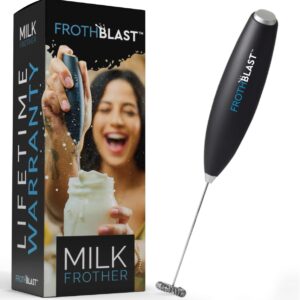
On paper this suits anyone pairing a steamless brewer with milk drinks and wanting a jug included rather than bought separately, which is a fair description of most owners of a moka pot or a small steam machine such as the IMUSA four cup steam espresso maker. In practice the discontinued status pushes most buyers toward a current model with the same shape and a supported supply chain, which is where the SIMPLETaste handheld milk frother and the FrothBlast battery frother come in. Anyone wanting pourable latte milk should ignore the whole handheld category and buy steam pressure instead, since no whisk of any speed produces the same texture.