


Description
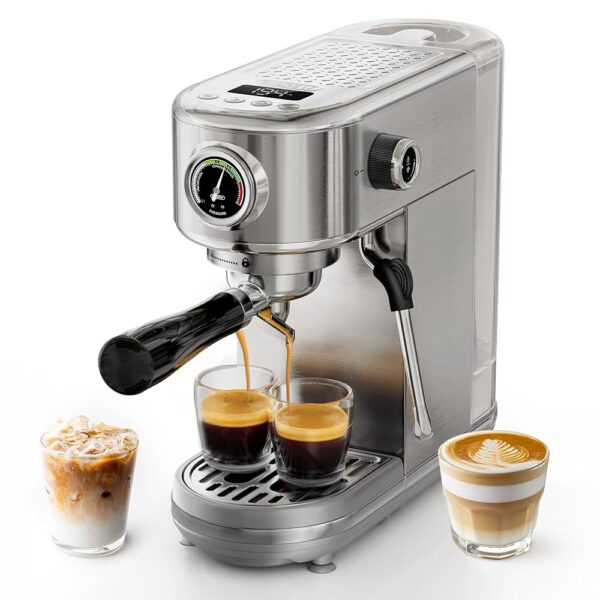
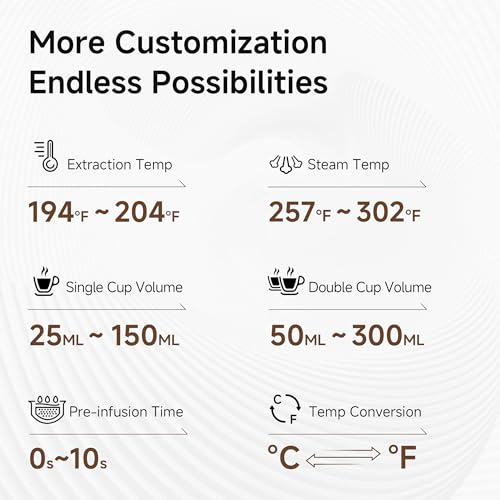
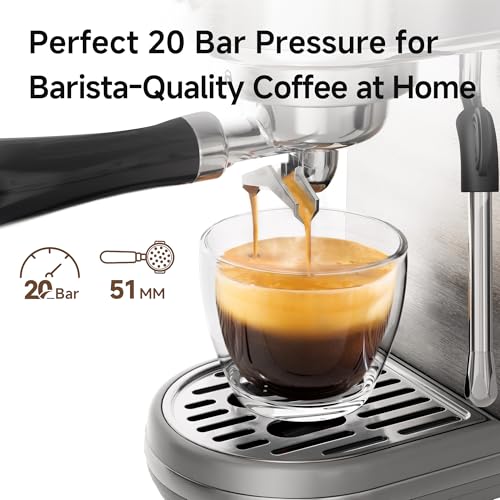
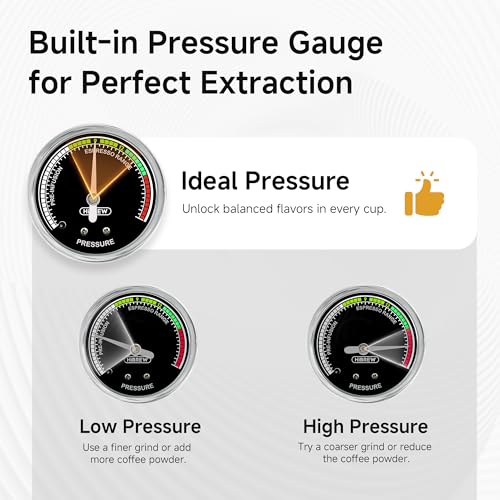
The HiBREW H10B is a semi automatic pump espresso machine that exposes more adjustable parameters than anything else near its price. HiBREW publishes ranges rather than slogans: single cup volume from 25 to 150 ml, double cup from 50 to 300 ml, hot extraction temperature from 90 to 95 degrees Celsius, steam temperature from 125 to 150 degrees Celsius, and pre infusion time from 0 to 10 seconds. It uses a 51 mm portafilter, a thermo coil heating system and a brushed stainless body measuring 12 inches deep, 5 inches wide and 11 inches tall at 9.6 pounds.
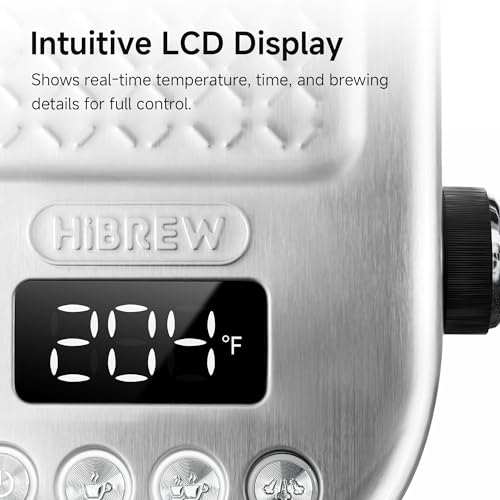
Publishing actual ranges is rare and it is the reason this machine is worth attention. Most listings at this level claim adjustable temperature without specifying what can be adjusted or between what limits. Here the numbers are given, the display converts between Celsius and Fahrenheit, and the operator can set pre infusion time to zero if they want it off. That is a level of control normally found several hundred dollars higher up.
Adjustable Extraction Temperature
The 90 to 95 degree Celsius range covers the conventional espresso brewing window almost exactly. Lighter roasts generally benefit from the upper end and darker roasts from the lower, and being able to move between them is one of the few adjustments that reliably changes the cup rather than just changing the numbers.
What the listing does not give is the stability band. A machine that can be set to 93 degrees but drifts 5 degrees during a shot is not delivering 93 degrees. HiBREW describes a stainless thermo coil intended to keep boiler temperature stable and resist internal corrosion, which is the right architecture, but no stability figure is published. The HiBREW H10A is the closest sibling and shares the same approach.
Programmable Volume and Pre Infusion
Single and double shot volumes are programmable across wide ranges, which means the machine can be set to stop at a measured yield rather than being timed by hand. Yield control is the more useful half of espresso repeatability, since dose and yield together define the brew ratio that determines strength and extraction.
Adjustable pre infusion from 0 to 10 seconds is the more unusual control. Pre infusion wets the puck at low pressure before full extraction; longer pre infusion helps with fine grinds and light roasts, and turning it off entirely suits some coffees. Very few machines under several hundred dollars let the operator set this at all, and it is a genuine reason to choose the H10B over the fixed pre infusion of a machine like the Gevi ECMG0.
Steam System and Milk
Steam temperature is adjustable from 125 to 150 degrees Celsius, and the wand rotates freely through 270 degrees with a detachable steam head for cleaning. Adjustable steam temperature is not a control most machines expose; higher steam temperature textures milk faster and with less finesse, lower gives more time to work the jug.
The detachable head is the practical detail. Steam tips clog with milk residue, and a head that comes off for soaking outlasts one that has to be cleared with a pin. Published owner feedback notes a slight delay when switching between brewing and steaming modes, which is inherent to a single thermo coil serving both functions and is normal at this size.
Build, the 51 mm Portafilter and Baskets
At 5 inches wide this is one of the narrowest machines in this catalogue, and the accessory list is specific: 51 mm single, double and pressurised baskets, plus a 51 mm tamper and powder spoon. Supplying both pressurised and non pressurised baskets is the right decision, because it lets the machine work with pre ground coffee immediately and with properly dialled fresh grounds later.
Fifty one millimetres is the standard domestic size below commercial spec. It works, but the aftermarket for bottomless portafilters and precision baskets is narrower than at 58 mm, which limits upgrade paths. Owner feedback also reports that the machine is light enough to need two hands when locking the portafilter, which is predictable at 9.6 pounds and 5 inches wide. A cup warmer occupies the top panel, heated passively by the coil beneath.
Cleaning and What Keeps It Working
The components that decide how long a machine like this stays usable are the steam tip, the group screen and the boiler. HiBREW addresses the first with a detachable steam head, which can be removed and soaked rather than cleared with a pin, and that single design choice does more for long term milk performance than any of the programmable settings.
The group screen accumulates coffee oils and needs periodic cleaning, and the thermo coil needs descaling in proportion to local water hardness. Neither has a stated interval in the listing. On a machine with a low mass heating element, scale matters more than it does on a heavy boiler, because a narrower water path clogs sooner. Running a descaling cycle on a regular schedule rather than waiting for symptoms is the maintenance that actually determines whether the machine is still working in three years, and it costs very little compared with replacing it.
What the Specifications Do Not Settle
The water tank capacity is absent from the data entirely, which is a real omission given owner feedback identifies the rear tank position as awkward in tight spaces. Also missing are the wattage, the basket dose in grams, the pump pressure as a structured field, the temperature stability band and the warranty term.
The coffee input type field reads coffee beans, which is wrong: this machine has no grinder and takes ground coffee. And the machine launched in November 2024 with a very small number of published reviews, so nothing can yet be said about how the thermo coil, the pump or the electronics hold up over years. On a machine whose appeal rests on programmable electronics, that is the uncertainty that matters most.
Who It Suits
The H10B suits a buyer who wants to experiment. Adjustable brew temperature, adjustable steam temperature, programmable yield and adjustable pre infusion give a learner more levers than machines costing several times as much, in a body 5 inches wide. Paired with a decent burr grinder and the supplied non pressurised baskets, it offers a genuine route into dialling in coffee properly. Anyone comparing programmable machines should also look at the Spacekey CM5080, which publishes a PID system and a pre soak step.
It is the wrong machine for anyone who wants a proven long term record, for anyone who wants automatic milk, and for anyone planning to build a 58 mm accessory collection. Buyers who want established reliability should look at long running models in the espresso machine category, and buyers who want a similar feature set with a bundled grinder can compare the CASABREWS Ultra. The Wirsh Home Barista CM5418 is one of the longer running options in that band.