Description
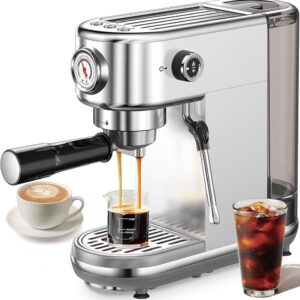
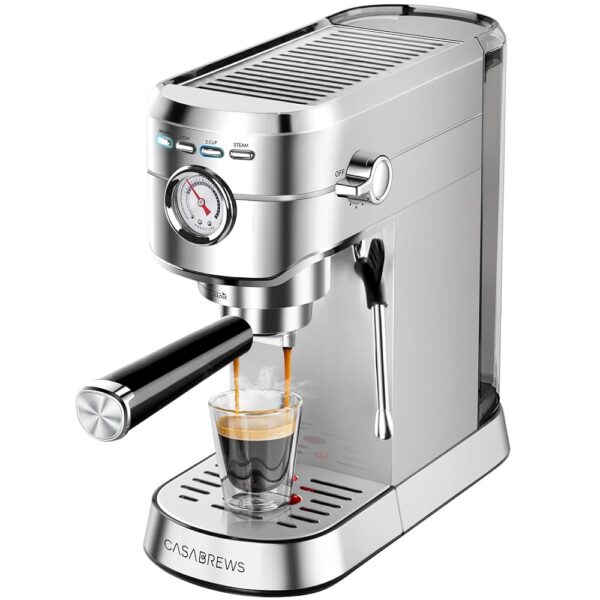
The CASABREWS CM5418 is a compact semi-automatic espresso machine built around a 51mm portafilter, a vibration pump rated at 20 bar and a 34 ounce removable water tank. The specification sheet lists it at 12.28 inches deep by 5.9 inches wide by 11.97 inches tall, running on 120 volts AC, with a brushed stainless exterior and an item weight of 8.59 pounds. In the box are a 51mm portafilter, a one cup filter, a two cup filter and a combined tamper and scoop.
Semi-automatic means the machine controls water and pressure while the person operating it controls the coffee. Grinding, dosing, tamping and judging when the shot is right all sit on the user side, and the machine will happily pull a bad shot from a bad puck. That is the trade a portafilter machine makes against a capsule brewer, and it is the same trade made by everything in the espresso machine archive on this site. What separates models in this price band is rarely the pump but the basket type, the steam wand and the thermal behaviour.
Pump Pressure Against Brew Pressure
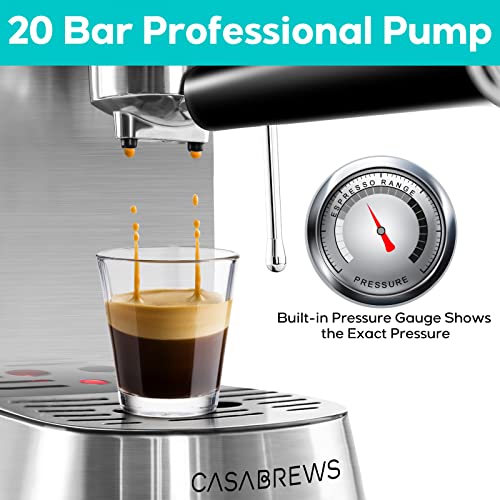
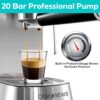
The listing leads with 20 bar, and that figure needs unpacking because it is the most misunderstood number in home espresso. Twenty bar is the maximum pressure the pump can generate at zero flow, not the pressure at the coffee. Espresso is conventionally extracted somewhere near 9 bar at the puck, and machines in this class reach that with an over specified pump plus an over pressure valve that bleeds the excess back to the tank. A 20 bar rating therefore tells a buyer about pump headroom, not about extraction quality, and nothing in this specification block states the brew pressure at the group head.
The machine does carry a pressure gauge on the front, which is worth more than the bar figure on the box. A gauge shows the operator whether the puck is choking or gushing, and it is the fastest way to learn grind adjustment on a machine without a built-in grinder. The sibling model, the CASABREWS 3700 Essential, drops the gauge entirely, which makes the two models less interchangeable than the shared 20 bar headline suggests.
Portafilter, Baskets and Dose
The portafilter is 51mm, the common budget size, and a real constraint on the accessory market. Tampers, distribution tools and precision baskets are far more plentiful at 54mm and 58mm, so anyone planning to upgrade puck preparation should check sizing first.
The included components field lists a 51mm one cup filter and a 51mm two cup filter, and it does not say whether either is pressurised. That omission matters more than any other unstated figure on this page. A pressurised, or dual wall, basket forces the coffee through a single small hole after brewing, generating foam that looks like crema regardless of grind quality. A single wall basket does not, so it exposes every flaw in the grind and the tamp. The first is forgiving with supermarket pre-ground coffee. The second is what a buyer with a burr grinder actually wants. The listing does not settle which type ships, and published owner feedback describing thick crema from pre-ground coffee is consistent with pressurised baskets rather than single wall ones.
Milk and Steam
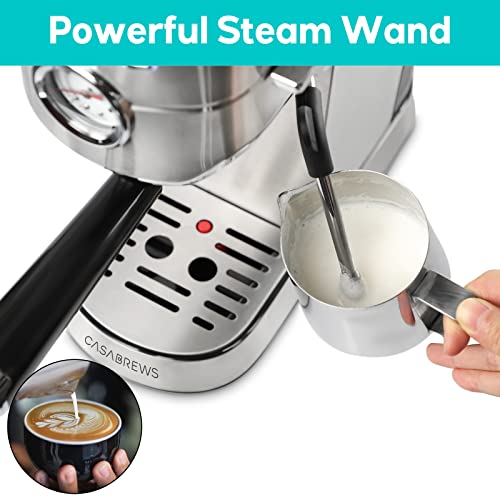
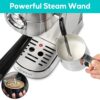
Milk is handled by a steam wand driven from the same heater as the brew water, controlled by a knob on the side of the machine. A single heater design cannot brew and steam at the same time, so the sequence is fixed: shot first, then steam, then a wait for the temperature to fall before the next shot. The listing’s own troubleshooting notes confirm this thermal juggling, instructing owners to run the hot water function for 20 seconds to cool the machine when the one cup and two cup buttons flash alternately, and to return the steam knob to the off position when the machine will not stop beeping.
Those instructions are unusually candid, and they are the most useful lines in the block. They describe a narrow thermal window with a documented recovery procedure, which is normal at this size but worth knowing beforehand.
Water Tank, Controls and Daily Handling
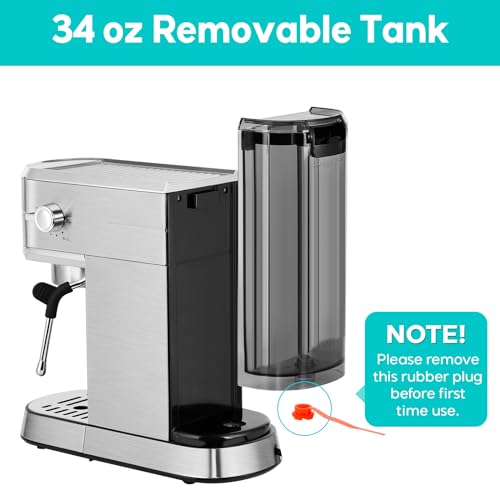
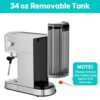
The 34 ounce tank is removable and rear mounted. That is roughly a litre, enough for several drinks between refills, but a rear tank on a machine 12.28 inches deep has to be pulled clear of a wall to lift out. Controls are buttons for one and two cups plus a side knob for steam and hot water, and the hot water position doubles as the priming route when the pump loses its draw.
At 8.59 pounds the machine is light for its size. Locking a portafilter into a group head takes real force, and published owner feedback repeatedly mentions having to steady the body while twisting the handle home. That is a predictable consequence of the weight, not a defect.
What the Listing Gets Wrong
The model number appears twice with two different values. The Model Name field reads CM5418BC-UL while the Item Model Number field reads CM5418-US. Those cannot both identify the unit in the box, and the difference matters when ordering a gasket, a shower screen or a replacement portafilter years from now.
The Specific Uses For Product field is not a use case at all. It holds a wall of troubleshooting instructions about flashing lights, beeping and pump priming, pasted into a field meant to say what the product is for. The Style field reads Button, and the Special Feature field is a keyword list repeating the words espresso machine and milk frother several times over. No wattage is given anywhere, and no warranty term appears in the block.
What the Specifications Do Not Settle
Nothing states the heating element type or its rating, so heat up time and recovery between shots cannot be predicted from the page. Nothing states the boiler or thermoblock material, or whether the group head is brass, aluminium or plastic bodied, which is the single biggest driver of temperature stability shot to shot on a machine this size. There is no figure for noise, no duty cycle guidance for how many drinks can be made in a row, and no descaling interval.
Parts availability is also unaddressed. Group gaskets harden and leak after a year or two of use, and the listing gives no part number, no gasket dimension and no service channel. Buyers should assume a periodic descale and a routine group clean using the products in the Coffee & Espresso Machine Cleaning Products category, because no maintenance schedule is given.
Who It Suits and Who Should Look at Another Format
This machine suits a first time espresso buyer who wants a metal bodied portafilter machine with a pressure gauge and a real steam wand, and who accepts that grinder, dose and tamp are their responsibility. It is a reasonable entry point precisely because the gauge shortens the learning curve, and because the price sits at the budget end of the category rather than the middle.
It suits nobody who wants milk and coffee at the push of one button, or who plans to make four drinks in a row for guests, since the single heater has to swing between brew and steam temperature each time. Buyers who want faster thermal recovery should compare it against the Breville Bambino BES450, and buyers who want the same manual routine from a longer established design can look at the De’Longhi Stilosa EC260BK. Anyone unwilling to buy a burr grinder should reconsider the format, because a portafilter machine fed pre-ground coffee is a messier route to a cup a pod brewer would have made better.