

Description
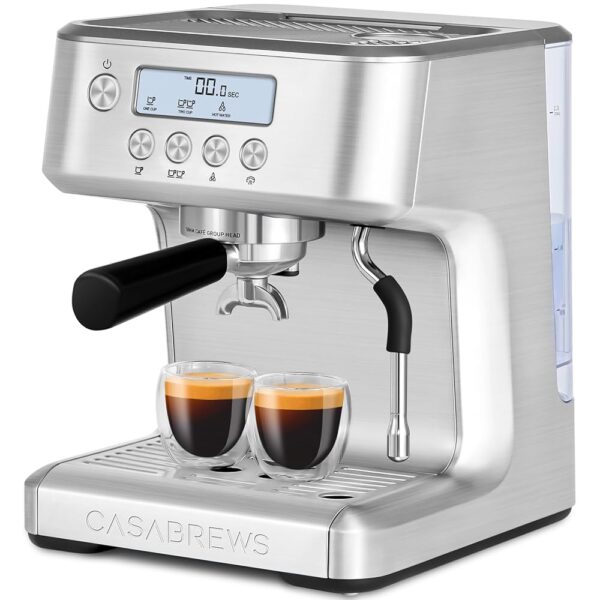
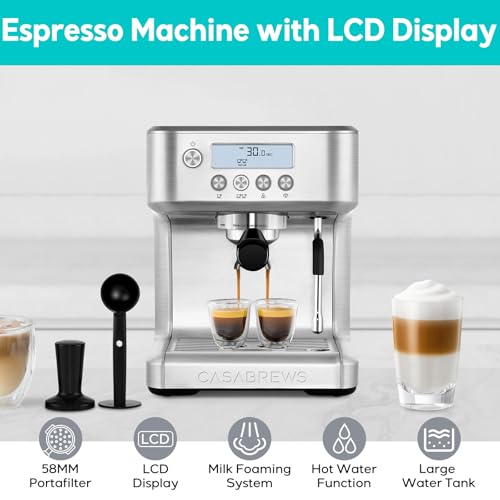
The CASABREWS Ultra is a semi automatic pump espresso machine with two specifications that stand out at its price: a 58 mm portafilter and four selectable brewing temperatures. CASABREWS states a 20 bar Italian pump, a 1350 watt motor, an LCD display, a steam wand, hot water dispensing, pre programmed shots and a removable 73 ounce water tank. It measures 12.2 inches deep, 10.31 inches wide and 12.99 inches tall at 13.55 pounds.
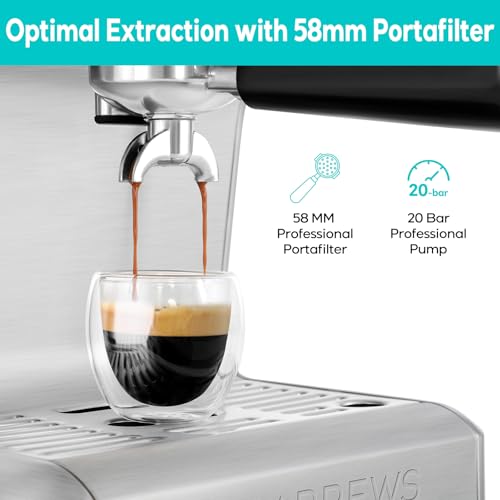
Fifty eight millimetres is the commercial standard portafilter diameter, and machines below the mid range almost never use it. The practical consequence is that every bottomless portafilter, precision basket, distribution tool and puck screen made for professional machines fits this one. That gives the Ultra an upgrade path most machines at this price simply do not have, and it is the strongest reason to choose it.
The 58 mm Portafilter and Baskets
CASABREWS supplies a 58 mm portafilter, two single cup filters, two double cup filters, a 58 mm tamper and a cleaning needle. The listing does not state which of those baskets are pressurised, which matters: pressurised baskets produce crema from any grind and suit pre ground coffee, while single wall baskets require a properly dialled grind and reward it.
Supplying four baskets suggests a mix of both types, which would be the sensible arrangement. Anyone buying this machine to learn on should establish which is which on arrival, because using a pressurised basket while trying to dial in a grinder is a common source of frustration; the basket masks the very feedback you are trying to read. Comparable machines using 58 mm at this price are rare; the Kismile machine with an integrated grinder is one of the few.
Four Brewing Temperatures
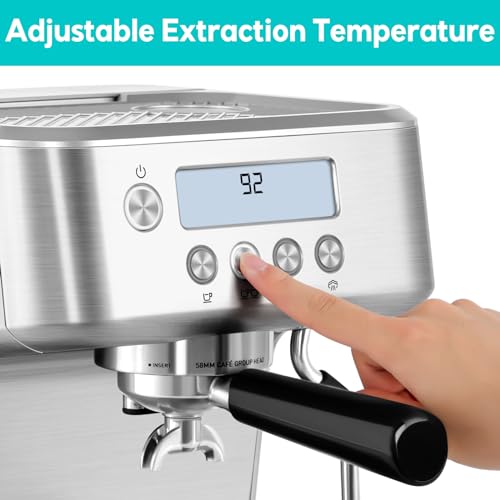
Adjustable brew temperature is the other unusual inclusion. CASABREWS provides four settings and states explicitly that the adjustment applies to espresso brewing only, not to steam or hot water. That caveat is worth noting because it is the kind of limitation most listings would leave out.
Why it matters: lighter roasts generally extract better at higher temperatures and darker roasts at lower ones, so a fixed setpoint machine forces one compromise across every bag of coffee. Four discrete steps is coarser than the 2 degree increments on a machine like the HiBREW H10B, but it is four more than most machines offer. The listing does not state what the four temperatures actually are, which is the obvious missing piece.
Water Tank, Display and Controls
The 73 ounce tank is over two litres and among the largest in this price band, which reduces refilling to an occasional task. The LCD display and a control panel handle steam, hot water and pre programmed shots. The listing does not say what the display shows, so whether it includes a shot timer, which would be genuinely useful, is unknown.
Owner feedback identifies the rear tank position as the main daily annoyance, requiring the machine to be pulled forward for refills. That is a common layout in this category and is worth checking against your own counter depth. The hot water function allows americanos without pushing extra water through the coffee, and lets cups be preheated, which affects the temperature of a finished espresso more than most people expect.
A Setup Step Buried in the Listing
One genuinely important instruction is hidden in a field intended for something else. The recommended uses attribute contains the line that before first use a red silicone plug must be removed from the bottom of the water tank. That is not a marketing note, it is a setup requirement, and a machine that will not draw water because a shipping plug is still fitted is easily mistaken for a faulty unit.
The same field carries useful troubleshooting: if pressure is low, use a finer grind, increase the dose or increase tamping pressure. That is correct advice and worth following. It is also a clear illustration of how badly structured these listings are, with real operating information filed under a field labelled for product uses while the actual field content elsewhere is stuffed with gift keywords.
Milk, Steam and Cleaning
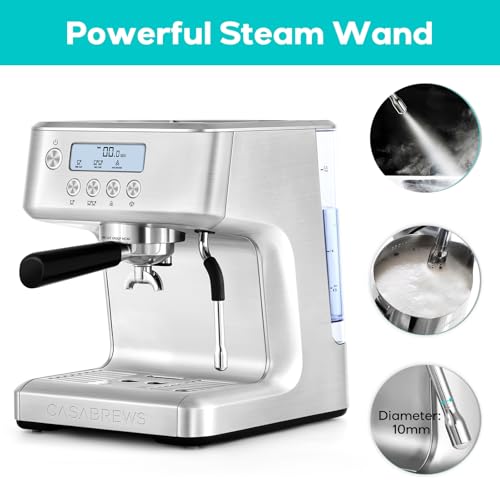
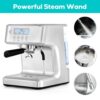
A steam wand handles milk, and CASABREWS advises using cold whole milk for foam, which is correct: cold milk gives more time to incorporate air before the temperature climbs, and whole milk’s fat content produces more stable foam than skimmed. A cleaning needle is supplied for clearing the tip.
No steam pressure, tip design or recovery time is published. As on any single heater machine, brewing and steaming are sequential rather than simultaneous. Owner feedback reports that the steam wand takes practice for beginners, which is true of every bare wand and is the price of the control it offers. The wand should be purged and wiped after every use without exception.
What the Specifications Do Not Settle
The four brewing temperatures are not stated as numbers, the boiler or thermoblock type is not given, the basket dose in grams is absent, and there is no heat up time, no warranty term and no indication of which supplied baskets are pressurised. The display contents are undescribed.
The special feature and specific uses fields are filled with gift occasion keywords rather than specifications, which is seller keyword stuffing rather than importer error, and it means the structured data carries almost no useful information. The machine launched in July 2024 with a modest published review count, so there is not yet enough owner history to say how the pump, the thermoblock or the temperature control hold up over years.
That last point deserves weight. CASABREWS sells several machines that look similar from the outside, including the longer established CM5418, and the Ultra is the newer and more ambitious of them. More features on a newer platform means more that can go wrong and less owner history to predict it, which is the trade a buyer is making here.
Who It Suits
The Ultra suits a buyer who intends to learn espresso properly and wants a machine that will not need replacing when their skill improves. A 58 mm portafilter, adjustable brew temperature and a two litre tank give it more headroom than almost anything at the price, and the commercial diameter opens a large and cheap accessory market. Paired with a burr grinder and a single wall basket it has real potential.
It is the wrong machine for anyone who wants milk handled automatically, and for anyone who needs a long service record before buying. Buyers who want automatic milk should look at the super automatic category, and buyers who want a proven machine with fewer features should compare the long running options across the espresso machine category.