



Description
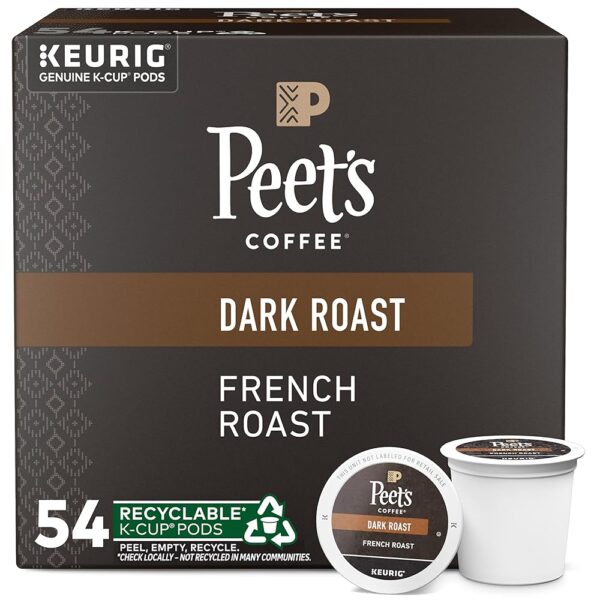
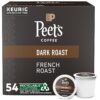
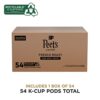
This is Peet’s Coffee French Roast in Keurig K-Cup format, a box of 54 pods listed at 39.34 dollars, described as a dark roast with rich, smoky flavour and a pleasant bite. Peet’s states the pods are fully recyclable and that the coffee is sourced responsibly to drive positive impact in coffee growing communities. At 54 pods for 39.34 dollars it works out at about 73 cents a cup.
Seventy three cents is the highest price per pod of anything covered on this site, and it is worth confronting immediately. The cheapest pod in the pod category here comes in at 39 cents. For a single daily drinker that difference is around 125 dollars a year. Peet’s is a genuinely serious roaster and dark roasting is what built its reputation, so the premium is not baseless, but it is nearly double and the buyer should know that going in.
A Name Discrepancy Worth Noticing
The site catalogues this product as Peet’s Coffee Dark Roast K-Cup pods. The manufacturer title is more specific: Dark Roast Keurig K-Cup Pods, French Roast, 54 count. The flavour field confirms French Roast.
That matters because Peet’s sells several dark roasts and they are not interchangeable. Major Dickason’s Blend, the company’s signature, is a dark roast built around richness and complexity. French Roast is something else entirely: it is a roast level rather than a blend, and it sits at the darkest end of the scale used in American roasting. A buyer searching for a Peet’s dark roast and landing on a generic description could easily end up with a considerably more intense coffee than they wanted. The Major Dickason’s Blend pods are the other Peet’s dark roast in this catalogue and the more approachable of the two.
What French Roast Actually Means
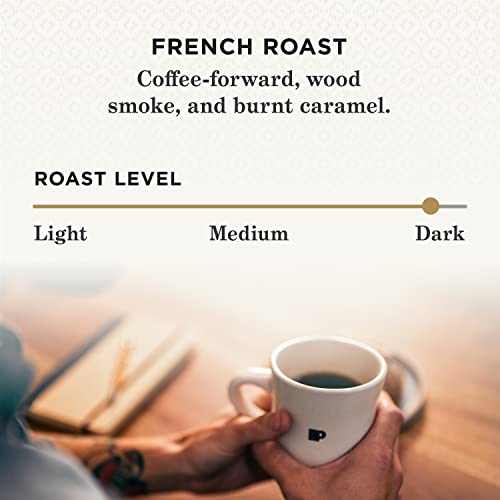
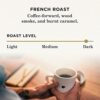
French roast is the second darkest of the conventional roast designations, past full city and just short of the point where the beans begin to carbonise. At that level the surface of the bean is oily, most of the origin character has been roasted away, and what remains is dominated by the roast itself.
Peet’s description, rich and smoky with a pleasant bite, is an accurate summary of that. Smoky is a direct product of the roast level. The bite is the bitterness that develops as sugars caramelise past the sweet point. Acidity is largely gone, which is why dark roasts read as heavier and rounder than light ones even though they contain less soluble material overall.
This is also why French roast survives the pod format better than a light roast does. Because the flavour is roast derived rather than delicate, a 10 or 12 ounce brew from a fixed pod dose still tastes like coffee rather than like weak tea, which is not true of the light roasts elsewhere in this category. If you drink large mugs, dark is the direction to go.
Fully Recyclable, With No Caveat
The recyclability bullet on this page reads: fully recyclable K-Cup pods, peel, compost grounds, recycle pod. It carries no qualification of any kind.
That is a notable difference from almost every other pod listing in this catalogue, including Peet’s own. The standard industry wording, used by the Keurig owned brands and by Peet’s on its Major Dickason’s listing, adds check locally, not recycled in all communities. Same company, same pod construction, same claim, and one page includes the caveat while the other does not.
The caveat exists for a reason. A K-Cup body is polypropylene, which is recyclable as a material, but the pod is small enough to fall through the sorting screens at many facilities and arrives contaminated with wet grounds and a bonded foil lid. Peeling and emptying deals with the contamination and does nothing about the size. So fully recyclable describes the material rather than the outcome, and the version of the claim on this page overstates it by omitting the qualification the same company applies elsewhere.
The 54 Count Box and Why It Costs What It Does
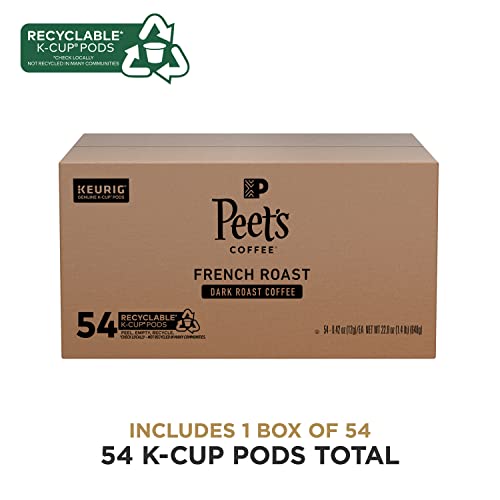
Fifty four is an unusual count. The standard sizes in this category are 12, 24, 32, 72, 96 and 128, and across all of them the pattern is consistent: larger boxes cost meaningfully less per pod, often 25 to 30 percent less than the smallest.
A 54 count box sits below the volume where those savings appear, which is a large part of why this works out at 73 cents. The other part is the brand: Peet’s positions itself above the supermarket and restaurant labels and prices accordingly. Whether the coffee justifies the gap is a matter of taste, but the box size is doing at least as much work as the roasting. It is worth checking whether Peet’s sells the same coffee in a larger count before buying this one, since across this category the same coffee in a bigger box is nearly always the cheaper purchase.
What the Specifications Do Not Settle
The specification block runs to five category labels: brand, item form, flavour, caffeine content and roast level. There is no weight, no dimensions, no country of origin and no date first available.
There is no bean type stated anywhere. Peet’s states 100 percent Arabica on its Major Dickason’s listing in this same catalogue and does not state it here, which is a gap rather than a difference in the coffee but is worth noticing. There is no origin, no dose per pod in grams and no caffeine figure. The sourcing claim, actively engaged in driving positive impact, names no programme, no standard and no auditor, which puts it below the third party certified options in this category and roughly level with the corporate commitments most brands make. There is no kosher certification, which several competitors do carry.
Who It Suits and Who Should Look Elsewhere
This suits someone who genuinely wants a very dark roast and is willing to pay for a roaster that does it well. French roast is a real style with a real following, it holds up in large brew sizes where lighter pods fail, and it takes milk without disappearing. Peet’s has been roasting dark since 1966 and this is the company doing what it is known for. The Green Mountain Dark Magic capsules are the other dark roast covered here.
It suits you poorly if cost per cup matters, since at 73 cents this is the most expensive pod covered here by a clear margin. It suits you poorly if you dislike smoky or bitter coffee, which at this roast level is not an accident but the design. And it suits you poorly if you want origin character, because French roasting removes most of it. Anyone who wants a dark Peet’s cup with more complexity and a lower price per pod should compare the Major Dickason’s box, and anyone drinking dark roast in volume should look at whether the brewer they own supports a reusable filter. The GoodCups reusable filter is the accessory to check for.