Description
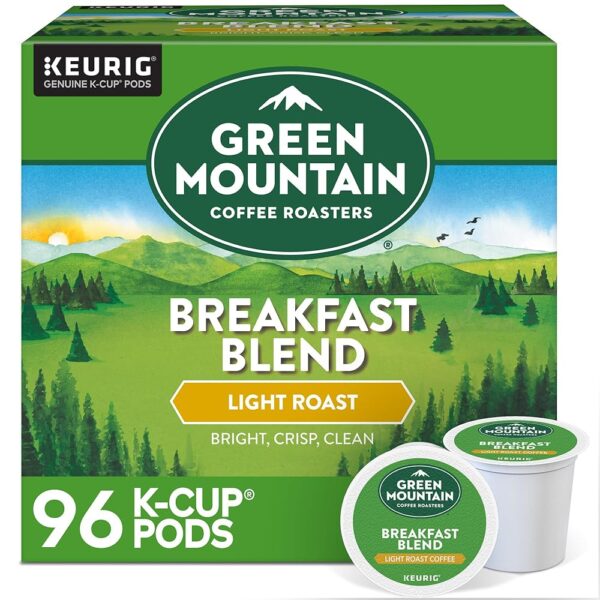
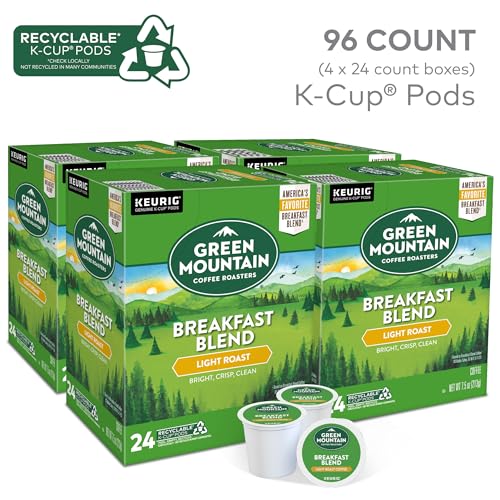
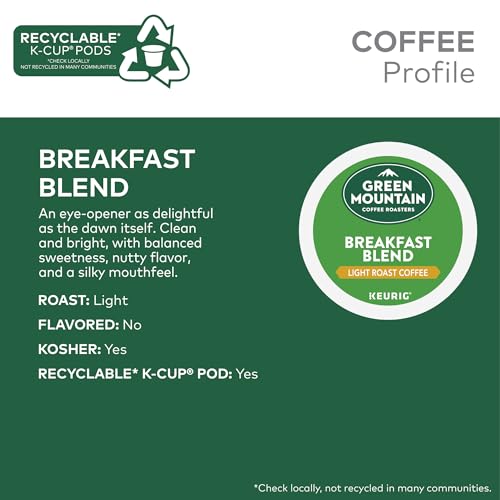
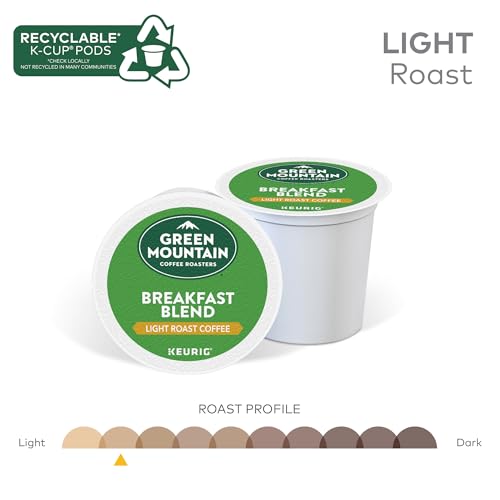
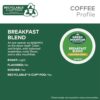
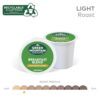
Green Mountain Coffee Roasters Breakfast Blend in Keurig K-Cup format is a 96 count box listed at 48.60 dollars, and it is one of the few genuinely light roasts in this category. Green Mountain describes it as clean and bright with balanced sweetness, nutty flavour and a silky mouthfeel, certified Orthodox Union Kosher and made from coffee the company describes as 100 percent responsibly sourced. That works out at about 51 cents a cup.
Light roast is the point of this product and it is the reason to consider it over the dozens of medium roasts in the pod category. Roasting drives off acidity and develops caramelisation, so a lighter roast keeps more of the bean’s own character and more brightness, while a darker one substitutes roast flavour for origin flavour. If most pod coffee tastes flat or generically toasty to you, roast level is usually why, and this is the direction to move.
The Caffeine Question, Answered Properly
Breakfast blend and light roast together produce one of the most persistent misunderstandings in coffee, so it is worth settling. Light roast coffee is not lower in caffeine than dark roast. If anything the relationship runs the other way.
Caffeine is largely stable through roasting, so a bean loses very little of it in the roaster. What the bean does lose is mass, because roasting drives off water and burns off organic matter. A dark roasted bean is lighter and larger than a light roasted one, which means that if you measure by volume, as a pod filling machine effectively does, you fit more mass of light roasted coffee into the same space. Measured by scoop, light roast is marginally the stronger; measured by weight, the two are close to identical.
So the practical answer is that switching from a dark roast pod to this one will not reduce your caffeine intake in any meaningful way. What it will change is the flavour, which is the actual reason to do it.
What the Tasting Note Describes
Clean and bright, with balanced sweetness, nutty flavour and a silky mouthfeel is a more specific claim than most listings in this category manage, and each phrase maps onto something real. Clean means little lingering aftertaste. Bright means noticeable acidity, which in coffee is a positive descriptor rather than a sourness. Nutty is a roast derived flavour that develops early and survives at light levels. Silky describes body and texture.
Together they point at a washed Latin American blend at a light to medium light roast, which is exactly what most American breakfast blends are. What the listing does not give is an origin, a blend composition or a bean type. It never says 100 percent Arabica, which is worth noting since the sibling Colombia Select pods from the same brand do state it and this page does not.
Brew Size Matters More on a Light Roast
The fixed pod dose is a problem for every K-Cup, but it bites harder here. Your machine varies the water and never the coffee, so a 12 ounce brew is the same nine to twelve grams as a 6 ounce brew with twice the water through it.
A dark roast has enough roast derived bitterness and body to survive that dilution and still taste like coffee. A light roast does not. Its appeal rests on delicacy and acidity, and diluting it produces something thin and sour rather than something merely weak. The practical consequence is that this coffee should be brewed at 6 or 8 ounces, not 10 or 12, and that if you drink large mugs you will get more satisfaction from a darker roast such as the Dark Magic pods in the same range.
Storage matters slightly more with a light roast too. Light roasted coffee holds more of its volatile aromatics and loses them faster once exposed, which is why the sealed pod format suits the style better than a bag does. Ninety six pods is around three months of daily brewing, and since each one stays sealed until it goes into the machine, the last of the box will taste much like the first. That is one of the few areas where the pod format genuinely improves on ground coffee.
Responsibly Sourced, and What That Is Not
The sustainability bullet reads committed to 100 percent responsibly sourced coffee. That is a corporate programme rather than a third party certification, and the distinction is worth drawing because both appear in this category and they mean different things.
A third party certification such as Fair Trade Certified or Rainforest Alliance involves an external body auditing farms and supply chains against a published standard, with a minimum price or a set of practice requirements attached. A responsibly sourced claim is defined by the company making it, against criteria it sets and verifies itself. Green Mountain’s parent operates a real programme with real criteria; it is simply not the same instrument as an audited certification, and the listing does not name a scheme, a standard or an auditor.
The kosher certification on this page is the opposite case. Orthodox Union is a named external body issuing a specific mark, and it is verifiable. For plain roasted coffee it is a facility level assurance rather than an ingredient one, but it is a genuine third party credential.
What the Specifications Do Not Settle
The specification block holds five fields, all category labels: brand, item form, flavour, caffeine content and roast level. There is no weight, no dimensions, no country of origin and no date first available.
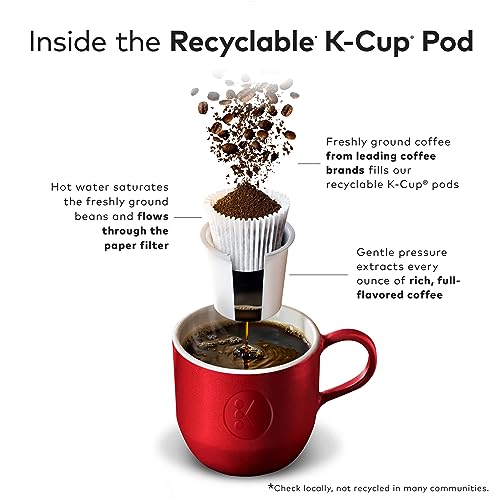
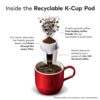
There is no dose per pod in grams, no caffeine figure in milligrams, no bean type and no origin. Most notably for a Green Mountain product, there is no recyclability statement on this listing, where the company’s other pods in this catalogue carry the standard peel, empty and recycle instruction with a local scheme caveat. Whether that means these are an older non recyclable construction or simply that the bullet was omitted is not something the page settles, and it is the one gap here that a buyer might reasonably care about.
Who It Suits and Who Should Look Elsewhere
This suits someone who finds most pod coffee flat and wants brightness and acidity back in the cup. Genuine light roasts are scarce in the K-Cup format, the tasting note is more specific than the category norm, and at 51 cents a cup in a 96 count box it is fairly priced against the medium roasts it competes with. It also makes better iced coffee than a dark roast, because the acidity survives dilution and cold better than roast bitterness does. The Solimo light roast breakfast blend pods are the plainer light roast to compare.
It suits you poorly if you drink 12 ounce mugs, since a light roast at a fixed pod dose thins out badly. It suits you poorly if you were buying light roast expecting less caffeine, which is not how roasting works. And it suits you poorly if you want documented recyclability, which this particular listing omits. Anyone brewing large volumes daily should also consider whether a refillable pod filter and their own lightly roasted beans would serve them better, since a filter you dose yourself removes the brew size problem entirely. The GoodCups reusable filter is one such filter.