Description
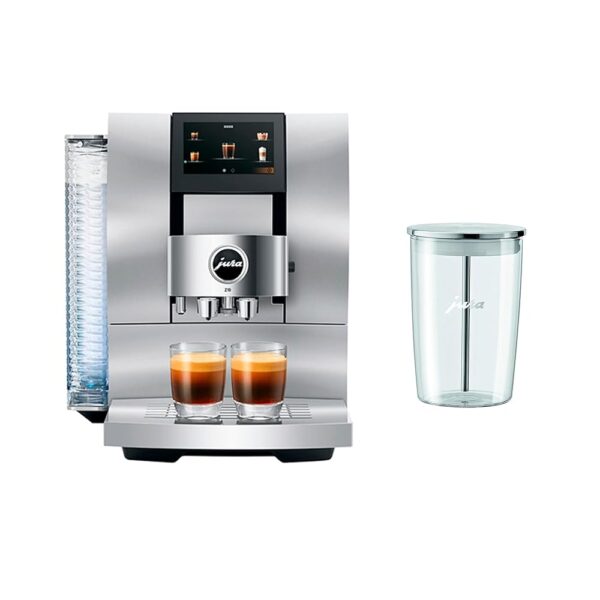
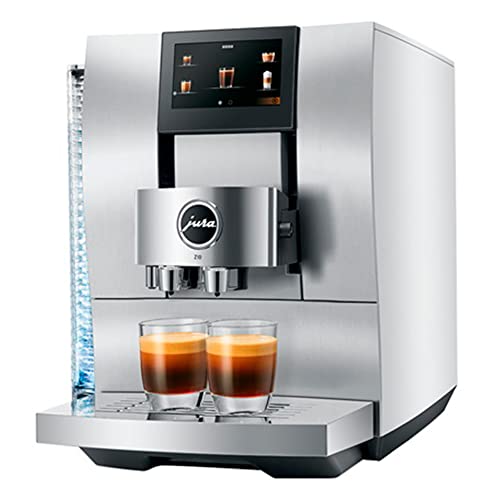
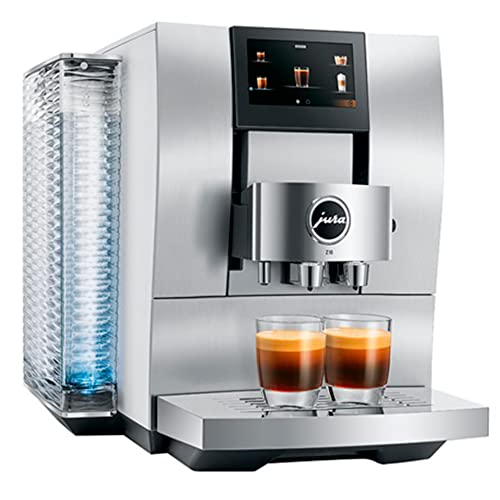
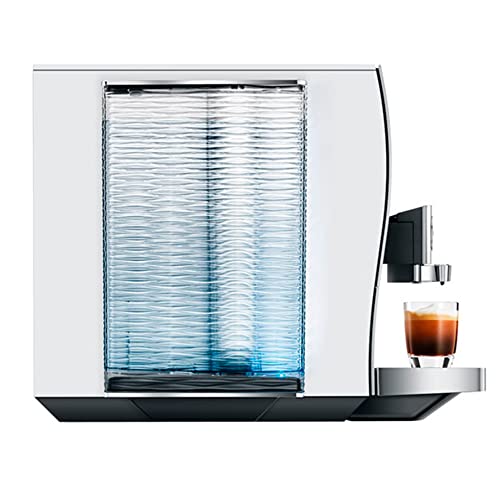
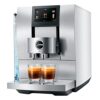
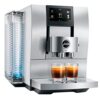
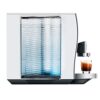
The Jura Z10 is the top of the domestic Jura range, listed here at 4,048 dollars in aluminium white with a glass milk container of 16.9 ounces included in the set. It weighs 38 pounds, draws 1450 watts, prepares up to 32 different specialities hot or cold, and carries the part number 15361-72570. It has been on this listing since November 2022.
At four thousand dollars the question is not whether it makes good coffee but what it does that a machine at a quarter of the price does not. Jura’s answer is three specific technologies plus a cold extraction capability that no conventional bean to cup machine offers. Whether those justify the gap is a judgement, but they are real engineering rather than badging, and they are worth understanding before comparing this against anything else in the super automatic section.
Cold Extraction and What It Actually Is
The headline feature is a cold extraction process, and it is genuinely unusual. Conventional iced coffee from an automatic machine is hot coffee poured over ice, which dilutes as it chills and loses aromatics to the steam. Cold brew avoids that by steeping ground coffee in cold water for twelve to twenty four hours, which produces a sweeter, lower acidity result but takes a day.
Jura’s approach is neither. The machine pulses cold water through the ground coffee under pressure, extracting in the cup rather than over hours. The result is a cold extracted coffee made to order rather than steeped overnight, which is a real capability and the reason the specific uses field on this listing reads Iced Coffee. It is not the same drink as traditional cold brew, since contact time is measured in seconds rather than hours, but it is genuinely cold extracted rather than chilled. Anyone whose main interest is cold coffee should weigh that against a twenty dollar steeping vessel from the cold brew section, which produces a different but excellent result for a fraction of one percent of the price.
3D Brewing, P.E.P and the Grinder
Jura names three further technologies. The 3D brewing process is described as making water flow evenly through the ground coffee, which addresses channelling: water taking the path of least resistance through a puck and under extracting the rest. The pulse extraction process, abbreviated P.E.P, pushes water through in pulses rather than a continuous stream, which extends contact time without extending the shot volume and is the mechanism Jura credits for short drink quality.
The grinder is described as a unique product recognition grinder, which on Jura machines means it adjusts grind fineness according to the drink selected rather than holding one setting for everything. That is a meaningful capability, since a ristretto and a lungo want different grinds and a fixed grinder compromises one for the other. The listing gives no burr material, no burr type and no number of settings, so the description is all there is.
The Intelligent Water System
The I.W.S is the water management side, described as detecting the water filter. In practice that means the machine recognises when a CLARIS cartridge is fitted and adjusts its descaling schedule accordingly, since filtered water deposits far less scale. Included components on this listing reads simply Filter, so a cartridge appears to be in the box.
On a machine with narrow water paths, a thermoblock and a pump, scale is the primary failure mode and the main determinant of how long the machine lasts. Filters are a genuine ongoing cost with a defined litre capacity, and skipping them means descaling instead, which is harder on seals. Treat the filter subscription as part of the running cost rather than optional, alongside the cleaning tablets these machines require, which the cleaning product reviews cover.
Two Sets of Dimensions That Do Not Match
This listing states the machine’s size twice and the two statements disagree. The specification block gives 17 inches deep by 13 inches wide by 15 inches high. The manufacturer description gives height 15 inches, width 12.6 inches and length 17.7 inches. Height agrees. Width differs by four tenths of an inch and length by seven tenths.
Those are small differences and neither will change whether the machine fits, but they should not both be on the same page, and the description contains two spelling errors in the same line, rendering width and length as Widht and Lenght. That is a transcription of a manufacturer sheet rather than a checked specification. The 15 inch height is the number that matters most, since it determines whether the machine clears an upper cabinet with the bean hopper lid open, and it is the one figure both sources agree on.
The Milk Container and the Set Contents
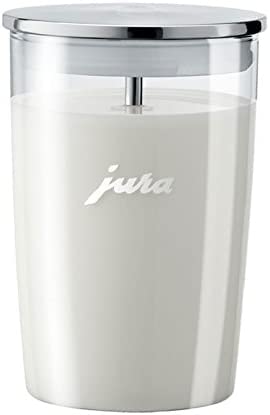
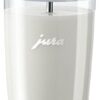
The product title and the set description both name a glass milk container of 16.9 ounces, which is a half litre. Glass rather than plastic matters for a milk vessel: it does not absorb odours, it can go in a dishwasher without clouding, and you can see how much is left. Half a litre is enough for several milk drinks in a session.
The specification block does not agree with the title. Number of items reads 2, which is consistent with a machine plus a container, but included components reads only Filter and omits the milk container entirely. The title and the set description are the more reliable statements here, but a buyer relying on the components field would not know the container was included.
What the Specifications Do Not Settle
For a four thousand dollar machine the data sheet is remarkably incomplete. There is no water tank capacity, no bean hopper capacity and no grounds container capacity, and those three numbers determine how often the machine needs attention. There is no pump pressure figure. There is no cup height clearance.
There is no description of the interface beyond the human interface input field reading Buttons, so screen size and control layout are unknown from this page. There is no country of origin, no warranty length, and no statement of whether the brewing unit is removable. The 32 specialities are counted but not listed, so a buyer cannot tell how many are genuinely distinct drinks against stored variations. And nothing states whether the cold extraction function requires a different bean setting or produces a different volume. Anyone considering this should also look at the other Jura Z10 listing in this catalogue, the Jura Z10 under part number 15361, since the two pages describe the same machine with different data.
Who It Suits and Who Should Look Elsewhere
This suits a household that drinks several different coffees a day, wants cold coffee on demand as well as hot, and treats a coffee machine as a considered appliance purchase rather than a utility one. The cold extraction capability is genuinely unavailable elsewhere at any price in this format, the grinder adjusting per drink is real engineering, and Jura’s parts and service network is among the longest lived in the category.
It suits you poorly if you drink one black coffee a day, in which case almost any machine on this site will serve you and the money is better spent on beans. It suits you poorly if you want to control extraction yourself. And it suits you poorly if you want cold brew in the traditional steeped sense, which this does not make. Anyone who wants Jura engineering without the top of the range price should compare it against the Jura E8, which shares the pulse extraction process at well under half the cost.