Description
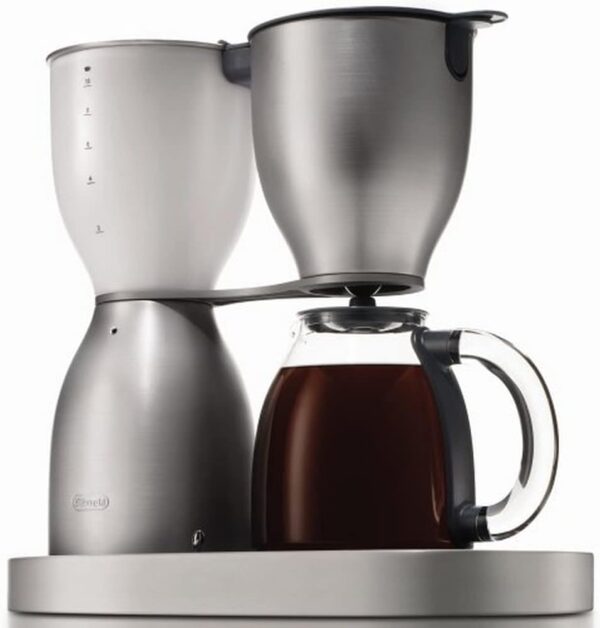
The DCM900 is a 10 cup drip machine in brushed aluminium, built around what the manufacturer calls an exclusive dual heating system: two separate heating elements, each with its own job. It carries a removable filter basket holder, a pause and serve function, an easy access water tank with a level indicator, and a permanent gold tone filter that keeps fine grounds out of the pot.
Two things frame this review before any of the features. First, this listing first appeared in March 2007, which makes it one of the oldest products carried on this site, and its sales rank sits deep in the millions. Second, the published owner feedback contains a repeated and specific complaint about lifespan that would be dishonest to leave out. Both are covered below.
The Dual Heating System
The manufacturer describes two separate heating elements, each with a specific function, without saying what those functions are. The usual reason a drip machine carries two elements is to separate the brewing heater from the carafe warming plate, so that water is brought to brewing temperature by one element while the pot is held at serving temperature by another that never touches the brewing path.
If that is the arrangement, it is a genuine design advantage. Single element machines have to compromise between a temperature high enough to extract properly and one low enough not to cook the coffee sitting underneath, and the compromise usually lands badly for both. Separating the two removes the conflict. The listing does not state the brewing temperature, the warming plate temperature, or the wattage of either element, so this remains a description of a mechanism rather than a measured claim.
Speed, Capacity and the Gold Tone Filter
The stated brew time is a full 10 cups in about six minutes. That is fast for a carafe machine of this size, and speed on a drip brewer is not a gimmick: a slow brew means the last of the water passes through grounds that are already exhausted, which adds bitterness without adding strength.
The permanent gold tone filter removes the ongoing cost of paper and, more importantly, changes the cup. A metal mesh passes oils that paper traps, so the coffee has more body and more texture, at the cost of some sediment. Anyone who prefers a clean, tea like cup should use a paper filter in the basket instead, or look at a paper filtered machine such as the ones covered in our drip machine section. Pause and serve interrupts the cycle when you pull the carafe, with the standard caveat that an early cup is stronger than the finished pot.
Build, Weight and the Removable Basket Holder
The machine weighs 15 pounds, which is heavy for a 10 cup drip brewer and consistent with a metal bodied design rather than a plastic one. Recorded dimensions are 15.59 by 14.13 by 7.4 inches. That weight is worth treating as a positive: a heavy machine sits still when you pull the carafe out one handed, and metal panels do not develop the stress cracks that plastic ones do around the hinge.
The removable filter basket holder is a small detail that matters daily. A basket holder that lifts out can be rinsed at the sink or put in a dishwasher; one that is fixed has to be cleaned in place around the machine’s electronics, which is why so many drip machines develop a stale coffee smell over time. The water tank has a level indicator and is described as easy to access for filling and cleaning.
Ten cups on this machine follows the usual convention, which means a five ounce cup and a carafe holding somewhere around fifty ounces rather than eighty. That fills three or four standard mugs. The listing does not state the carafe volume in ounces anywhere, which is the omission most likely to disappoint a buyer who reads ten cups and pictures ten mugs.
The 230 Volt Entry and Other Data Problems
The stored voltage field reads 2.3E plus 2 volts AC, which is 230 volts written in scientific notation. That is a European mains specification, not a North American one, and it appears on a listing sold in the United States. Either the field has been copied from the international version of this model or it is simply wrong. It matters because a genuinely 230 volt machine will not run correctly on a 120 volt supply, so anyone buying should confirm the voltage of the actual unit being shipped.
Other fields are wrong in less consequential ways. The specific uses field lists drip coffee and espresso; this machine makes no espresso and has no pump. The recommended uses field lists large capacity brewing and single serve brewing; there is no single serve function anywhere on it. The special feature field says manual while the machine is described with a pause and serve mechanism and buttons. The manufacturer name is spelled two different ways across two fields on the same page.
What Owners Report About Lifespan
This is the part that decides the purchase, and the published feedback on the listing is unusually consistent about it. One owner writes that the expected life of the unit is likely to be a year or so, referencing what other reviewers on the same page had said, while praising the looks, temperature and speed. Another describes loving the machine for a few months before problems began. A third reports the machine simply stopping one morning with no warning.
Those are individual accounts and not a failure rate, and none of them were verified here. But three separate owners describing the same failure pattern on one listing, with an average rating well below the category norm, is a signal worth weighing rather than smoothing over. A metal bodied machine that brews fast and looks good is not much use if the electronics give out inside a year, and the age of the listing means spare parts and support are unlikely to be straightforward.
Who It Suits and Who Should Look Elsewhere
The DCM900 suits someone who wants a metal bodied machine that brews quickly, likes the fuller cup a permanent metal filter gives, and is buying primarily on looks and speed with clear eyes about the reliability reports. As an office machine that will be replaced anyway, it makes more sense than as a decade long kitchen purchase. The Smeg DCF02 is the other drip machine here bought largely on its finish.
Look elsewhere if you want a machine to last. Buyers who value fast, hot, well extracted coffee from a durable design should compare the Bonavita BV1900TS or the Technivorm Moccamaster, both built around the same brewing priorities with far better service records. Anyone wanting a simpler and cheaper metal finished machine should look at the Krups Simply Brew. The Bonavita BV1901TS is the thermal carafe version of that same brewing priority.