

Description
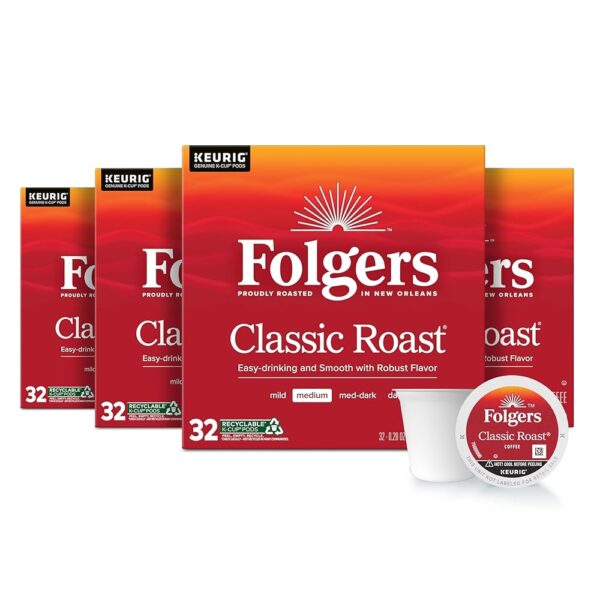
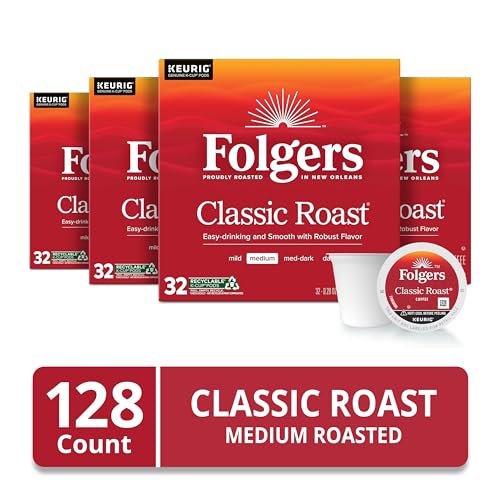
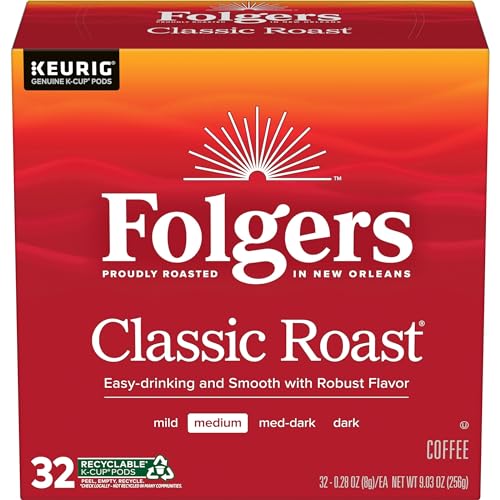
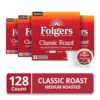
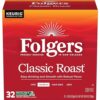
This is Folgers Classic Roast in Keurig K-Cup format, supplied as four separate 32 count packages making 128 pods in total, listed at 61.74 dollars. It is a medium roast and Folgers describes it as genuine K-Cup pods designed for Keurig machines. At 128 pods for 61.74 dollars it costs about 48 cents a cup.
Classic Roast is the most widely sold ground coffee in the United States and has been for decades, which makes this an unusual product to review. Almost nobody buying it is discovering it. The relevant questions are therefore not about flavour, which the buyer already knows, but about whether the pod format is worth what it costs against the same coffee in a tin, and about what this listing does and does not tell you. Both matter more here than tasting notes.
The Bulk Box and What It Saves
A 128 pod case is one of the largest single purchases in this category, and buying at that scale is normally where the savings are. Across the pods covered on this site, cost per pod falls as box size rises, and the difference between a 32 count and a 96 count of the same coffee is routinely 25 to 30 percent.
This case does not deliver that. At 48 cents a pod it sits in the middle of the range rather than the bottom, and several 96 count boxes from other brands come in cheaper per cup. The reason is that this is not one large box; it is four 32 count packages sold together. You get the storage and reordering convenience of buying in bulk without the packaging economy that normally comes with it. Anyone buying at this volume purely for the price should compare the per pod figure against the 96 count boxes in the pod category before committing sixty dollars.
Four Packages, and Why That Is Better Than One
The four package format has a real advantage that the listing never mentions. K-Cups are individually sealed, so the pods themselves do not go stale once the outer carton is opened, but the outer packaging does protect them from light, crushing and the smells of a cupboard.
More usefully, four sealed packages means you open one at a time. A 128 pod case that arrives as a single open tray sits exposed for four months in a normal household; four packages means three of them stay sealed while you work through the first. Foil lidded pods are reasonably robust but they are not indestructible, and a pierced or split lid means a pod that has been oxidising in the cupboard for weeks. For a purchase this size, the packaging arrangement is a genuine functional detail.
What Classic Roast Actually Is
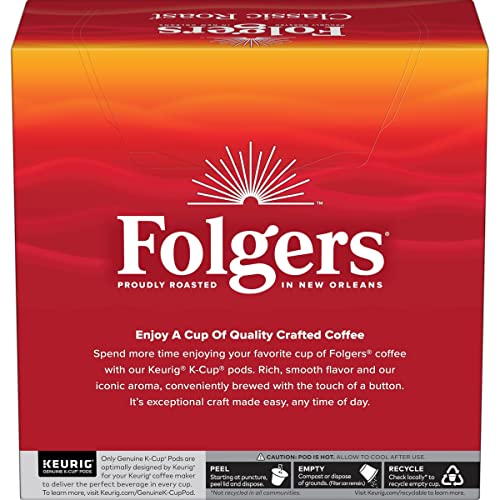
Folgers gives four bullets and one of them is blank. The three that survive say the coffee is a rich, pure medium roast with a smooth flavour and distinctive aroma, brewed at the touch of a button.
What is not stated anywhere is the bean type. Nothing on this page says 100 percent Arabica, and that silence is meaningful in a category where almost every competing brand states it explicitly. Folgers Classic Roast is a blend that has historically included Robusta, which is cheaper, higher in caffeine and heavier and more bitter in the cup, and which is a large part of why Classic Roast tastes the way it does. The McCafe Premium Roast 96 count is the nearest competitor that does state 100 percent Arabica. That is not a criticism of the coffee; it is the flavour profile that has made it the best selling ground coffee in the country for generations. But a buyer comparing it against the 100 percent Arabica pods elsewhere in this category should know that the listing does not make the same claim they do.
The Silence on Sourcing and Recyclability
Most branded pods in this category carry three statements: a sourcing or sustainability claim, a kosher or other certification, and a recyclability statement with a check locally caveat. This listing carries none of the three.
There is no sustainability programme named, no third party certification, no kosher mark and no statement about whether the pod body is made from recyclable material. That last omission is the most consequential, because the pod format’s environmental problem is well known and most manufacturers have moved to polypropylene bodies specifically to be able to say something about it. A listing that says nothing leaves you unable to tell whether the pods are the older non recyclable construction or the newer type.
None of this means the coffee is worse. It means that on the three questions many buyers now ask about pods, this page is silent while its competitors answer.
What Genuine K-Cup Means
Two of the four bullets describe these as genuine K-Cup pods optimally designed for Keurig coffee makers. That phrasing is worth unpacking because it is used across the category and it carries a specific history.
Keurig licenses the K-Cup design to other roasters, and licensed pods are described as genuine. Between 2014 and roughly 2016 Keurig sold machines under the 2.0 designation that read a marking on the pod lid and refused to brew unlicensed ones, which produced considerable customer anger and was eventually abandoned. Machines from that era can still reject some third party pods. A licensed pod avoids the question entirely, which is what genuine is really promising. On any current Keurig machine, and on the third party single serve brewers in the brewer section, unlicensed pods work fine.
What the Specifications Do Not Settle
The specification block is five category labels: brand, item form, flavour, caffeine content and roast level. There is no weight, no dimensions, no country of origin and no date first available. There is no dose per pod in grams, no caffeine figure in milligrams, and no bean origin.
The brand field reads Folgers K Cups rather than Folgers, which is a listing artefact rather than a brand. There is no roast date or best before guidance, which matters more on a 128 pod case than a small box because you will be drinking the last of it four months after the first. And nothing states whether the four packages are individually sealed or simply four cartons inside a shipper, which is the detail that determines whether the storage advantage above is real.
Who It Suits and Who Should Look Elsewhere
This suits a household that already drinks Folgers, brews from pods daily and would rather order once every four months than once a month. The four package format is genuinely better for storage than a single large tray, and the familiarity of the coffee removes the risk that a 128 pod commitment usually carries. The Eight O’Clock The Original pods are the other bulk option in the category.
It suits you poorly if you are buying in bulk to save money, since 48 cents a pod is beaten by several 96 count boxes from other brands. It suits you poorly if you want 100 percent Arabica, sourcing certification or a recyclability statement, none of which this listing provides. And it suits you poorly if you drink one cup a day, because 128 pods is a very long commitment to a single coffee. Anyone who wants to use their own ground coffee in the same machine should look at the refillable pod filters, which reduce the cost per cup by roughly three quarters. The GoodCups reusable filter is one of them.