
Description
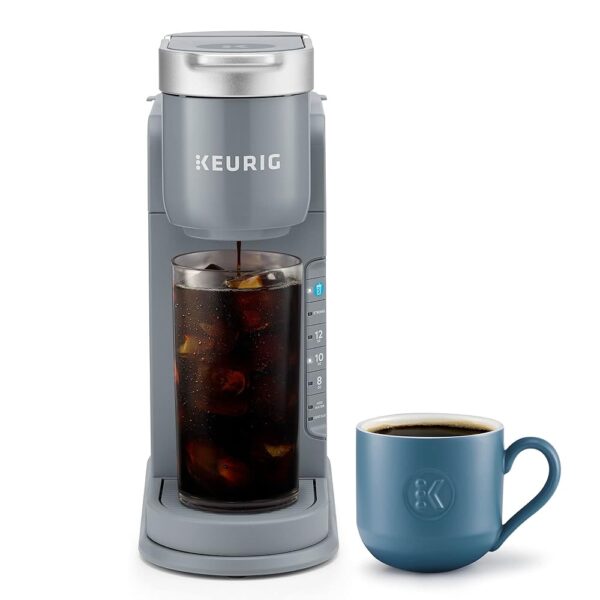
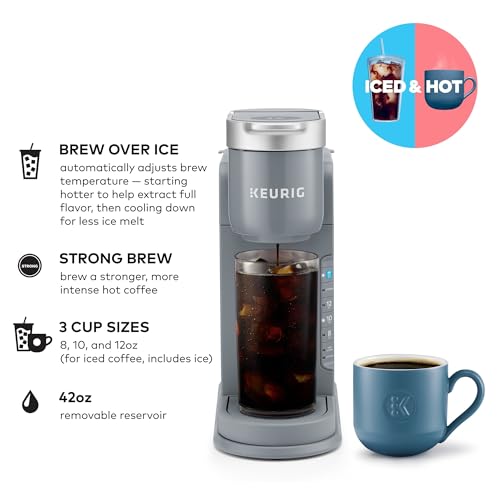
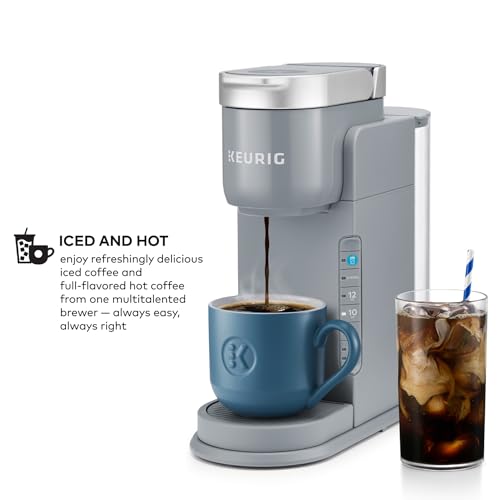
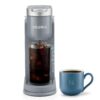
The Keurig K-Iced is a standard K-Cup pod brewer with one addition that justifies its existence: a brew over ice cycle that changes the water temperature during the pour. It brews hot coffee like any other Keurig, and it brews a cup designed to land on ice without turning into brown water. If iced coffee is a daily habit rather than a summer novelty, that is the whole argument for this model over a cheaper one.
Placed against the other brewing formats this site covers, it is a convenience machine first. It will not out extract a pour over cone and it does not touch what a French press does for body. What it does is remove every step from an iced coffee routine except loading a pod and filling a glass with ice, and for a lot of people that is the trade they actually want.
How Brew Over Ice Actually Works
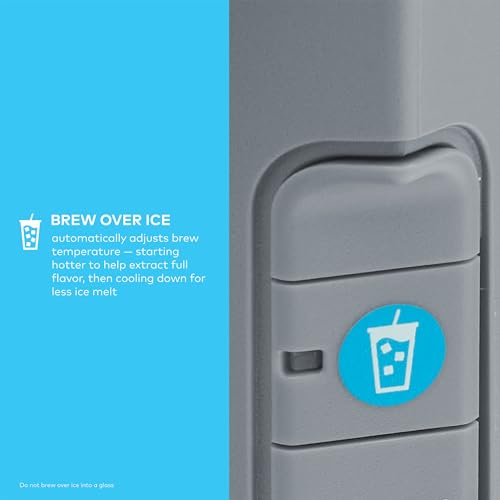
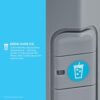
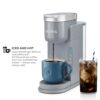
Keurig describes the cycle as starting hotter to extract full flavour, then cooling down so there is less ice melt. That is a two stage temperature profile rather than simply brewing cold, and it addresses the real problem with pouring hot coffee over ice: the first half of the pour melts the ice, and the diluted result is watery by the time you drink it.
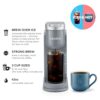
The cup sizes for iced brewing are 8, 10 and 12 ounces, and Keurig is explicit that those volumes include the ice. That is an important detail. A 12 ounce iced brew is not 12 ounces of coffee over ice, it is a total serve of 12 ounces once the ice is counted, so the actual coffee volume is meaningfully smaller and correspondingly more concentrated. That concentration is deliberate and it is what stops the drink tasting thin.
Brewing System and Cup Sizes
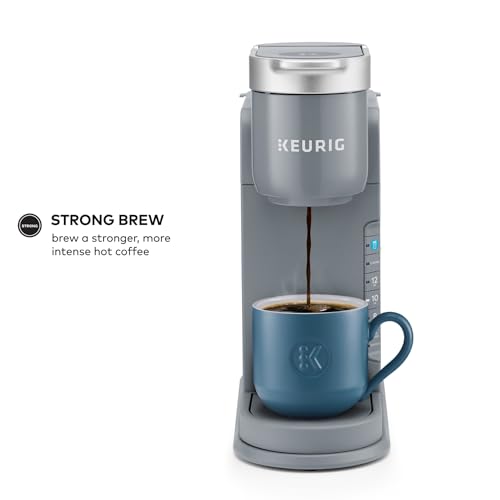
For hot coffee the same three sizes apply: 8, 10 and 12 ounces. There is a strong brew button that slows the water through the pod for a more concentrated cup, which is the only extraction control on board. At 12 ounces through a standard K-Cup you will want it engaged, because the fixed dose in a pod is not generous for that volume.
Any K-Cup pod fits, including the ones marketed specifically for iced brewing, which are simply roasted and dosed for the job. The machine is also compatible with the My K-Cup universal reusable filter, sold separately, if you would rather load your own grounds. That is worth knowing because iced coffee benefits from a darker roast and a heavier dose, and the reusable basket gives you control over both.
Water Tank and Daily Handling
The removable reservoir holds 42 ounces, which Keurig rates at up to four cups between refills. That sits comfortably between the single cup tanks on the smallest models and the 60 ounce reservoir on the Keurig K-Cafe. For one or two people it means filling the tank every day or two rather than every brew.
The drip tray is removable and accommodates tumblers and travel mugs up to 7 inches tall, which is more relevant here than on a hot only machine because iced coffee is usually drunk from a tall glass or a tumbler. The tray also holds a full accidental brew, which saves the cleanup when you forget the glass. The auto off timer runs five minutes after the last brew rather than the two hours used on several other Keurig models.
Build, Footprint and Spec Sheet Conflicts
The recorded dimensions are 12.9 inches deep, 5.1 inches wide and 12.6 inches high, with an item weight of 4.4 pounds. The 5.1 inch width makes this one of the narrower machines with a multi cup reservoir, since the tank sits behind the body rather than beside it.
Several other fields in the imported data do not hold up. The specific uses field reads Espresso, Iced Coffee. This machine makes no espresso; there is no pump and no pressure, and the shot style output some Keurig models offer is simply a short pod brew. The manufacture year is recorded as 2019 while the first availability date is March 24, 2023, and those two cannot both describe this product. The special feature field lists Water Filter while the included components field reads No, so there is no clarity on whether a charcoal filter ships in the box. Finally, the Coffee Maker Type is given as Drip Coffee Machine, which is closer to the truth than the Espresso Machine label the importer applied to several sibling models, but still an odd fit for a pod brewer.
Pods, Filters and Running Costs
Pods are the running cost, and iced drinking tends to increase consumption because a 12 ounce iced serve still uses one pod. Across a summer that adds up faster than the equivalent hot habit. The K-Cup pods and capsules we cover vary widely in price per cup, and dark roasts generally hold up better against ice and milk than lighter ones.
If iced coffee is the main use, cold brew is the obvious alternative to compare against. It is slower, it needs planning the night before, and it is far cheaper per glass because it uses ordinary ground coffee. The cold brew makers we cover are the other route to the same drink, and the choice comes down to whether you value convenience or cost per glass.
Cleaning and Descaling
The reservoir lifts out for rinsing, the drip tray removes, and the pod holder pulls out for cleaning. The exit needle in the brew head is the component that clogs with fine grounds, and a stalled or spitting pour usually starts there.
Descaling is the recurring maintenance task and it matters on this machine because the brew over ice cycle relies on the heater changing temperature accurately during a pour. Scale insulates the heating element and blunts exactly that behaviour. Keurig recommends descaling every three to six months across the range, and the Keurig three month brewer maintenance kit packages the solution and rinse pods to that schedule.
What the Specifications Do Not Settle
Keurig does not publish the actual brew temperatures used at either end of the brew over ice cycle, so there is no way to judge from the specification how much cooler the second stage runs. There is no wattage figure. There is no statement of how much of a 12 ounce iced serve is coffee and how much is displaced by ice. The water filter question raised above is unresolved in the data. And nothing says whether the strong brew setting is available on the iced cycle or only on hot.
Who It Suits
This is worth the premium over a plain pod brewer only if you drink iced coffee regularly. For that person the temperature cycle is a genuine improvement over pouring a hot brew onto ice, the 42 ounce tank is enough for a couple of days, and the tall tray clearance suits the glassware iced coffee is actually served in.
If you drink hot coffee almost exclusively, the extra cost buys nothing. A simpler machine from the single serve brewer range does the same job for less. And if iced coffee is your main drink and cost matters more than speed, cold brew will beat this on both flavour depth and price per glass.