Description
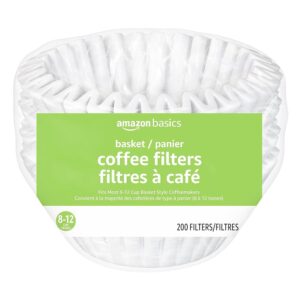
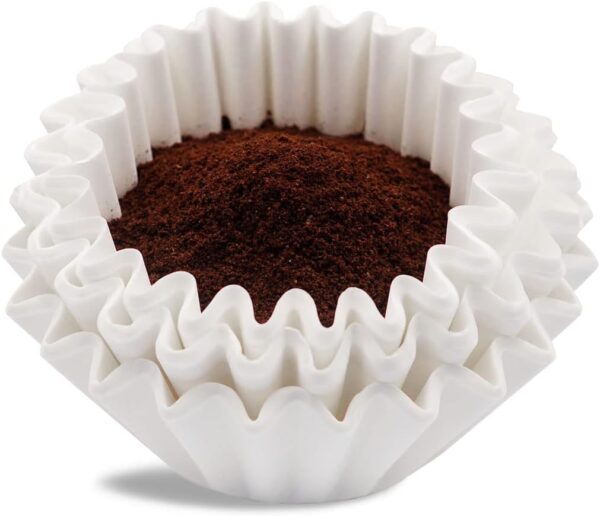
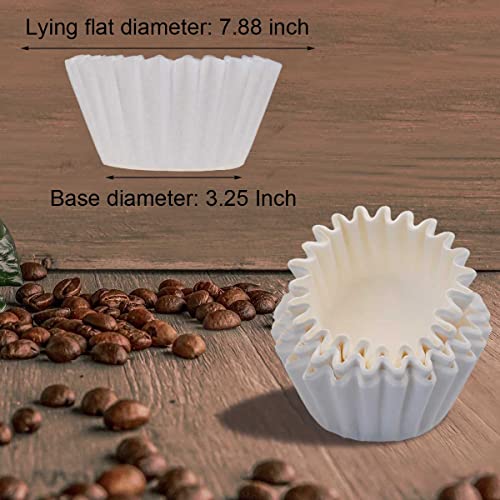
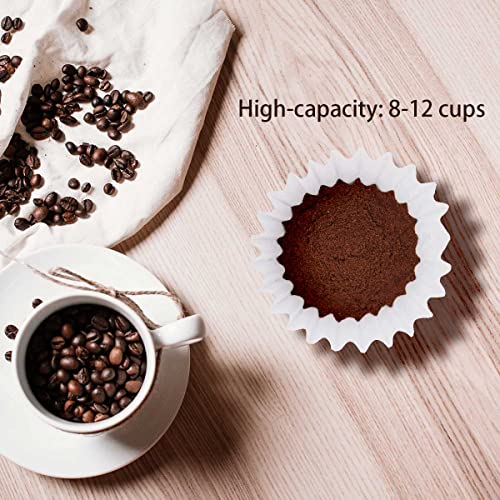
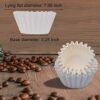
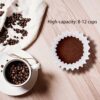
These are disposable paper basket filters sold 100 to a pack, sized for 8 to 12 cup electric drip coffee makers. The measurements given are 7.875 inches across when laid flat and 3.25 inches across at the base, which is the standard basket filter dimension that fits the great majority of full size American drip machines.
Filters are the least interesting purchase in coffee and one of the few that genuinely changes what ends up in the cup. Paper removes things that metal does not, and the difference is not subtle once you know what to taste for. This particular pack is unremarkable in most respects and specific in a couple that are worth setting out.
Fit and Sizing
The two numbers that matter are the flat diameter and the base diameter, and Revelook gives both. At 7.875 inches flat and 3.25 inches at the base, this is the common 8 to 12 cup basket size, which fits the flat bottomed basket holders used on most full size drip machines including the Cuisinart DCC-3200 and the Hamilton Beach 49980.
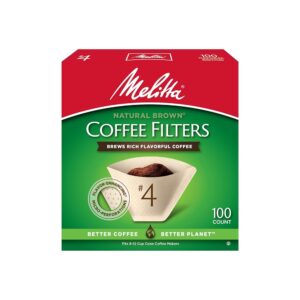
What they do not fit is a cone filter holder, which needs a wedge shaped filter rather than a flat bottomed basket. That is not a criticism, it is a different product, but it is the single most common ordering mistake with filters. Check the shape of your brew basket before ordering rather than the cup count on the machine. Some machines in the 8 to 12 cup range use cones, and some smaller machines use baskets.
What Paper Removes
The listing makes a claim that is more interesting than it appears: compared with a reusable basket, disposable paper filters out more oil, scum and foam, and no grounds fall through, so the coffee tastes purer.
That is accurate and it is a genuine trade rather than a straight improvement. Paper traps the oils that carry body and mouthfeel, so paper filtered coffee is cleaner and lighter than the same beans through a metal mesh. It also traps the fine particles that make a cup taste muddy at the bottom. Whether you want that depends on the coffee and your taste. Anyone who prefers a heavier cup with more texture is describing what a metal filter or a French press produces, and paper is working against them. Anyone who finds drip coffee heavy or silty is describing the problem paper solves.
Paper Specification and Bleaching
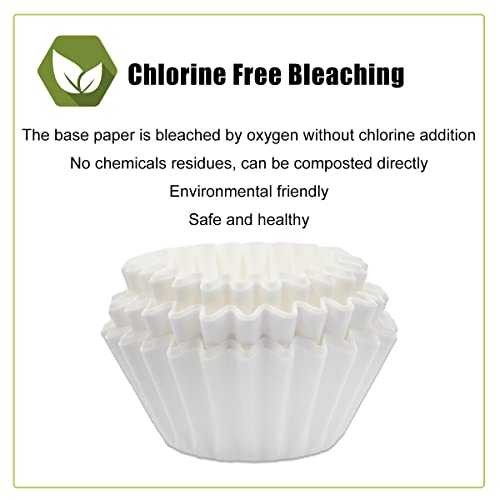
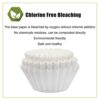
Revelook states oxygen bleaching, chlorine free, no chemical residue, no glue, and describes the filters as biodegradable and compostable. Those are the specifications worth having on a filter and most of them are checkable in use.
The chlorine free point is the substantive one. Older filter papers were bleached with chlorine, which is why unbleached brown filters became popular as an alternative. Oxygen bleaching produces a white filter without chlorine chemistry, so you get the appearance of a bleached filter without the reason people avoided them. The no glue claim matters too, since some cheap filters use adhesive on the seam that can contribute a taste. What is not given anywhere is a paper weight or thickness figure in grams per square metre, which is the specification that actually determines flow rate.
The Thickness Claim
The listing states an ideal thickness with no weak brew and no over extraction. That is a claim without a number attached, and it is worth being clear that filter thickness is a real variable rather than marketing invention.
A thicker paper slows the water down, which increases contact time and pushes extraction up. A thinner paper drains faster and can leave the brew under extracted, particularly on a machine with an aggressive shower head. The problem is that no figure is published here, so there is no way to compare this filter against another on that basis. In practice the way you find out is by brewing: if the basket overflows or the brew runs long against your usual timing, the paper is thicker or thinner than what you were using before, and the fix is a small adjustment to grind rather than a change of filter.
Disposal and the Compostable Claim
Paper filters plus wet grounds are one of the better composting inputs in a kitchen, and the listing states that the filter is biodegradable and compostable with no glue in it. Unlike the certified compostable pod claims elsewhere in the coffee world, which usually require an industrial facility, an ordinary paper filter with coffee grounds in it will break down in a garden heap.
The practical convenience claim in the listing is the more mundane one: the filter lifts out with the grounds in it, so cleanup is one movement rather than a rinse. That is the main day to day argument for disposable over reusable, and it is why paper persists despite the ongoing cost. If the ongoing cost is what bothers you, the reusable filter option we cover removes it entirely, at the price of a rinse after every brew and a different cup.
What the Listing Does Not Settle
No paper weight or thickness figure is given, so the thickness claim cannot be verified or compared. No compostability certification is named, only the words biodegradable and compostable. The recorded package dimensions of 4.61 by 4.41 by 3.23 inches describe the box the filters ship in rather than the filters themselves, and the 3.17 ounce item weight is the whole pack rather than a single filter.
Nothing states whether the filters are single or double crimped at the seam, which affects how well they hold their shape when wet. And no maximum coffee dose is suggested, which matters because overfilling a basket filter is the usual cause of grounds escaping into the carafe.
Who It Suits
This is the right buy for anyone running a standard full size drip machine with a flat bottomed basket who wants a clean, light cup and a one movement cleanup. A hundred filters is roughly three months at one brew a day, the chlorine free bleaching removes the usual objection to white filters, and the paper composts with the grounds still in it.
It is the wrong buy if your machine takes a cone filter, which is a different shape entirely, or if you want body and texture in the cup, in which case a metal mesh or a press pot serves you better. And if the recurring cost is the issue, a permanent filter pays for itself quickly on a machine used every day. The drip coffee makers we cover vary in which basket shape they use, so check yours before ordering either way.