Description
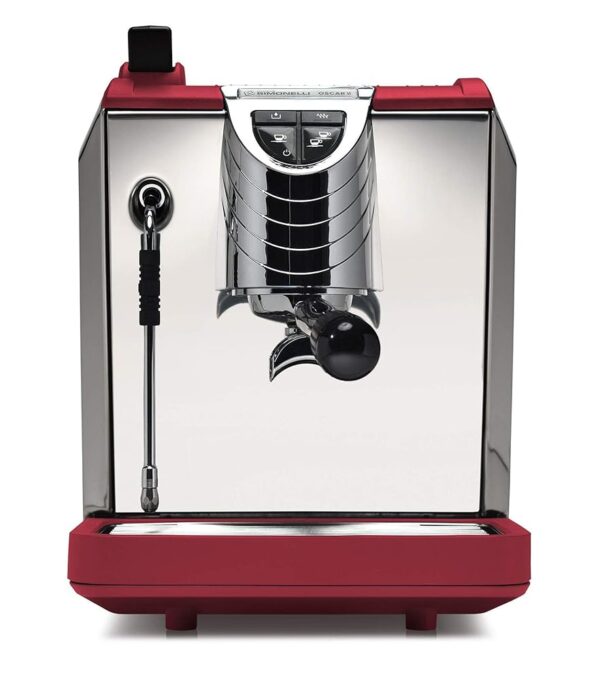
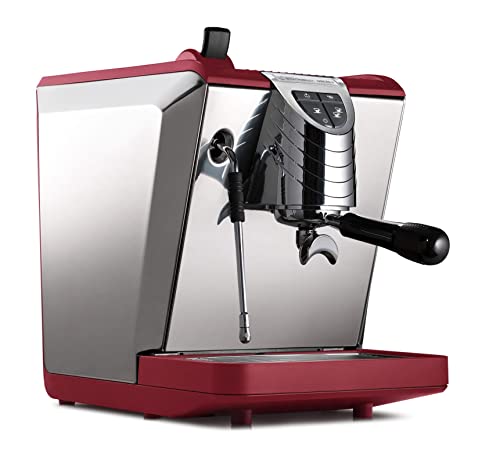
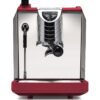
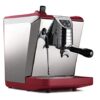
The Nuova Simonelli Oscar II is a commercial grade espresso machine in a domestic footprint, listed here in red with a stainless steel exterior, a two litre water reservoir, a cup warmer and a weight of 52 pounds. The listing recommends it for home, office and small coffee locations, and dates it to June 2018.
One phrase in the product title needs explaining before anything else, because it means the opposite of what most readers will assume. Pour over on this machine does not refer to pour over brewing with a cone and a paper filter, which is the method covered in our pour over coffee makers section. In commercial espresso terminology, pour over means the machine is filled from a tank you pour water into, as opposed to being plumbed into a mains supply.
Tank Fed Versus Plumbed
Commercial espresso machines are normally plumbed: connected to a water line through filtration, with a drain to waste. That removes refilling entirely and is what makes continuous service possible. It also means installation work, a water supply within reach and a drain connection.
A pour over version of the same machine keeps the commercial internals and swaps the plumbing for a reservoir you fill by hand. That is what makes the Oscar II viable in a kitchen: no plumber, no drain, no permanent installation. The cost is that someone has to fill it, and the two litre reservoir sets how often. Two litres covers a run of drinks comfortably but it is a fraction of what a plumbed machine draws in service, which is why the listing scopes the recommendation to home, office and small coffee locations rather than to a cafe.
Build and What 52 Pounds Buys
Fifty two pounds in a machine this size means a metal chassis, a real boiler and commercial internals rather than a domestic thermoblock in a stainless facing. Mass on an espresso machine is thermal stability: a heavy machine holds temperature through a shot and through a steaming session in a way a light one cannot, and it does not move when a portafilter is locked into the group.
The Oscar II is built around a heat exchanger design, which is what the listing highlight about quick transition between brewing and steaming describes. A heat exchanger passes fresh brew water through a tube inside the steam boiler, so the machine holds steam temperature continuously while still delivering water at brewing temperature to the group. The practical consequence is that brewing and steaming do not compete: there is no wait, no purge cycle between them and no compromise. The offsetting characteristic of every heat exchanger is that water sitting in the exchanger overheats while the machine idles, so a short cooling flush before the first shot is part of the routine.
Heat Up and Daily Use
A machine with a real boiler and this much mass does not come up to temperature quickly. That is the honest cost of the stability, and no engineering changes it: a thermoblock machine is ready in thirty seconds, a boiler machine is not. Owners of machines in this class generally leave them on during the day or put them on a timer plug rather than switching on each morning.
Published owner feedback also notes that dialling in the grind and tamp takes patience on this machine, which is what you would expect from commercial hardware with no pressurised basket to smooth over mistakes. There is no grinder, so a capable burr grinder is a prerequisite rather than an upgrade, and it should be budgeted alongside the machine rather than after it. That is the same requirement a machine such as the MiiCoffee Apex imposes, and for the same reason.
Milk and the Steam Wand
The listing highlight describes effortless steaming including with almond and oat milks. Alternative milks are harder to texture than dairy because they have less protein to stabilise the foam, and the thing that makes them workable is abundant, dry steam that lets you finish quickly before the milk breaks. A commercial boiler supplies exactly that, which is why machines of this class handle alternative milks better than domestic ones.
The wand is manual and the results depend on the person using it. What the machine removes is the equipment limitation: on a small domestic machine you are fighting weak steam and a short recovery window, and here you are not. The listing does not describe the wand tip, the hole count or whether the wand is insulated, which on a machine that idles hot is a burn risk worth knowing about.
Errors in the Listing Data
The product dimensions read 20.5 by 16 by 22 inches. Those are shipping carton measurements rather than the machine, which is considerably narrower; a 20.5 inch width would make the Oscar II wider than many two group commercial units, which it is not. Planning counter space from these figures would reserve roughly twice the space required, and no usable product dimensions appear anywhere on the page.
The operation mode field reads Manual. In espresso terminology manual means a lever machine where you generate the pressure with your arm; this is a pump machine with push button controls, which is semi-automatic. The style field reads Retro, which describes the appearance rather than any characteristic. The item model number reads Oscar while the model name reads Oscar II, and those are different generations of the same machine, so confirm which is shipping. The included components field reads only Filter, so whether a portafilter, baskets, a tamper or a milk pitcher are supplied is unstated.
What the Specifications Do Not Settle
The listing does not state the machine dimensions, the boiler capacity, the boiler architecture, the wattage, the electrical supply requirement, the portafilter diameter, the basket sizes, the heat up time, the pump type, whether a pressure gauge is fitted, the cup clearance, or the warranty term.
The portafilter diameter is the omission that matters most on a machine bought for its commercial credentials, because 58mm compatibility is the reason to buy commercial hardware in the first place. The electrical requirement is the second: a machine with a boiler this size draws more than a small appliance, and confirming it runs on a standard domestic circuit is worth doing before delivery. Backflushing with detergent is the routine maintenance job on a machine of this type, and the products for it are covered in our coffee and espresso machine cleaning products selection.
Who It Suits
This suits someone who wants commercial build quality and unlimited steam at home without plumbing, and who has a grinder and the patience to dial shots in. The heat exchanger removes the brew and steam compromise entirely, the mass gives temperature stability, and the tank fed design means it plugs in and works. For a small office or a very small coffee operation it is a sensible middle point between domestic and installed equipment. The Rancilio Silvia M V6 is the single boiler machine most often weighed against it.
It suits you poorly if you want coffee quickly from cold, given the warm up a boiler machine needs. It suits you poorly without a grinder, since commercial hardware has no pressurised basket to forgive a bad grind. And it suits you poorly on a light or shallow counter, given 52 pounds and dimensions the listing does not accurately state. Anyone who wants a hot drink on demand with none of that should look at a bean to cup from our super automatic espresso machine section instead. The Diletta Bello is the other tank fed machine with a steel boiler in this bracket.