Description
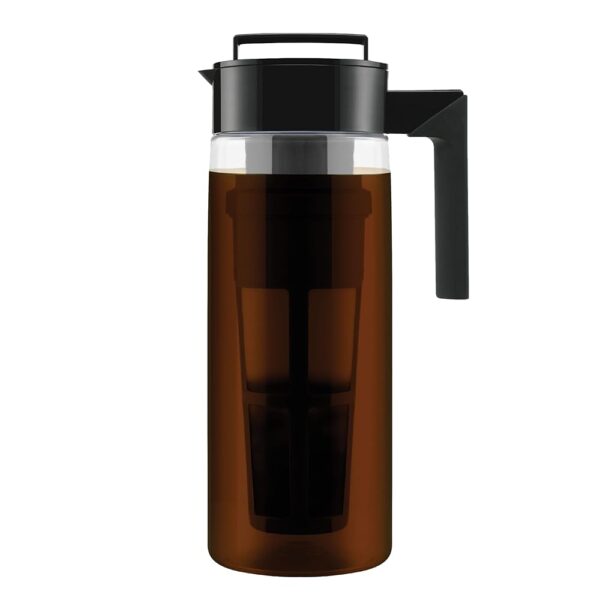
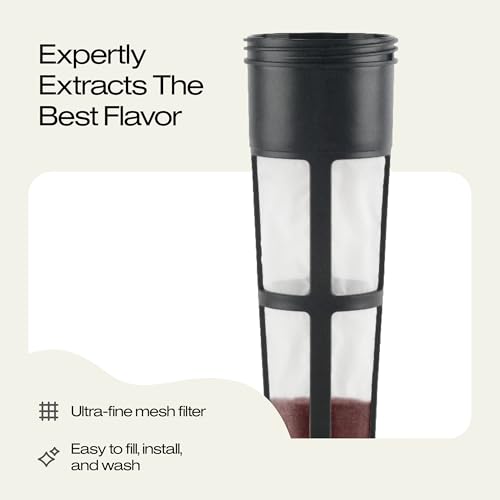
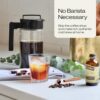
The Takeya 10311 is a two quart cold brew pitcher: a Tritan plastic jug, an airtight lid and a fine mesh filter basket that hangs from the neck. Nothing about it is powered or heated. Coarse grounds go into the mesh, water goes into the pitcher, and time does the extraction while the assembly sits in a refrigerator. The specification block classifies it as a coffee infuser rather than a coffee maker, which for once is the more accurate description.
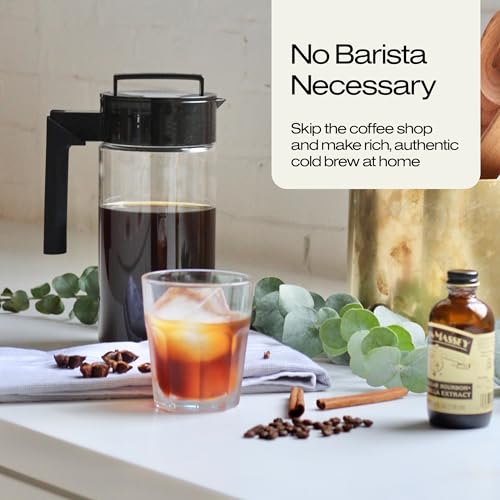
Immersion brewing at refrigerator temperature produces a concentrate with markedly lower acidity than hot brewing, because the compounds responsible for the sharper notes are less soluble in cold water. That is the entire appeal of the format, and it is shared across every device in the cold brew coffee makers section. What separates one from another is capacity, filter fineness, and how well the vessel stores in a fridge, which is where this model makes its case.
Grind, Dose and Steep Time
Cold brew wants a coarse grind, coarser than drip and closer to what a French press takes. Fine grounds pass through mesh, cloud the result and over extract into bitterness over a long steep, so grinder quality matters more here than the pitcher does. The manufacturer positions the filter as fine enough to hold grounds back, but no mesh rating is published, and a fine grind will defeat any mesh basket.
Steep time is the variable a buyer controls. Twelve to eighteen hours in the fridge gives a drinkable brew at a normal ratio, and longer steeps push strength further without the bitterness a hot brew would develop. The filter basket lifts out when the steep ends, which is the important part: a device that cannot separate grounds from liquid keeps extracting until the pitcher is empty. Immersion at room temperature works on the same principle as the French presses covered on this site, with the plunger screen replaced by a basket that comes out whole.
The Filter and What It Holds
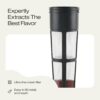
The filter type is listed as reusable, and there are no paper consumables anywhere in the design. Mesh lets coffee oils through, which is why cold brew from a steel or nylon basket has more body than the same coffee through paper, and it is also why a fine sediment settles at the bottom of the pitcher over a few days. Owners who want a cleaner cup filter the finished concentrate a second time through paper.
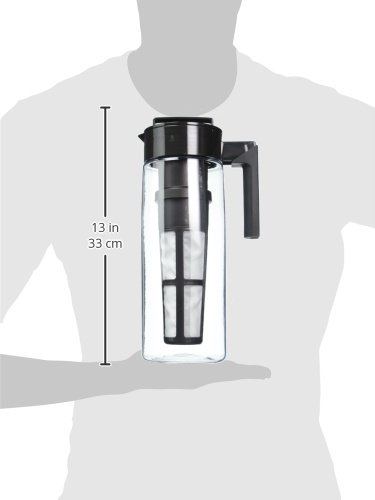
The basket is long and narrow so that it sits in the water column rather than floating on top of it, which keeps the whole dose wetted. That geometry also means the basket is easier to overfill than it looks; packing grounds tightly stops water circulating through the middle of the bed and produces a weak brew from a full basket. The alternative approach, used by the Hario Mizudashi, is a wider filter in a glass body, which trades the airtight seal for a material that will not scratch or hold odors.
Pitcher, Lid and Fridge Storage
The body is Tritan, listed in the style field, which is the copolyester used where a maker wants glass clarity without the breakage risk. It is BPA free, it survives a drop that would end a glass carafe, and it is lighter, which matters on a two quart vessel. The trade is that plastic scratches, and scratched plastic holds coffee oils and eventually smells of them.
The airtight lid is the feature the patent claim rests on and the reason the pitcher can be laid on its side in a fridge, which is the difference between fitting on a shelf and not fitting at all. That seal depends on the lid being fully seated; published owner feedback commonly reports leaks traced to a lid tightened by feel rather than to the stop. Anyone chilling a finished hot brew rather than steeping a cold one is solving a different problem, and the HyperChiller HC2 addresses that case instead.
What the Dimension Field Actually Describes
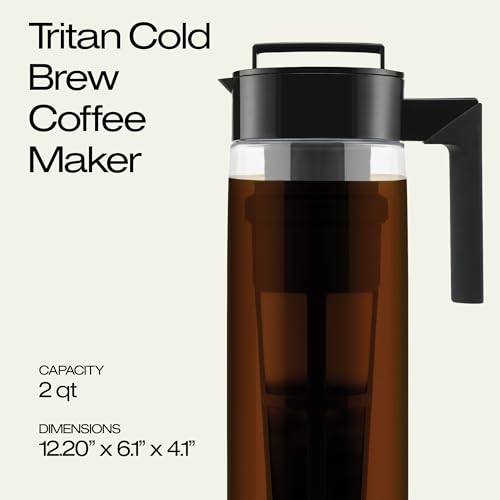
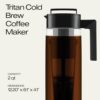
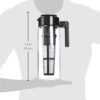
The specification block gives the product dimensions as 0.6 inches deep by 4.1 inches wide by 12.2 inches high. A vessel holding two quarts of water cannot be six tenths of an inch deep. The height and width are plausible for a tall, slim pitcher; the depth figure is a packaging or data entry artifact and should be ignored entirely when planning fridge space. The real depth is close to the listed width, since the body is round.
The item weight of 9.6 ounces is the empty pitcher. Filled to capacity it carries roughly four pounds of liquid, which is worth knowing because the handle and the silicone grip are the parts taking that load every time the jug is lifted from a cold shelf. The exterior finish field reads Not Obtainable, which is the importer admitting it has no value to give rather than describing anything about the product.
Cleaning and Material Life
The manufacturer specifies dishwasher safe components, which is unusual for a mesh basket and is the strongest practical argument for the design. Grounds rinse out of the basket under a tap, though the mesh needs a soft brush rather than anything abrasive, since a torn mesh cannot be repaired and turns the whole pitcher into a device that makes muddy coffee.
Coffee oils build up on plastic faster than on glass. A periodic wash with a dedicated cleaner rather than dish soap alone keeps the pitcher from developing a stale background note, and the same applies to the lid seal, which is the part most often forgotten. A pitcher that is cleaned in place and never fully disassembled will eventually taste of every brew that preceded the current one.
What the Specifications Do Not Settle
The two quart capacity appears only in the product title. No capacity field exists in the block at all, and no ratio guidance, mesh size or recommended steep time is published anywhere on the page. A buyer cannot tell how much coffee the basket is designed to hold, which is the single most useful number for a cold brew device.
Nothing states whether replacement filter baskets or lid seals can be bought, which matters on a product whose two wear parts are exactly those. There is no maximum temperature for the Tritan body, so its suitability for hot bloom techniques is unresolved, and no statement covers whether the pitcher is safe for prolonged storage of an acidic concentrate. Country of origin is given as the USA, which is a genuine and unusually clear entry in a block that gets the physical dimensions wrong.
Who It Suits and Who Should Look Elsewhere
This pitcher suits a household drinking cold brew regularly enough to keep two quarts moving, particularly one with a crowded fridge where laying a sealed jug on its side is the only way to store it. It suits anyone who has broken a glass carafe, anyone who wants the filter out of the dishwasher rather than scrubbed by hand, and anyone brewing at strength for dilution later. Buyers wanting a smaller batch might prefer the Primula Burke maker or a mason jar style brewer.
It is the wrong buy for anyone who wants hot coffee, since cold brew concentrate reheated is a different drink from a fresh hot brew, and for anyone who objects to plastic touching coffee for a full day. Those buyers should be looking at a glass immersion brewer, or at a hot brewing method entirely, and accepting the higher acidity that comes with it.