Description
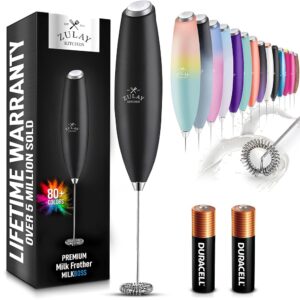
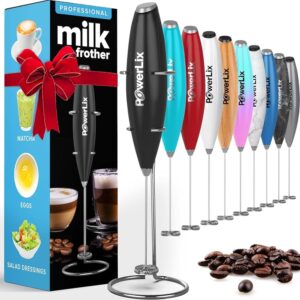
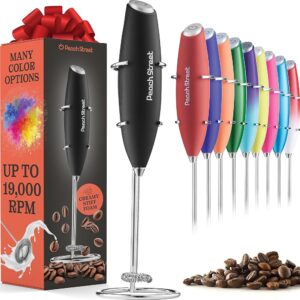
The Dutewo D-02 is a battery powered handheld milk frother: a slim body with a small coiled whisk on the end that spins fast enough to beat air into milk. It is the cheapest way to put foam on a coffee, and it belongs to the accessory tier rather than to any brewing format. The listing records a grey plastic body, two batteries, a weight of 120 grams, hand washing only, and a first availability date of May 2023.
This category is crowded with near identical wands, so the differences worth examining are power supply, whisk construction and what the listing is prepared to commit to in writing. On those three points this record is more revealing for what it omits than for what it states, and it contains one outright internal contradiction about which model is actually in the box.
Power Supply and Running Cost
The power source field reads Battery Powered and the number of batteries reads 2, which in this class means a pair of disposable AA cells that the buyer supplies. That has one advantage and one disadvantage. The advantage is that a flat wand is working again in thirty seconds anywhere batteries are sold, with no charging cable and no sealed cell to age out. The disadvantage is a running cost that never ends, and a gradual loss of speed as the cells drain, which shows up as foam that takes longer to build. Rechargeable wands remove that drift at the cost of a battery that cannot be replaced when it dies.
Cell placement also affects handling. Two AA cells sit in the handle, which puts the mass at the top of the tool rather than at the whisk, and that balance is what makes a light wand feel controllable in a narrow jug. It also sets the diameter of the body, since the handle has to be wide enough to hold two cells, which is why battery wands are chunkier than sealed rechargeable designs. Alkaline cells are widely available, and that availability is the strongest practical argument for this power source in a caravan, a rental or a holiday cottage.
Whisk, Materials and Cleaning
The material field says Plastic, which describes the handle rather than the working end, since the marketing title calls it an electric whisk and the whisk on every wand of this design is steel wire. Hand washing is specified, and the correct method is to spin the whisk in a cup of hot water rather than to submerge the body, because the switch and the battery compartment are the parts that fail when water gets in. The wetted end is the only part that should ever be under a tap. A comparable wand at this level is the FrothBlast handheld milk frother, which shares the same construction and the same care requirement.
Whisk geometry is the part that decides how well any wand works, and it is the part no listing describes. A tight coil of small diameter builds foam slowly but is easy to keep submerged; a wider loop moves more milk and splashes sooner. The wire also bends. A whisk that has been dropped or forced against the base of a mug will wobble in use, and on a sealed wand a bent whisk usually means a replacement wand rather than a replacement head. Nothing in this record confirms whether the head detaches at all, which is the difference between a repair and a rebuy. At this end of the market the answer is usually a rebuy, and that is worth factoring in before buying two.
Vessel Choice and Splashing
The most common complaint about every wand in this class is milk thrown across the counter, and it is a technique and vessel problem rather than a fault. A tall, narrow container keeps the whisk fully submerged and traps the splash; a wide mug lets the head break the surface at speed. Starting and stopping the motor with the whisk below the surface solves most of it. The same discipline applies to the YUSWKO MFSILVER1 frothing wand and to every other single speed device of this shape.
Milk choice is the other half of the result. Whole milk aerates readily, skimmed milk produces a drier and stiffer foam, and plant milks vary so widely that a barista formulation is often the difference between foam and bubbles. Starting with cold milk gives a longer window before the structure collapses, since foam becomes unstable as the liquid warms. None of that is under the control of the device, which does one thing at one speed, so a user chasing better results is really adjusting the milk, the vessel and the timing rather than the wand. None of those adjustments cost anything, which is the one advantage of a device with no settings.
What the Listing Gets Wrong
The record disagrees with itself about the model. The model name field reads D-01 while the item model number field reads D-02, and nothing explains which one shipped. The product dimensions read 3.94 by 3.94 by 2.36 inches, which is a carton and not a wand; no handheld frother is under two and a half inches long. The colour field says Gray while the marketing title ends with the word Sliver, a misspelling of silver, so the finish is described twice and differently. The special feature field reads cordless in lower case, which describes a battery device accurately but adds nothing, and the recommended use field reads Residential, which tells a buyer nothing at all.
What the Specifications Do Not Settle
No motor speed is published, which on a frother is the number that separates a wand that builds foam in ten seconds from one that takes a minute. Battery chemistry and expected cell life are absent, as is any statement about whether the whisk head detaches or can be replaced when it bends. There is no water ingress rating on a device that is rinsed after every use, no noise figure, and no warranty term. The included components field simply reads Mixers, which does not confirm how many heads arrive. Buyers who want a listing that states more of these figures should compare the New England Stories MF-BLACK-H1 frother and the SIMPLETaste 706-0001 milk frother.
Who It Suits and Who Should Buy Something Else
This suits an occasional user: someone who wants foam on a coffee a few times a week, keeps the wand in a drawer, and does not want to manage another charging cable. It suits a desk, a caravan or a holiday let, and it suits mixing powdered drinks as much as milk. It does not suit anyone making milk drinks every day, because disposable cells become the dominant cost and the speed sags as they drain. It does not suit anyone who wants dense, pourable microfoam, which needs steam rather than a whisk; those buyers should be looking at the espresso machines with steam arms covered on this site instead of at any handheld device.