

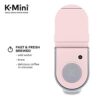
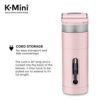
Description
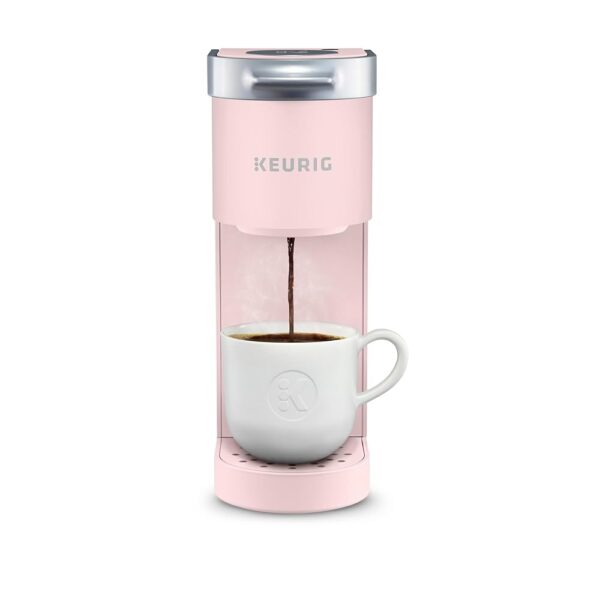
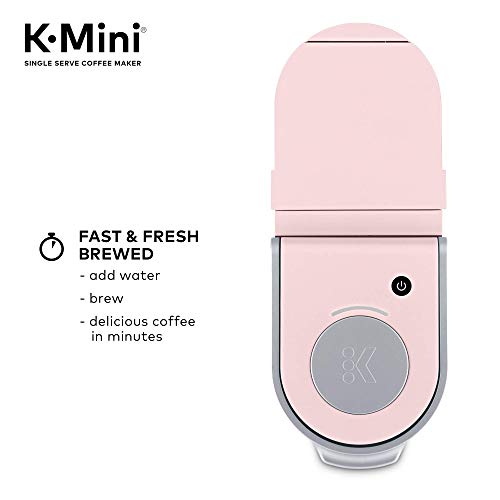
The Keurig K-Mini is the smallest brewer in the Keurig line, a single serve K-Cup machine stripped back to one button, one pod and one cup at a time. It has no standing water tank, no display, no strength control and no carafe. Water goes in for the cup that is about to be brewed, the pod goes into the holder, and the machine heats and pumps that water through in one pass before shutting itself down.
That makes it the narrowest interpretation of the single serve format this site covers, and the trade is deliberate. A drip machine brews eight or twelve cups at once and keeps them warm; a pod brewer of this kind brews one cup on demand and leaves nothing standing. Buyers weighing the two formats will find the comparison spread across the single serve brewers covered on this site, where the K-Mini sits at the compact and least featured end of the range.
Brewing System and Cup Sizes
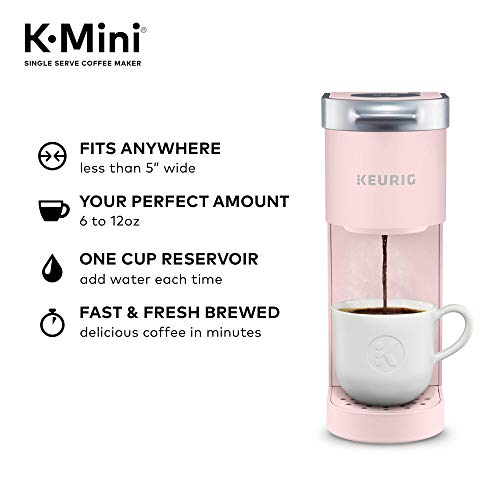
The manufacturer specifies a brew size range of six to twelve ounces, set by how much water is poured into the reservoir rather than by a button. There is no size selector, so the volume in the cup is the volume that went into the machine, less what the pod and the internal path hold back. That mechanism is simpler than the multi button size selection on larger Keurig models and it removes a common source of confusion, at the cost of any ability to repeat a cup exactly without measuring.
Strength across that range is set by the pod alone, since the same quantity of ground coffee has to serve a six ounce cup and a twelve ounce one. A twelve ounce brew from a standard K-Cup is a noticeably thinner drink than a six ounce brew from the same pod, and that is a property of the ratio rather than a fault in the machine. Owners who want a stronger large cup generally brew short and top up, or move to a model with a dedicated strong setting such as the Keurig K-Express.
The Single Cup Reservoir
The absence of a standing tank is the defining feature of the model and the one that divides opinion most. Nothing sits in the machine between uses, so there is no reservoir to develop a stale taste and nothing to empty before a trip. The cost is that every cup begins with a refill, and because there is no water level window, the volume has to be judged by filling the mug that is about to be used and pouring that in.
Larger machines in the same family hold enough for several brews and let a household work through a morning without returning to the tap. That includes the K-Mini Plus, which keeps the same slim body but adds a removable tank and a pod store, and the older Keurig K15. Anyone brewing for more than one person in the morning should treat the refill step as the deciding factor rather than a detail.
Footprint and What the Dimension Field Says
The specification block lists the product dimensions as 4.5 inches deep by 11.3 inches wide by 12.1 inches high. Those first two figures are transposed. Keurig markets this machine on being under five inches across, and the photography shows a tall, narrow body rather than a wide one; the 11.3 inch measurement is the depth from front to back, where the drip tray and the pod handle need room. A buyer planning a shelf on the basis of the width field as printed would size the gap wrongly in both directions.
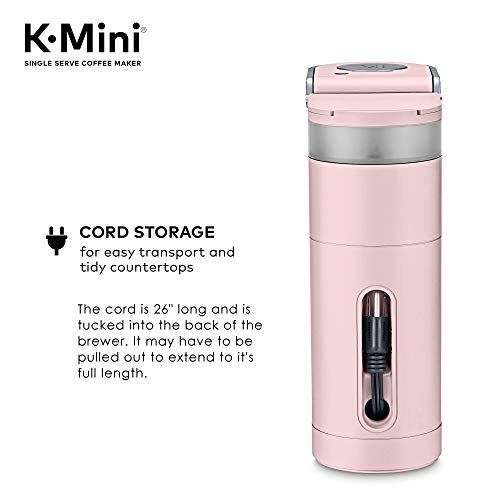
The listed weight of 4.6 pounds is credible for a machine of this size, and the height of 12.1 inches is worth checking against a wall cabinet, because the lid has to swing up clear of the body to load a pod. The drip tray lifts out to make room for a travel mug, which is the one concession the design makes to taller vessels.
Pods, Filters and Running Costs
Running cost is set by pods, not by the machine, and the price per cup of a branded K-Cup is several times the cost of the same coffee bought as grounds. That arithmetic is the strongest argument against the format and the reason the single serve capsules and pods section is worth reading before committing to a pod brewer rather than a drip machine.
The specification block records the filter type as Reusable, which needs correcting. The included components field lists the coffee maker and nothing else. Keurig sells a universal reusable filter basket that fits this machine and lets it brew loose grounds, but it is an accessory bought separately, not something in the box. As printed, that field implies a machine which arrives ready to brew ground coffee, and it does not.
Cleaning and Descaling
Maintenance on a pod brewer is mostly descaling, because the whole machine is a small heater and a pump feeding a needle. Scale narrows that path and shows up first as a slower brew and a cup that is not as hot, then as brews that stop short of the intended volume. Keurig publishes a descaling interval of roughly three to six months depending on water hardness and sells a three month brewer maintenance kit for the job.
The entrance and exit needles also collect grounds and dried coffee oils, and a blocked exit needle is the usual cause of a pod that floods rather than drains. The pod holder lifts out for rinsing. The drip tray catches spills and comes away for washing, and neither part is stated to be dishwasher safe anywhere in the listing.
What the Specifications Do Not Settle
The most obvious error in the block is the coffee maker type, given as Espresso Machine. This machine has no group head, no portafilter and no pressure system capable of espresso; it is a pod fed drip brewer, and the field is simply wrong. Operation Mode set to Fully Automatic is generous for a machine with one button and a manually poured reservoir, and Recommended Uses For Product set to Traveling describes a 120 volt corded appliance weighing over four pounds.
Beyond the errors, the listing does not publish the brewing temperature, the pump pressure, the time from a cold start to a finished cup, or the noise level, all of which are the things that actually separate one pod brewer from another. Warranty terms and the availability of replacement pod holders and drip trays are absent as well. The 120 volt rating is the one electrical fact given, and it confirms that the machine is not usable abroad without a transformer.
Who It Suits and Who Should Look Elsewhere
The K-Mini suits one coffee drinker in a small space: a dorm room, an office desk, a camper or a kitchen with no spare counter. It suits households where a second machine is needed for one person who drinks something different from everyone else, and it suits anyone who values a machine holding no standing water over a machine that saves a refill.
It is the wrong choice for a household of two or more, for anyone who wants a full carafe waiting in the morning, and for anyone unwilling to accept the price per cup that pods impose. Buyers in that position should look at a drip machine with a thermal carafe, or at a dual format brewer that takes both pods and grounds, rather than at the smallest pod machine in the range.