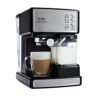

Description
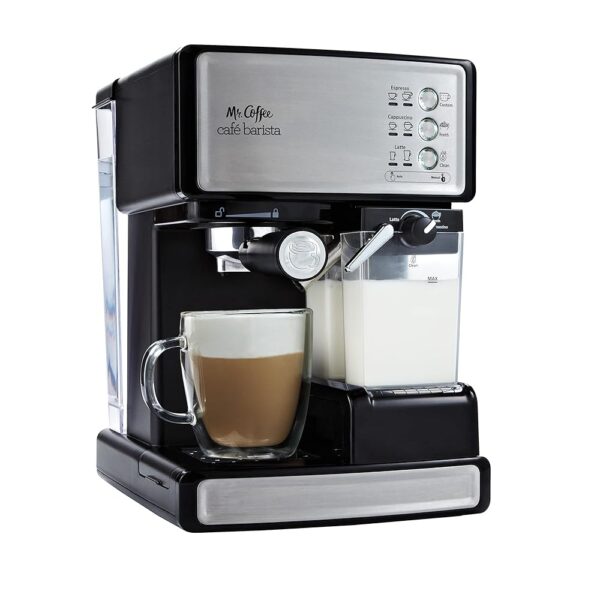
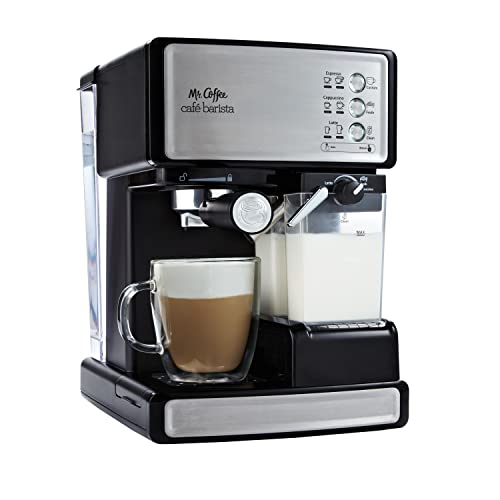
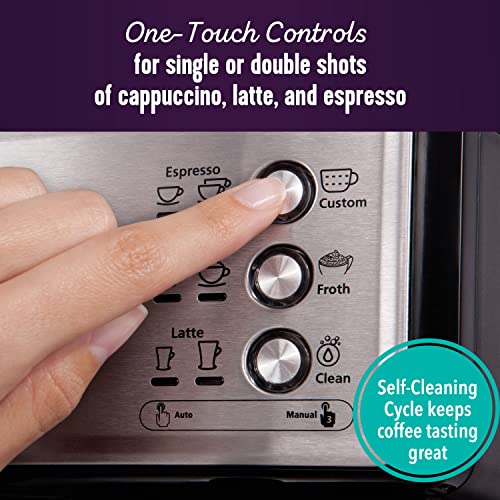
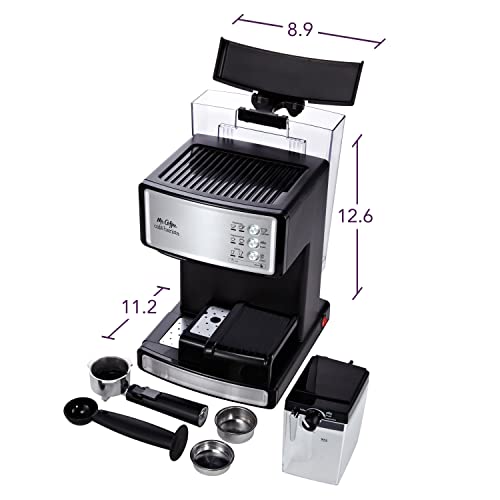
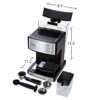
The Mr. Coffee Cafe Barista EM5000 is a semi automatic pump machine whose defining feature is an automatic milk frother rather than a manual steam wand. Milk sits in a removable reservoir on the side of the machine, and a one touch panel selects espresso, cappuccino or latte, with the machine drawing and texturing milk itself. Mr. Coffee specifies a 15 bar pump, single and double shot filters and a removable water tank. It measures 8.86 inches deep, 11.22 inches wide and 12.6 inches tall at 10.37 pounds.
That automatic milk system is unusual at this price and it is the reason the machine has sold in the volumes it has since 2012. Most espresso machines under a few hundred dollars give you a bare steam wand and leave milk texturing as a skill to acquire. The EM5000 removes that skill entirely, at the cost of control and at the cost of a milk system that has to be cleaned rather than simply wiped.
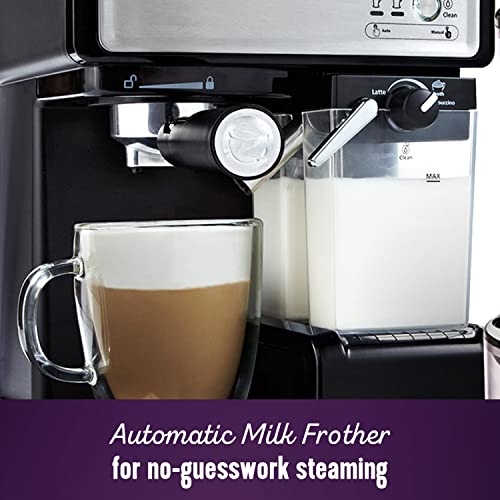
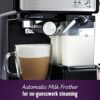
The Automatic Milk Frother
The milk reservoir clips onto the side of the machine and detaches for refrigeration between uses, which is the same approach De’Longhi and Philips use on their automatics. Selecting a cappuccino or latte runs the milk cycle and then the shot, producing a complete drink without the operator holding a jug.
The trade offs are real. Automatic frothers produce a consistent foam but not the fine, glossy microfoam a manual wand can achieve in a trained hand, so latte art is largely off the table. And the milk path has to be flushed and cleaned, which owner feedback consistently identifies as the most time consuming part of owning this machine. Anyone who values speed above all should weigh that daily cleaning against the minute a manual wand takes to purge and wipe.
Brewing System and Shot Control
The 15 bar pump is the pump maximum, and as on every machine of this design the pressure at the puck settles near 9 bar during extraction. Single and double shot filters are supplied, and the control panel is programmable so shot volumes can be adjusted from the defaults.
The baskets are almost certainly pressurised, which is standard on a machine designed to work with supermarket pre ground coffee. That makes the machine forgiving and puts a ceiling on how good the espresso can get. Anyone pairing it with a burr grinder will find the improvement smaller than expected, because the basket, not the coffee, is generating most of the crema. A manual machine such as the De’Longhi ECP3420 costs less and gives more control, at the price of doing the milk yourself.
The Grind Advice on the Listing Is Wrong
One line in the manufacturer’s own description deserves flagging because following it will produce bad coffee. The listing states that a coarse grind, an adequate coffee amount and substantial tamping ensure optimum pressure for a high quality brew. Espresso does not use a coarse grind. Espresso uses a fine grind, considerably finer than drip or French press, because the water is in contact with the coffee for only 25 to 30 seconds and needs the surface area a fine grind provides.
A coarse grind in an espresso basket produces a fast, thin, sour shot. The advice is likely a copy error carried over from another product, and it is a good illustration of why listing copy on this catalogue should be read against how espresso actually works rather than followed literally. Use a fine grind, dose to the basket, and tamp level.
Build, Tank and Daily Handling
At 10.37 pounds with a matte stainless finish, the EM5000 is reasonably solid for its class. The water tank and milk reservoir are both removable, which is what makes daily cleaning practical. Owner feedback consistently notes that the frother components are plastic and feel less substantial than the machine body, and that the drip tray fills quickly.
The water tank sits at the rear, so a machine pushed back against a wall has to be pulled forward to refill. That is the single most common ergonomic complaint across this whole category and it is worth checking against your own counter before buying. The machine also powers down automatically after a period of inactivity, which is a sensible inclusion on a unit that will be left plugged in.
What the Specifications Do Not Settle
The water tank capacity and the milk reservoir capacity are both absent from the data, which is a notable gap on a machine whose entire appeal is milk drinks made in sequence. Also missing are the wattage, the brew temperature, the portafilter diameter, the basket dose and the warranty term.
The included components field reads simply Cafe Barista, which tells a buyer nothing about what is in the box. The UPC field contains two different barcodes, and the global trade identification number carries a prefix inconsistent with a North American product, both signs that the importer captured data from more than one listing variant. What partly offsets all of this is scale: with well over ten thousand published reviews accumulated since 2012, the practical behaviour of this machine is documented far better by owners than by its specification sheet.
Cleaning the Milk System
This is the maintenance task that decides whether the machine stays pleasant to use. Milk protein and fat left in a frothing circuit sours quickly and then bakes on, and unlike a steam wand, the path here is enclosed and cannot be wiped by hand. Mr. Coffee’s design allows the reservoir to be detached and refrigerated, which slows the problem, but the internal tubing still needs a flush cycle.
Owner feedback describes this as time intensive rather than difficult, which is the right characterisation. It is a few minutes at the end of the day rather than a technical operation. Anyone unwilling to commit to that should buy a machine with a bare steam wand instead, where cleaning is a two second purge and a wipe. Descaling remains necessary on top of milk cleaning, and a product from the machine cleaning range handles it.
Who It Suits
The EM5000 suits someone whose drinks are mostly cappuccinos and lattes, who does not want to learn milk texturing, and who is content with pre ground coffee. The one touch panel and the detachable milk reservoir make a milk drink genuinely quick, and the machine’s long production run means parts and owner knowledge are both readily available.
It is the wrong machine for anyone who wants to make espresso well, since the pressurised baskets and lack of temperature control cap the result, and for anyone unwilling to clean a milk circuit daily. Buyers who want manual control should look at the pump machines in the espresso machine category, and buyers wanting the strong dark style rather than true espresso can spend far less on the Mr. Coffee 4 shot steam maker or the Mr. Coffee 2132815 steam machine.