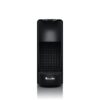
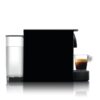
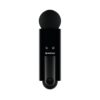
Description
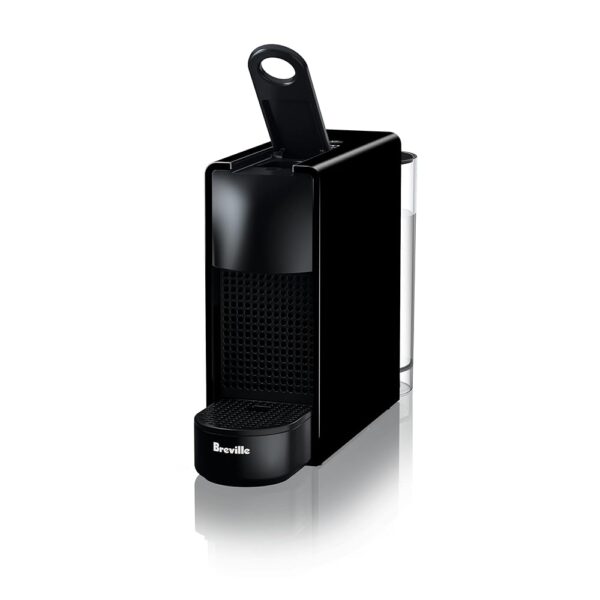
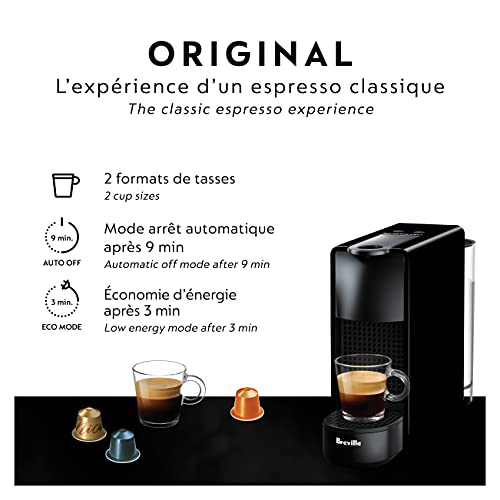
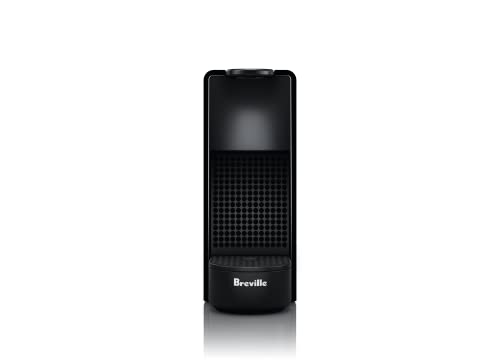
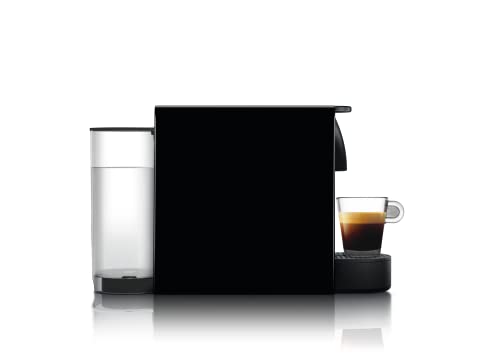
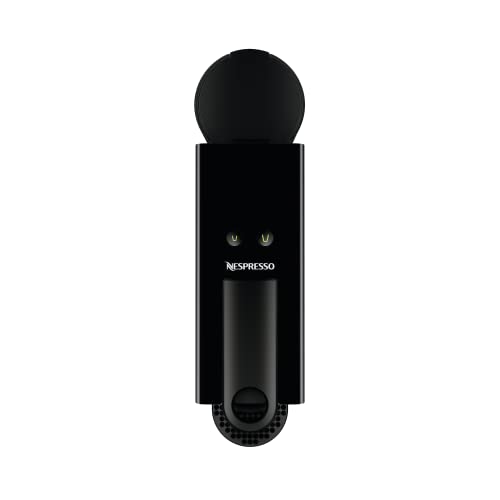
The Breville BEC220BLK1AUC1 is the Breville distributed version of the Nespresso Essenza Mini, an OriginalLine capsule machine stripped down to the essentials. Nespresso specifies a 25 second heat up, two one touch cup sizes, an energy saving automatic shut off and a starter set of capsules in the box. It is the smallest machine in the Nespresso OriginalLine range and one of the smallest espresso format machines on this site.
Capsule machines answer a different question from portafilter machines. There is no grinder, no dose, no tamp and no shot to dial in; you drop in a sealed capsule, press a button, and the machine pierces it and extracts under pressure. The result is consistent from cup to cup, and the ceiling on quality is set by the capsule rather than by the operator. For anyone who wants espresso without a routine, that consistency is the entire value proposition.
Brewing and the Two Cup Sizes
The Essenza Mini brews two preset volumes at the touch of a button, an espresso and a lungo, both reprogrammable by holding the relevant button during extraction. Because the capsule contains a fixed dose of ground coffee sealed under gas flush, extraction variables that dominate portafilter machines simply do not apply. The machine’s job is to deliver hot water through the capsule at pressure, and it does so identically every time.
Nespresso’s own listing copy includes a note that is really about portafilter machines rather than this one, warning that too coarse a grind, too little coffee or insufficient tamping will produce inadequate pressure. None of those actions are possible on a capsule machine, and the note appears to be boilerplate carried across from another product. It is a good example of why listing copy on this fleet should be read against the hardware rather than taken at face value.
Heat Up, Power and Auto Shut Off
The stated 25 second heat up is the practical headline. A thermoblock heats only the water passing through it rather than a reservoir, so a machine this small can be ready from cold in well under a minute. That makes it genuinely usable for a single cup on the way out of the door, which is something no boiler based espresso machine can match.
Automatic shut off after a period of inactivity is standard on the range and keeps standby draw low. The voltage field in this listing reads as 100120 volts, which is a mangled rendering of the 100 to 120 volt range rather than a real figure. The machine is a standard North American 120 volt appliance. If capsule convenience with a larger cup range appeals, the Nespresso Pixie covers the same capsule system in a slightly larger body, and the Nespresso CitiZ adds a bigger tank.
Milk, and the Frother That Is Not There
This is the point on which the listing is most misleading. The special features field lists a milk frother among the machine’s attributes. The Essenza Mini has no steam wand and no milk system of any kind. It brews coffee into a cup and nothing more. Published owner feedback confirms the absence, and it is one of the most common complaints against the model from buyers who did not check.
Milk drinks are still possible, but only by heating and frothing milk separately with a standalone frother or by hand. Anyone whose main drink is a cappuccino or a latte should either budget for a separate frother or buy a machine that includes one. Within the same capsule ecosystem, the Lattissima range integrates a milk carafe; outside it, any pump machine with a steam wand in the espresso machine category will handle milk directly.
Size, Weight and the Dimension Conflict
The dimensions on this listing contradict each other outright. The product title states 15.25 by 5.5 by 12.25 inches, while the structured attributes table states 4.3 inches deep, 8 inches wide and 12.8 inches tall. Those describe two different objects. The likeliest explanation is that one set is the shipping carton and the other the machine, a systematic error across this catalogue, and the narrow 4.3 by 8 inch figure is the more plausible description of an Essenza Mini body. Neither can be treated as authoritative, and anyone measuring a tight space should confirm against the manufacturer’s own specification page.
The listed weight of 5.95 pounds is consistent with a small capsule machine. The number of items field reads 6, which is another importer artefact: this is a single machine, and the six most likely refers to the complimentary capsule assortment. Country of origin is given as Hungary, which is where Nespresso’s OriginalLine machines of this generation were assembled. The Nespresso branded EN85R version of the same Essenza Mini is listed separately on this site and differs mainly in distributor rather than in hardware.
What the Specifications Do Not Settle
The most significant omission is the water tank capacity, which appears nowhere in the data. On a machine this small the tank is the main daily constraint, and owner feedback consistently identifies frequent refilling as the principal annoyance. The listing also omits the capsule container capacity, the pump pressure, the brew temperature and the auto shut off interval.
Running cost is the other unstated factor, and on a capsule machine it dominates. The machine price is only the entry fee; every cup thereafter requires a proprietary OriginalLine capsule, and over a couple of years that recurring cost typically exceeds the price of the machine several times over. That is not a fault, but it is the number that should drive the buying decision, and no listing will show it to you. Owner feedback also notes that the used capsule container can drip when removed, which is worth knowing if the machine sits on a wooden counter.
Who It Suits
The Essenza Mini suits a one or two cup a day black coffee drinker who values speed, consistency and a machine that disappears into a corner of the counter. Heat up in around 25 seconds, two preset sizes and almost no cleaning make it about as low effort as espresso format coffee gets. As a second machine for an office or a spare room it makes even more sense.
It is the wrong machine for milk drink drinkers without a separate frother, for anyone brewing for a household, and for anyone who objects to a proprietary capsule lock in on cost or waste grounds. Buyers in that last group should look at ground coffee machines instead, whether a pump espresso machine or something from the single serve brewer category where refillable options are more common.