



Description
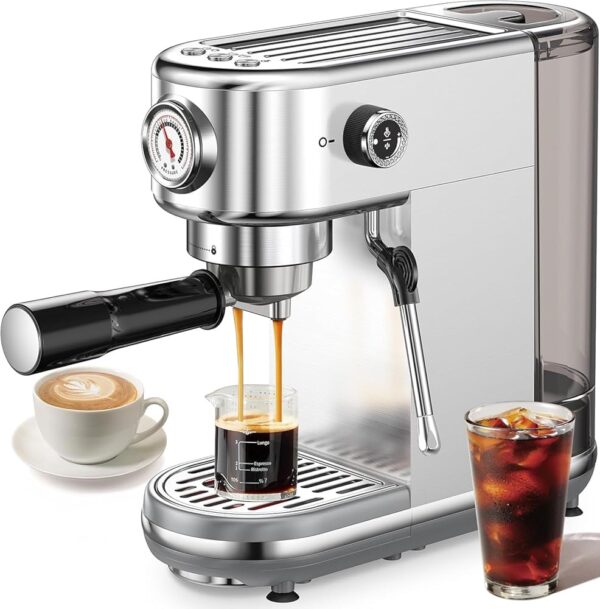
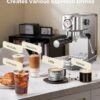
The Atatix EM3111 is a compact pump espresso machine built around a portafilter, a steam wand and a removable water tank. It sits in the crowded band of stainless clad home machines that arrived in late 2024, offering pressurised extraction and manual milk steaming without a built in grinder. The manufacturer specifies a 20 bar pump and a 1350 watt heating element, and the machine is listed at 12.24 inches deep, 5.5 inches wide and 11.17 inches tall with a stated weight of 7.5 pounds.
That narrow 5.5 inch width is the most interesting number on the sheet. It puts the EM3111 in the same footprint class as a slim single boiler machine while still carrying a full portafilter workflow, which is the trade many small kitchens are actually trying to make. Against the pod machines and steam driven units this site also covers, a pump machine like this asks more of the operator: you grind, dose, tamp and clean a basket, and in exchange you get control over the shot that a sealed capsule cannot give you.
Brewing System and Shot Modes
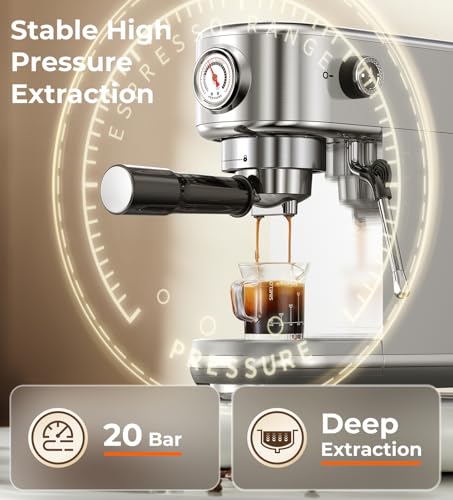
The EM3111 runs a pressurised portafilter system fed by a vibration pump the manufacturer rates at 20 bar. That figure is a pump maximum rather than a brewing pressure. Espresso is conventionally extracted near 9 bar at the puck, and machines quoting 20 bar reach that number only against a closed valve. It is a marketing headline across this entire price band rather than a meaningful point of difference, and the Atatix listing is no worse than its rivals here.
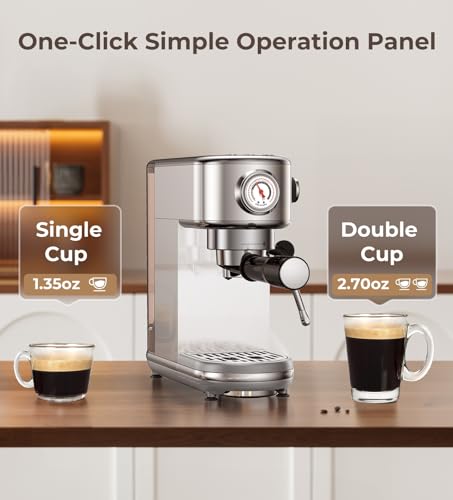
What is more useful is that the listing gives actual shot timings. The espresso mode is stated to run 28 seconds for a single, yielding 25 to 40 grams, and 42 seconds for a double, yielding 55 to 85 grams. A separate manual mode lets the operator hold the extraction for up to 102 seconds, producing 180 to 350 grams. Those are volumetric timings, not weight controlled ones, so output varies with grind and dose. The 180 to 350 gram figure is really a lungo or americano range rather than espresso, and it is worth reading as such. If you want a machine with dedicated programmable volumes instead, the Breville Bambino Plus with its preset single and double shots handles the same job with less guesswork.
Grind, Dose and What Is In the Box
There is no grinder. The included components are a single cup filter, a two cup filter, a portafilter, a funnel and a combined tamper and scoop, plus the 45 ounce removable water tank and the instruction manual. Coffee input type is listed as ground, which matches the hardware.
The practical consequence is that shot quality here is decided almost entirely by the grinder you pair with it. Pressurised baskets are more forgiving of coarse or stale grounds, which is why entry machines ship with them, but they also flatten the difference between good coffee and mediocre coffee. Anyone expecting a step change in the cup should budget for a burr grinder alongside it. Machines that bundle the grinder, such as the Gevi 20 bar model with an integrated bean hopper, remove that purchase at the cost of a larger footprint.
Temperature Control and Preheating
Atatix specifies an NTC thermistor controlling water temperature, with an automatic preheat cycle before extraction. NTC control is a standard, inexpensive approach: a thermistor reads boiler temperature and the controller cuts power at a setpoint. It is more consistent than a simple bimetallic thermostat and considerably less precise than a PID loop with a temperature readout.
What the listing does not provide is the brew temperature setpoint, the stability band, or how long the preheat takes. Without those numbers there is no way to say whether the machine holds temperature across back to back shots, which is where single boiler machines usually struggle. The stainless top plate is a passive cup warmer heated by conduction from the boiler rather than by a dedicated element, so expect it to take real time to become useful from cold.
Milk and Steam
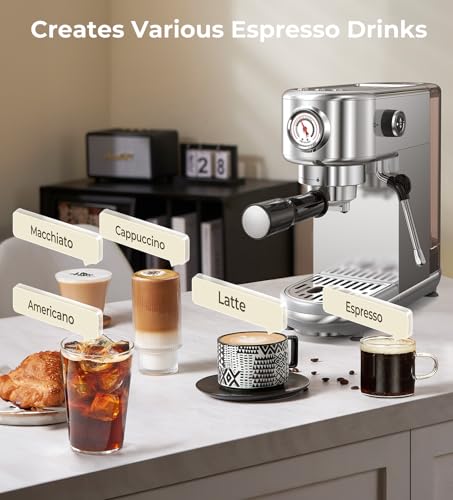
Milk is handled by a manual steam wand rather than an automatic frother. The manufacturer describes it as producing microfoam suitable for latte art, which is a claim about capability rather than about ease. Steam wands on single boiler machines at this price typically run a single hole tip and require the operator to switch the machine from brew to steam and wait for the boiler to climb, so back to back espresso and steaming is a sequential operation, not a simultaneous one.
The listing does not state the number of steam tip holes, the boiler volume, or the steam pressure, all of which determine how fast a pitcher of milk textures. Nor does it state whether there is a dedicated steam thermostat. Anyone whose main drink is a 12 ounce latte should assume steaming will be the slow part of the routine on a machine of this size.
Water Tank, Build and Daily Handling
The tank is a removable 45 ounce unit, which is generous for the footprint and means fewer refills than the 20 to 30 ounce tanks common on machines this narrow. The drip tray is also detachable. Body construction is described as a mix of ABS plastic and stainless steel, with four silicone suction feet on the base intended to stop the machine walking during pump operation, which is a sensible inclusion on a 7.5 pound unit where locking a portafilter can otherwise shift the whole machine.
Two points on the spec sheet do not hold together. The features table lists the operation mode as fully automatic, while the manufacturer description calls the same machine a semi automatic two in one espresso maker. The hardware settles it: a portafilter, a manual steam wand and no grinder or brew group make this a semi automatic machine, and the fully automatic label in the table is an importer error rather than a description of the product. Genuinely automatic bean to cup machines look like the Philips 1200 Series with its internal brew group, and they behave nothing like this.
What the Specifications Do Not Settle
Several things a buyer would want to know are absent. The listing gives no brew temperature, no boiler capacity, no portafilter diameter and no basket size in grams, so there is no way to know whether standard 51 mm or 58 mm accessories will fit or whether the baskets are pressurised. There is no descaling interval, no filter option and no stated warranty term in the structured data.
The review history is also thin. This model reached the market in late 2024 with a small published review count, so there is not yet the volume of owner feedback that would reveal how the pump, the seals and the thermostat hold up after a year of daily use. Planning for regular descaling with a descaling tablet formulated for espresso machines is the cheapest way to extend the life of a boiler in this class.
Who It Suits
The EM3111 suits someone with limited counter width who wants the portafilter routine rather than a capsule, and who already owns or plans to buy a grinder. The 45 ounce tank and the timed shot modes make it workable as a two or three drink a day machine for one or two people. The narrow body is a genuine advantage if your available space is measured in inches rather than in general terms.
It is the wrong machine for anyone who wants milk drinks without learning to steam, or for anyone who values a documented service record over a low price. Those buyers are better served further up the espresso machine category, or by an automatic machine that removes the grind and dose variables entirely.