

Description
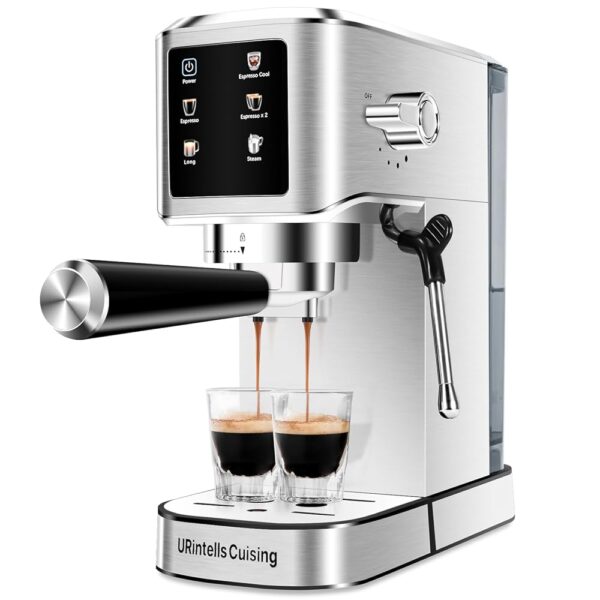
The URintells Cuising EM5110-US is a narrow semi-automatic espresso machine with a touch panel, a steam wand and one feature that separates it from almost everything else at this price: a cold extraction mode. The specification lists it at 5 inches wide, 11.2 inches deep and 11.4 inches high, weighing 6.92 pounds, with a 34 ounce removable water tank, 51mm single and double filters, a portafilter, a tamper with an integrated spoon and a cup warming surface.
Five inches wide is the headline dimension. This is one of the narrowest pump machines with a steam wand you can buy, and it competes directly with a small group of similar bodies including the CHULUX LC-EM335010-DG and its own siblings the EM5120-US and EM5220-US. Choosing between them comes down to tank size, control layout and whether you want the cold function.
The Cold Extraction Mode and Its Caveat
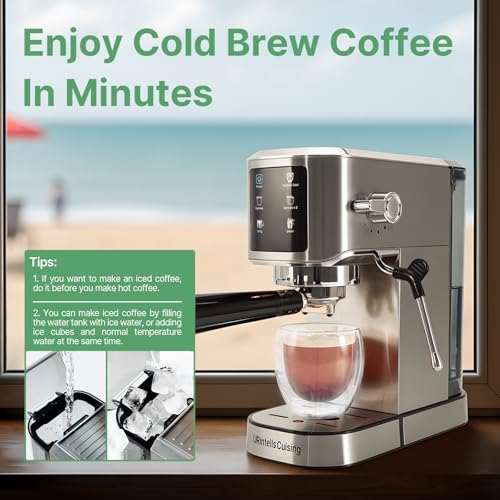
The cold function is the reason to look at this model, and the listing is unusually honest about how it works. Cold coffee extraction on this machine is not heated at all. You add ice water or cold water to the tank and the pump pushes it through the puck at ambient temperature. That is a cold pressure extraction rather than true cold brew, which is a long steep, so the flavour profile is different: less of the sweetness a twelve hour steep develops, more of the brightness a short extraction gives you.
The caveat is significant and the manufacturer states it plainly. If you make a hot drink first, you cannot make a cold one until the machine cools down. The listing instructs you either to wait or to purge hot water three to five times through the espresso cool function until the water reaches normal temperature. That is a real constraint on a shared machine: one person’s morning latte blocks the next person’s iced coffee for several minutes. Nobody making cold coffee as their primary drink should choose a machine that heats first, but as a summer option alongside espresso it works.
Touch Panel and the 20 Bar Pump
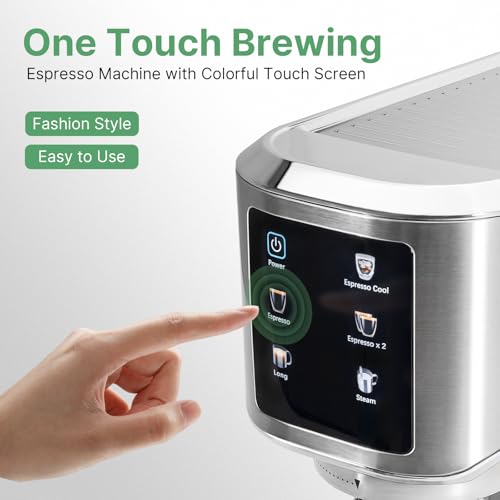
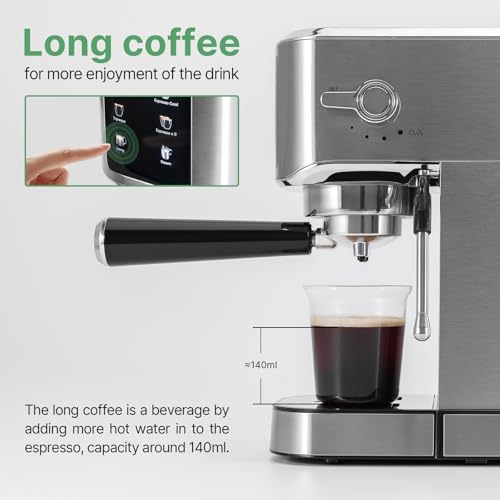
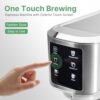
The interface is a touch panel rather than switches, with preset drink selections for espresso, long coffee and the cold mode. There is also a side knob that selects steam or hot water, so the machine mixes an electronic front panel with a mechanical valve. That is a sensible split: the valve does the job electronics do badly, which is throttling steam by feel.
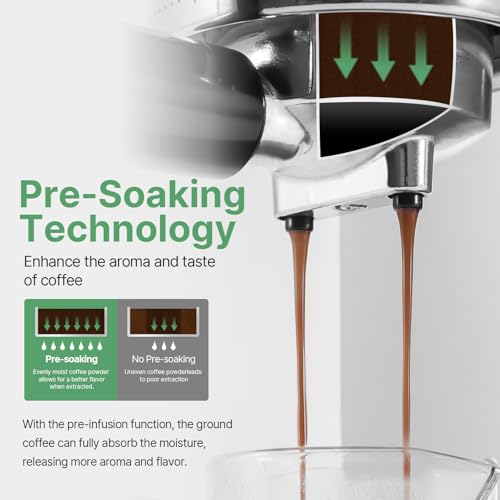
The 20 bar figure is a pump maximum rather than a brewing pressure. Espresso extracts near 9 bar, and the machine reduces the pump’s output through a relief valve or a pressurised basket. It is worth understanding because the number appears on almost every budget machine listing and it does not rank them. What the rating does confirm is a vibratory pump rather than the steam pressure design used on cheaper units, and that difference is real.
Portafilter, Baskets and Accessories
The included components list is specific, which is helpful: an instruction manual, the machine, a 34 ounce removable water tank, a 51mm one cup filter, a 51mm two cup filter, a portafilter and a tamper with a spoon. The 51mm format is the budget standard. Accessories exist for it, but the ecosystem is smaller than for the 58mm commercial size, and dose recipes written for commercial baskets will not transfer directly because a 51mm basket holds less coffee.
The listing does not state whether the two supplied baskets are pressurised or single wall. At this price and with a machine sold without a grinder, pressurised is the reasonable expectation. Pressurised baskets produce a thick foam layer regardless of grind quality, which is forgiving for someone using supermarket pre ground coffee and frustrating for someone who has bought a burr grinder and wants to see the effect of their adjustments. If the second description fits you, a 58mm machine such as the CASABREWS 4700Gense opens a far wider range of baskets.
Water Tank, Hot Water and Daily Use
The 34 ounce tank is about one litre and it is removable, so it fills at the sink rather than by jug. On a five inch wide machine that is a reasonable capacity, though it is smaller than the 40 ounce tanks on some competitors. It is described as transparent, so the level is visible without lifting a lid.
The hot water function runs through the same wand, selected by turning the side knob to the water position after the machine has finished preheating. That covers americanos and tea. Shared wands need purging between milk and water duties, since milk residue in a tea is unpleasant. The cup warmer on top is passive and, on a machine that heats on demand rather than idling hot, it does very little; a blank shot of hot water into the cup preheats it far more effectively.
What the Specifications Do Not Settle
The special feature and specific uses fields on this listing are largely keyword stuffing. The special feature field repeats the product category more than a dozen times and then directs the reader to the manufacturer’s video page. The specific uses field contains operating instructions rather than uses. Neither adds information about the machine and both should be read past.
Substantively, the listing does not state the boiler type or wattage, the heat up time, the brew temperature, the shot volumes the presets deliver, whether the baskets are pressurised, the cup clearance, the auto shut off interval, or the warranty term. It does not state the steam wand tip type, which decides whether microfoam is achievable. And it does not state how cold the cold extraction actually runs, which is the specification most relevant to the feature the machine is sold on. Given the mode simply uses unheated tank water, the answer depends entirely on how cold the water you put in is and how much residual heat remains in the block.
Who It Suits
This suits someone with a very narrow counter who drinks both hot espresso and iced coffee and does not want two appliances. The five inch width is the strongest argument for it, and the cold mode is a genuine feature rather than a relabelled setting, provided you accept the cooling wait between hot and cold drinks.
It suits you less well as a shared household machine, because the cooling constraint makes hot and cold users compete for the same appliance. It suits you poorly if you want to develop espresso technique, given the 51mm format and the almost certainly pressurised baskets. And anyone whose main interest is cold coffee should consider a dedicated immersion brewer from our cold brew coffee makers, which produces a smoother result overnight for a fraction of the price and none of the sequencing problems. For hot espresso alone, the wider machines in our espresso machines category generally give you a larger tank and a steadier body for the same money.