

Description
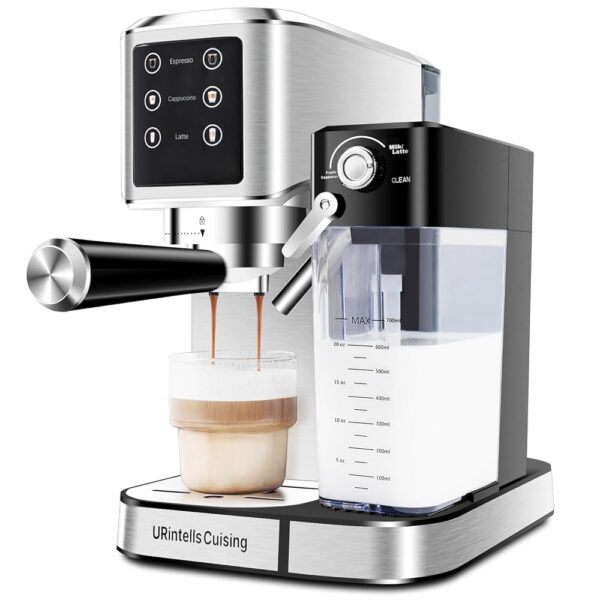
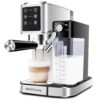
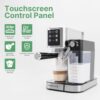
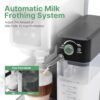
The URintells Cuising EM5120-US is a semi automatic pump machine with an automatic milk frothing system and a colour touch screen. What makes it technically unusual at its price is the dual pump and dual heater arrangement: a 20 bar pump for espresso extraction and a separate 4 bar pump for milk, with 1350 watt and 900 watt heating elements controlling coffee and milk temperature independently. It carries a 34 ounce removable water tank and a 23 ounce milk reservoir, and measures 11.2 inches deep, 8.3 inches wide and 12.5 inches tall at 10.58 pounds.
Machines at this price almost always use one pump and one heater for everything, which forces a compromise: the same temperature and pressure serve both extraction and milk, and the two need very different conditions. Splitting them is the sort of engineering usually found on far more expensive automatic machines, and it is the strongest reason to consider this over the many single pump rivals it sits among.
Why Two Pumps and Two Heaters Matter
Espresso extraction wants roughly 9 bar at the puck and water in the low nineties Celsius. Milk texturing wants low pressure air injection and a target around 60 to 65 degrees. A single pump and single heater has to be switched between those states, which is why every conventional machine makes you wait between pulling a shot and steaming.
Two pumps and two heaters means both conditions exist at once. In practice that shortens the cycle for a milk drink and means the coffee is not sitting cooling while the machine climbs to steam temperature. The 4 bar figure for the milk pump is appropriate; milk does not need extraction pressure, it needs controlled flow through an aerating path. Whether the execution matches the architecture is not something the specification sheet can settle, but the design intent is sound.
The Automatic Milk Frothing System
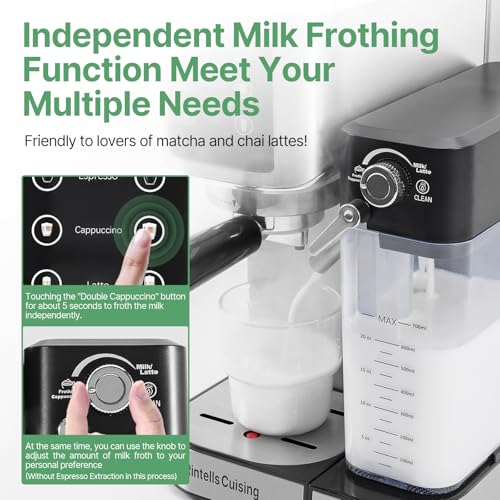
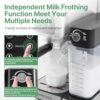
Milk sits in a 23 ounce reservoir with scale markings and is drawn and textured automatically at one touch, with an adjustable foam level. URintells adds a specific control worth knowing: holding the double cappuccino button for five seconds froths milk on its own without brewing coffee, which is what you need for a matcha latte, a chai latte or hot chocolate.
That makes the machine considerably more useful to a household where not everyone drinks coffee. The reservoir is dishwasher safe, though URintells states explicitly that the lid is not, which is the sort of detail that ruins a component if missed. As with every automatic milk system, the internal path needs flushing rather than wiping, and that is the daily cost of not steaming by hand. A machine with a similar automatic approach at a comparable price is the Mr. Coffee Cafe Barista.
A Troubleshooting Note Worth Reading First
Buried in the listing is an instruction that will save someone an unnecessary return. URintells states that if the milk reservoir is not installed in the correct position, the cappuccino and latte buttons will not illuminate. A machine whose milk buttons appear dead is easily mistaken for a faulty unit, and the actual cause is a reservoir seated a few millimetres out.
This is the kind of information that belongs at the top of a manual rather than at the bottom of a marketing description. It is also a useful diagnostic in ordinary use: if the milk buttons stop responding after cleaning, reseat the reservoir before assuming anything worse.
Pre Soaking and Extraction
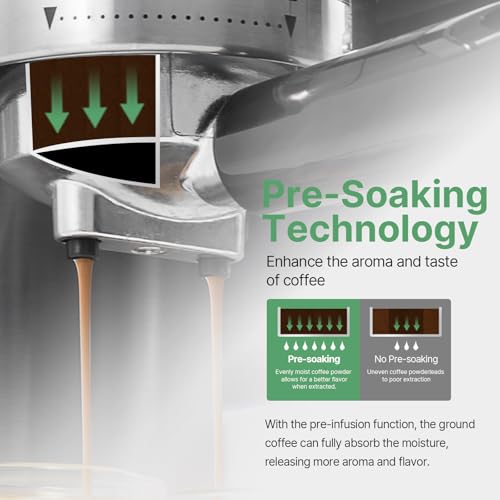
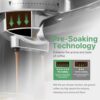
URintells describes pre soaking technology intended to achieve thorough penetration of the coffee before full extraction. That is pre infusion under another name: water is applied at low pressure so the puck wets and settles evenly before the pump ramps up, which reduces channelling and makes the machine more forgiving of an imperfect tamp.
The 20 bar figure is the pump maximum rather than the pressure at the coffee, which settles near 9 bar during a real extraction. The listing gives no pre soak duration, no brew temperature, no portafilter diameter and no indication of whether the supplied baskets are pressurised. That last unknown decides how much difference a burr grinder will make, since a pressurised basket produces crema regardless of grind quality and masks the feedback a grinder adjustment is meant to provide.
Tank, Build and Daily Handling
The 34 ounce water tank is transparent and removable, which makes the level visible without lifting anything, and the milk reservoir carries scale markings so the quantity can be judged before starting. The drip plate is detachable to accommodate larger cups, which matters on a machine expected to make lattes as well as espresso.
Published owner feedback raises two points. The milk frother is noisy in operation, which follows from a second pump drawing milk through a narrow path. And flavour consistency varies with grind size, which is true of every machine and is a reminder that a burr grinder is the other half of this purchase. The touch screen has the usual capacitive drawback: wet or greasy fingers register unreliably.
Cleaning the Milk Circuit
This is the task that decides whether an automatic milk machine stays pleasant to use. Milk protein and fat left in an enclosed circuit sours quickly and then bakes on, and unlike a steam wand the path cannot be wiped by hand. The reservoir detaches and goes in the fridge, which slows the problem considerably, but the internal tubing still needs a flush cycle.
The practical routine is a rinse after each session rather than a deep clean at the end of the week, because dried milk is far harder to shift than fresh. Note again that the reservoir lid is not dishwasher safe even though the reservoir itself is. Descaling remains a separate job on top of milk cleaning, and on a machine with two heating elements it is worth doing on schedule rather than waiting for symptoms.
What the Specifications Do Not Settle and Who It Suits
The structured data is partly corrupted. Two attribute rows read as “Capacity 1 Liters” and “Item Weight 10.58 Pounds” in both the name and value fields, an importer parsing failure, and the 1 litre figure conflicts with the 34 ounce tank stated in the description, which is roughly 1 litre and probably the same number rounded. The manufacturer part number is empty, and the special feature field is stuffed with keyword phrases rather than specifications. Also missing are the voltage, the country of origin, the warranty term and the heat up time. The machine launched with a small published review count, so there is no long term history on how two pumps and two heaters age. Thin structured data of this kind is normal in the bracket, as the QJA EM625 also shows.
The EM5120 suits a buyer who wants automatic milk drinks at a low price and appreciates that separate pumps and heaters is a better way to do it. The dedicated milk froth function makes it useful for non coffee drinks too. It is the wrong machine for anyone who wants to learn milk texturing, for anyone unwilling to flush a milk circuit daily, and for anyone who needs a proven service record. Buyers who want a manual steam wand on similar hardware should compare the URintells Cuising EM5220 or the EM5110, and anyone wanting a longer track record should look across the espresso machine category. The Wirsh Home Barista CM5418 has the longer record among narrow machines.