Description
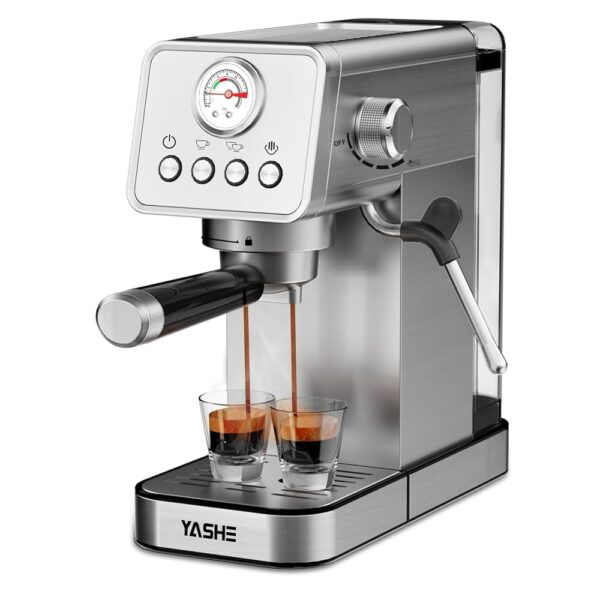
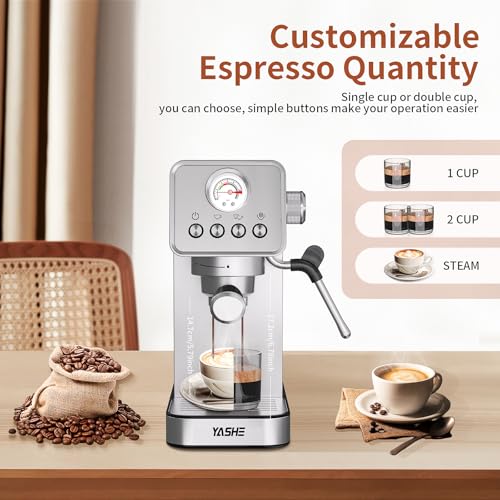
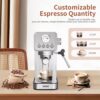
The YASHE AZ-EM1503 is a budget semi-automatic pump espresso machine with a 20 bar pump, a 1350 watt heating system, a 37.2 ounce removable water tank and a steam wand for milk. The listing records a silver white finish and describes the machine as semi-automatic, meaning you supply ground coffee, tamp it and press a control while the machine handles the pump.
Two specifications separate it from the crowd at this price. The tank is larger than most, and the wattage figure suggests a heating system sized for quick recovery rather than the smallest element the price would allow. Neither makes it a better machine than the established budget options in our espresso machines category, but both are real advantages in daily use, and tank capacity in particular is the specification people underestimate.
The 20 Bar Pump
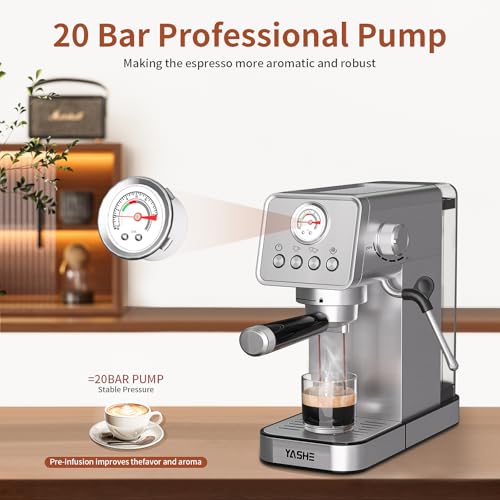
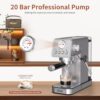
Twenty bar is a pump rating, not a brewing pressure, and it is worth being direct about that because it appears on almost every budget listing. Espresso is extracted at roughly 9 bar at the puck. Every consumer machine quoting 15, 19 or 20 bar reduces its pump maximum through a relief valve or through the basket itself, so the figure does not rank machines against each other.
What it does confirm is a vibratory pump rather than a steam pressure design. Steam machines top out around 3 bar and cannot make espresso in the technical sense; a pump machine can. At this price that distinction is the one that actually matters, and it is the reason a 20 bar budget machine produces a recognisably different drink from a cheaper steam unit such as the Capresso Steam PRO.
The 1350 Watt Heating System
The wattage field gives 1350 watts, and earlier listing copy describes it as a boiler delivering rapid heating. A figure in that range on a machine of this size points to a thermoblock rather than a tank boiler: water is heated on demand as it flows through a metal channel instead of a reservoir being held hot.
The practical consequences follow from that architecture rather than from the brand. Heat up from cold is quick, standby power is low, and there is a mandatory transition when moving between brewing and steaming because the block has to climb to steam temperature and then be purged before the next shot. Temperature stability across a long shot is weaker than on a machine with real thermal mass. Thermoblocks are also more scale sensitive than boilers because the water passage is narrow, so descaling on a schedule with a product from our coffee and espresso machine cleaning products selection matters more here than on a heavier machine.
The 37.2 Ounce Tank
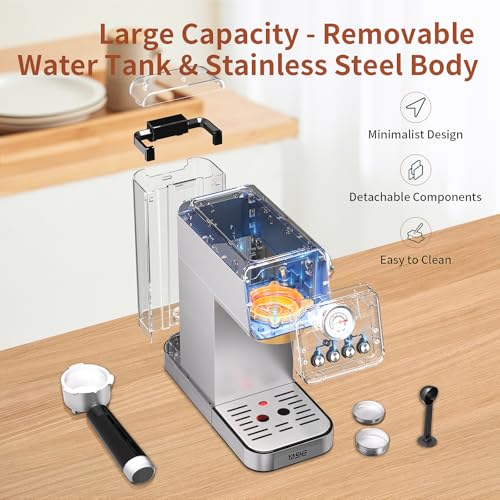
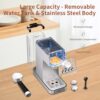
Thirty seven ounces is roughly 1.1 litres, which is generous for a budget machine where one litre or less is the norm. It is removable and transparent, so it fills at the tap and the level is visible without lifting a lid.
That transparency matters more than it sounds. The most common way a cheap pump machine dies is being run dry, because a vibratory pump with no water to move destroys itself quickly, and machines at this price rarely have a low water sensor. A visible level is the substitute for instrumentation the listing does not mention. The listing does not state whether a low water cut off is fitted, and the reasonable assumption at this price is that it is not.
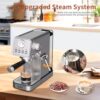
Steam Wand, Drip Tray and Milk
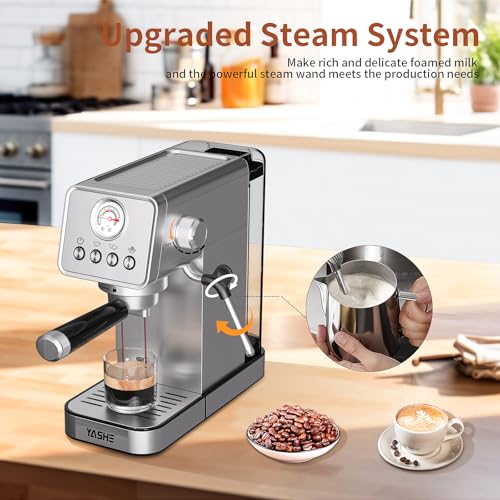
Earlier copy describes a steam wand that rotates through 360 degrees. A wand with a full swing is genuinely useful because it lets you position a pitcher at the angle that creates a proper whirlpool rather than forcing your wrist against the drip tray. The figure is not in the structured specification, so treat it as a manufacturer claim.
What the listing does not state is the tip type or hole count, which determines whether microfoam is achievable or whether the wand produces coarse cappuccino foam. On a single thermoblock, expect one comfortable milk drink and a wait before the second. The removable drip tray is described as accommodating larger cups, which is the mechanism that lets one machine serve both an espresso cup and a tall mug, though no cup clearance figure is published for either position.
Errors and Noise in the Listing
The product dimensions read 13.19 inches deep, 16.93 inches wide and 7.48 inches high. A machine only 7.48 inches tall could not house a 37.2 ounce tank above a group head and a drip tray, and 16.93 inches wide is implausible for a compact budget machine. These are packaging measurements with the axes scrambled, and no usable product dimensions appear anywhere on the listing. That means you cannot plan counter space from this page at all.
The special feature field is keyword stuffing rather than product information: it repeats the product category seven times in slightly different phrasings, contains the typographical errors Latte Cpffee Maker and Expresso Maker, and then instructs the reader to see more. Two further fields, Capacity 37.2 Fluid Ounces and Wattage 1350 watts, appear with the field name duplicated as the value. The product title also describes the machine as a Semi-Automatic Steam Espresso Coffee Maker, which mixes pump and steam terminology; the 20 bar rating confirms it is a pump machine.
What the Specifications Do Not Settle
The listing does not state the machine's actual dimensions, its weight, the portafilter diameter, whether the supplied baskets are pressurised or single wall, the number or size of baskets supplied, whether a tamper or milk pitcher is in the box, the heat up time, the brew temperature, the cup clearance, the auto shut off behaviour, or the warranty term.
The portafilter size is the most consequential omission because it determines every accessory that will fit. Machines in this class are almost always 51mm, which is the smaller budget standard rather than the 58mm commercial size, but the page does not confirm it. It also does not state whether the machine has a three way solenoid valve, which decides whether the used puck knocks out dry or has to be scraped out wet, and on a machine used daily that is the difference most likely to become irritating.
Who It Suits
This suits someone stepping up from drip or capsules who wants a real pump machine and a steam wand for as little as possible, and who values not refilling the tank constantly. The larger tank and the visible water level are practical advantages over most machines at this price, and the wattage suggests it will not keep you waiting between drinks any more than its competitors do. The Wirsh Home Barista CM5418 is the narrower machine with a similar tank. The QJA EM625 pairs a larger tank with a touch panel at the same level.
It suits you poorly if you intend to develop espresso technique, because the portafilter format is undocumented and the baskets are almost certainly pressurised, which hides the effect of any grinder you buy. It suits you poorly for several milk drinks in a row, given the single heating circuit. And it suits you poorly if counter space is tight enough to need exact measurements, since the listing does not provide any usable ones. Anyone who wants a machine with a documented commercial format should look at the 58mm options in our espresso machines category instead. The CASABREWS 4700Gense is one of those.