Description
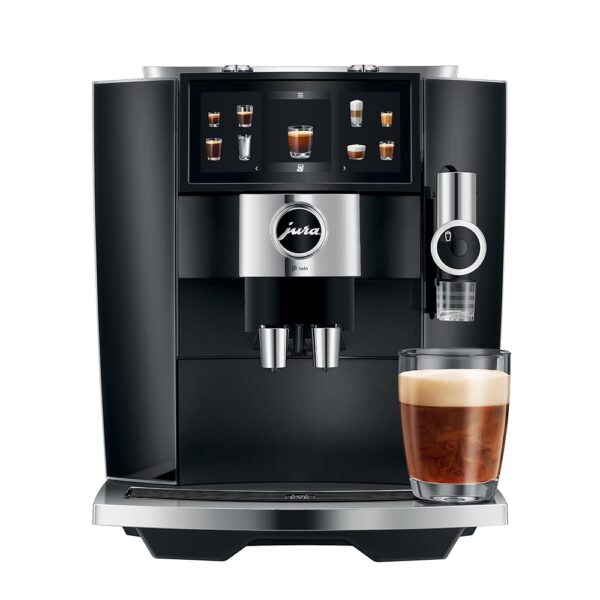
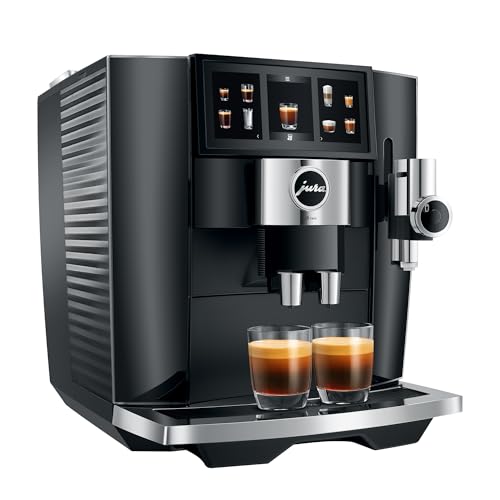
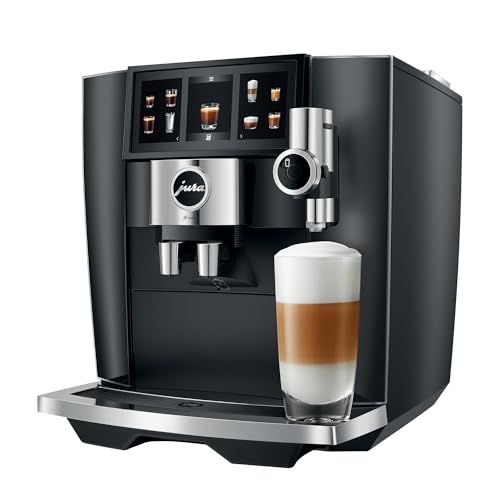
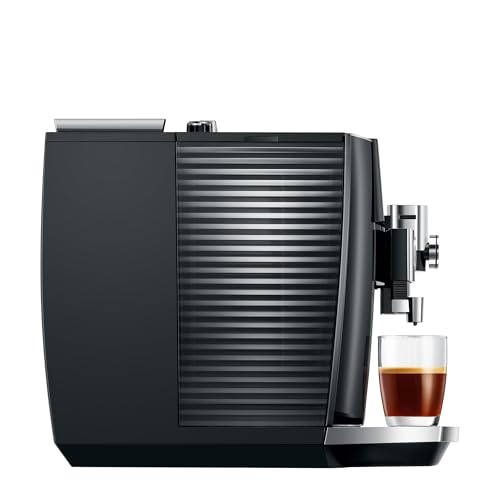
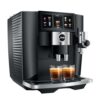
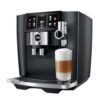
The Jura J8 twin, model 15658 in Diamond Black, is a bean to cup machine with two separate bean hoppers and two grinders rather than one. Built in Switzerland and dated 2024, it weighs 25 pounds and measures 17.5 inches deep, 12 inches wide and 14 inches high, with a touchscreen interface, an integrated grinder listed as a special feature and a 120 volt supply.
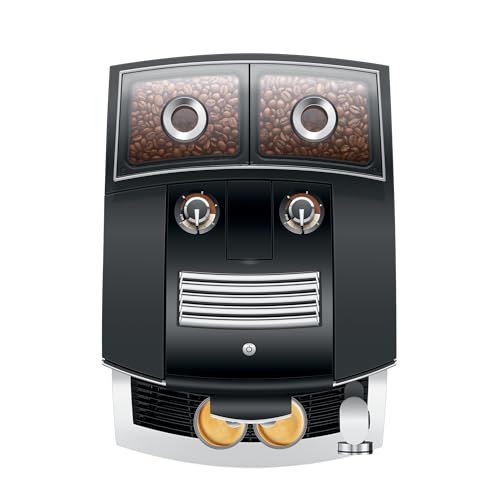
The twin designation is the entire proposition and it is worth being clear about what it solves. On a single hopper machine, serving a decaf means emptying the hopper or using a bypass chute of pre ground coffee. On this one, both beans are loaded at once and the machine selects between them per drink. That is a real convenience in a household split between caffeinated and decaf drinkers, and it is rare enough that few machines in our super automatic espresso machine section offer it at all. Jura's own single hopper flagship, the Z10, costs more and still cannot do it.
Two Hoppers, Two Grinders
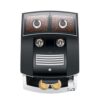
Earlier listing copy describes two conical grinders and dual 6.3 ounce bean containers. Two grinders rather than one shared grinder with a diverter is the correct engineering answer, because a shared grinder retains grounds of the previous bean in the chute and a decaf drink pulled through it is not really decaf. Separate grinders remove that cross contamination entirely.
The honest cost is hopper size. Two 6.3 ounce containers is roughly 180 grams each, which is small: a bag of beans will not fit in one, and each hopper holds around a dozen drinks. On a single hopper machine you would expect a larger reservoir and less frequent topping up. That is the trade the format makes and it is worth knowing before buying, because on a busy machine you will be filling two small hoppers rather than one large one. The figures are earlier copy rather than confirmed fields, since the structured specification gives no hopper capacity at all.
The Touchscreen and Drink Menu
The human interface input field confirms a touchscreen, and earlier copy describes a 6.7 inch panel. A screen that size is unusual on a domestic machine and it changes how the drink menu works: instead of scrolling through abbreviations on a two line display, drinks are shown as a grid you tap. On a machine with two bean sources and a milk system, that matters, because the number of possible combinations is what makes smaller displays unusable.
The listing gives no drink count. Earlier copy references Jura's brewing technologies by name, including a pulsed extraction process and a preheating system intended to make the first cup match the tenth. Those are manufacturer designations rather than specifications, and none of them appears in the structured data. What the specific uses field does confirm is espresso, latte and cappuccino, so a milk capability is present.
The Sweet Foam Function
Earlier copy singles out a Sweet Foam function that produces sweetened milk foam. This is worth explaining because it is unusual and easily misread. The machine draws a sweetening syrup through the milk circuit alongside the milk, so the sweetness is in the foam rather than stirred into the drink afterwards.
Whether that appeals is a matter of taste, but there are two practical consequences. The first is that anything sugary passing through a milk tube makes cleaning more important, not less, because sugar residue in a narrow channel is worse than milk residue alone. The second is that it implies a proprietary or at least specific syrup rather than any bottle from the cupboard, and the listing says nothing about what is compatible or what it costs to run. As with any milk system, the machine's rinse cycles handle the internal channel while the container still needs washing.
Size, Weight and Placement
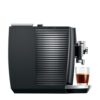
At 17.5 inches deep this is a deep machine, and depth is the dimension people forget. Add clearance behind for the plug and above for two bean hopper lids and the water tank, and the real space required is more than the 14 inch height suggests. Twelve inches of width is modest for a machine carrying two grinders.
Twenty five pounds indicates a metal chassis and substantial internals rather than a plastic shell, and it means the machine is positioned once and stays there. The listing does not state the water tank capacity, which on a machine expected to serve two bean varieties and milk drinks is the specification most likely to constrain a busy morning, and it does not state whether the tank is accessed from the front, side or rear.
What the Specifications Do Not Settle
The listing does not state the water tank capacity, the bean hopper capacities as confirmed fields, the grounds container capacity, the number of grind settings, the burr material, the brewing temperature range, the pump pressure, the number of drinks on the menu, the touchscreen size, the noise level, or the warranty term. The included components field reads only Filter.
Two omissions matter more than the rest. The listing does not say whether a milk container, carafe or cooler is supplied, which on a machine with milk drinks in its use case is a significant cost and a significant cleaning routine either way. And it does not state whether the brewing unit is removable for rinsing, which determines whether the machine can be cleaned properly at home or only flushed with tablets. On a machine intended to last a decade, that is the question that most affects whether it does. Descaler, milk system cleaner and cleaning tablets are all consumables here, and they are covered in our cleaning and descaling section.
Who It Suits
This suits a household where people drink different beans: decaf in the evening and regular in the morning, or a dark roast for milk drinks and something lighter for black coffee. Two hoppers and two grinders is the only clean way to do that, and it is the reason to choose this machine over a single hopper alternative at a lower price. The large touchscreen makes the resulting combinations navigable rather than buried in menus. The Jura X10 15669 is the larger machine aimed at shared settings.
It suits you poorly if everyone drinks the same coffee, because you would be paying for a second grinder and accepting two small hoppers instead of one large one for no benefit. It suits you poorly on a shallow counter, given 17.5 inches of depth. And it suits you poorly if you want control over extraction, since the format is closed and the adjustment ranges are undocumented. A single hopper machine such as the Jura E6 covers the same ground for considerably less if the twin capability is not the reason you are buying. The Jura E8 15400 is the single hopper machine with a comparable drink menu.