Description
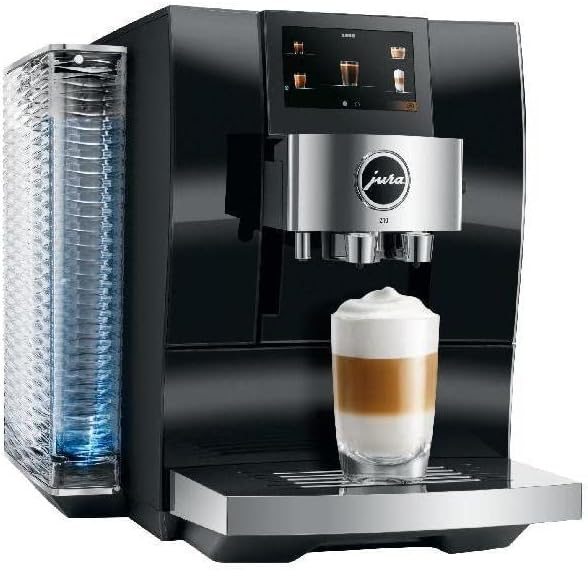
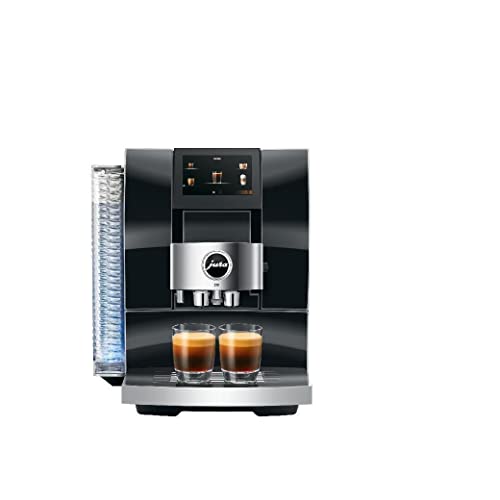
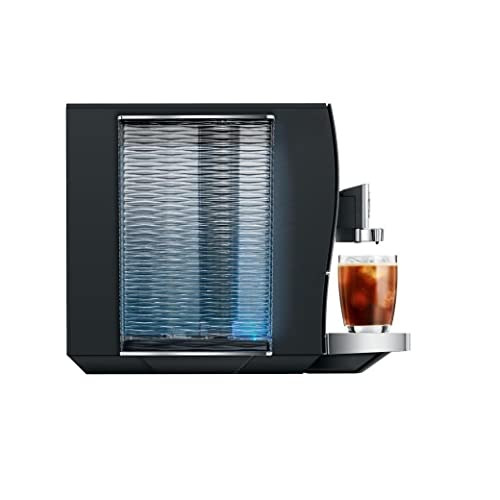
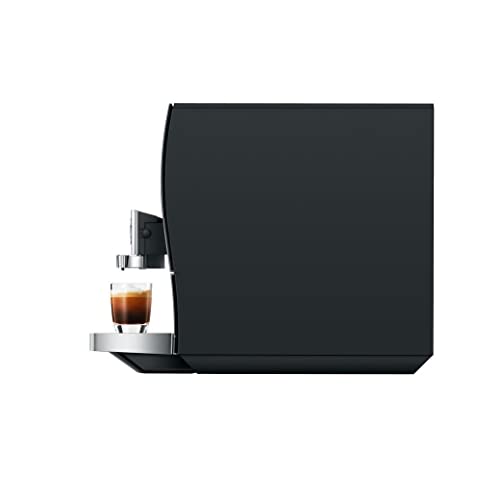
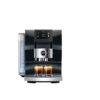
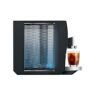
The Jura Z10, model 15464 in Diamond Black, sits at the top of Jura’s domestic range. It is a bean to cup machine that grinds, doses, tamps, brews and cleans itself, and its distinguishing capability is cold extraction: it can brew cold drinks by pulling water through the grounds at low temperature rather than simply chilling hot coffee. It weighs 36.6 pounds and measures 17.75 inches deep, 12.62 inches wide and 15 inches high.
That weight is the first honest signal about this machine. At more than 36 pounds it is roughly double the mass of a mid range bean to cup, which reflects a metal chassis, a substantial grinder assembly and a brewing unit built for a long service life. It also means this is not a machine you move, so counter position needs deciding before delivery rather than after. Compared against the rest of our super automatic espresso machine section, it is at the extreme end for both size and specification.
Cold Extraction and Why It Is Different
The recommended uses field states brewing various types of coffee and coffee beverages, both hot and cold, and cold capability is the Z10’s headline. What Jura implements is not iced coffee made by brewing hot and pouring over ice, and it is not overnight cold brew either. It is a cold extraction: water at low temperature is pulsed through the puck under pressure, producing a concentrated cold coffee in about the same time as a hot one.
The result sits between the two familiar cold methods. It has more clarity and acidity than a long immersion steep, and less of the dullness that flash chilling produces. Whether you prefer it is a matter of taste, but the capability is genuine and almost no other domestic machine offers it. Anyone whose interest is specifically in the smoother, sweeter profile that a twelve hour steep produces should note that a simple immersion brewer from our cold brew coffee makers gives that result for almost nothing.
Grinder and Brewing
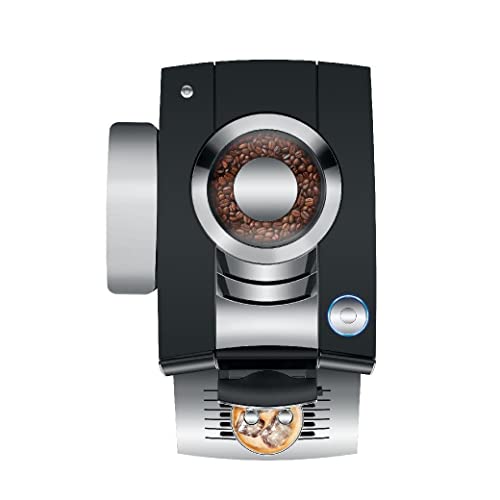
The special feature field lists an integrated coffee grinder, which on a machine at this level means a burr grinder with electronic adjustment rather than a manual dial. Earlier listing copy credits the machine with 32 coffee specialties on the menu, a figure absent from the structured specification and therefore a manufacturer claim.
What the listing does not give is the number of grind settings, the burr material, the brewing temperature range or the brewing unit capacity. On a machine of this class those are the specifications that justify the price, and their absence from the page is a genuine gap rather than a rounding error. It also does not state whether the brewing unit is removable for rinsing, which determines whether the machine can be properly cleaned at home or only flushed with tablets, and that question matters more the longer you intend to keep it. A more modestly specified machine such as the Jura E6 shares the same maintenance model at a fraction of the outlay.
Milk System and Cleaning
The listing’s marketing describes convenient milk system integration and an automated cleaning system. On Jura machines this means a milk tube drawn from a container or a supplied carafe, with rinse cycles the machine runs itself and prompts for. That automation is the single biggest practical advantage of a machine at this level: the milk path is the part that goes wrong on cheaper machines, and here it is managed.
Automated does not mean maintenance free. Jura machines prompt for cleaning tablets, milk system cleaner and descaling on a schedule tied to use and to the water hardness you configure. Those consumables are an ongoing cost and the machine will refuse to operate if you ignore the prompts for long enough, which is a design decision rather than a fault. Stocking the relevant products from our cleaning and descaling section before the first alert appears avoids losing a week to a delivery.
The Voltage Figure and Other Data Problems
The voltage field reads 2.4E+2 Volts (AC). Read literally that is scientific notation for 240 volts, rendered wrongly because the import failed to convert the exponent. Two separate issues arise from it. The formatting is plainly an error. The value itself is the more serious question: 240 volts is a European or commercial supply figure, not a standard North American domestic outlet. Jura sells 120 volt versions of its machines for the United States market, and a 240 volt unit would not run on a normal household circuit there.
Anyone buying this machine should confirm the voltage of the specific unit being shipped before ordering, because a grey import at 240 volts is unusable on a domestic supply without a transformer and would very likely have no local warranty. This is the one item on the page that could turn a large purchase into a returned parcel, and the listing does nothing to flag it. Separately, the human interface input field reads Buttons, which sits oddly with the large display Jura fits to machines at this level, and the included components field reads only Filter.
What the Specifications Do Not Settle
Beyond the voltage question, the listing does not state the water tank capacity, the bean hopper capacity, the grounds container capacity, the number of grind settings, the burr material, the brewing temperature or its adjustability, the number of drinks on the menu as a confirmed field, the display type or size, the cup clearance, or the warranty term.
It does not state whether a milk carafe is supplied or whether a tube and a container are expected, which changes what arrives in the box. It does not state whether the machine connects to an application over Bluetooth, a feature Jura fits to parts of its range. And it gives no figure for how many drinks the grounds container holds before emptying, which on any bean to cup determines how often you interact with a machine sold on the promise that you barely have to.
Who It Suits
This suits a household that drinks a lot of coffee in a lot of forms, wants hot and cold from the same machine, and values a long service life over a low purchase price. The cold extraction is a real capability rather than a relabelled setting, the milk automation removes the most tedious maintenance job in the category, and the build mass suggests a machine intended to last well beyond the usual replacement cycle.
It suits you poorly if you want any control over extraction, since the format is closed by design and the specification does not even document the adjustment ranges. It suits you poorly on a shallow counter, given nearly 18 inches of depth and 36 pounds that will not be moved for cleaning. And for anyone whose interest is espresso as a craft rather than coffee on demand, a manual machine and a good grinder from our espresso machines category delivers more control for a fraction of the outlay.