
Description
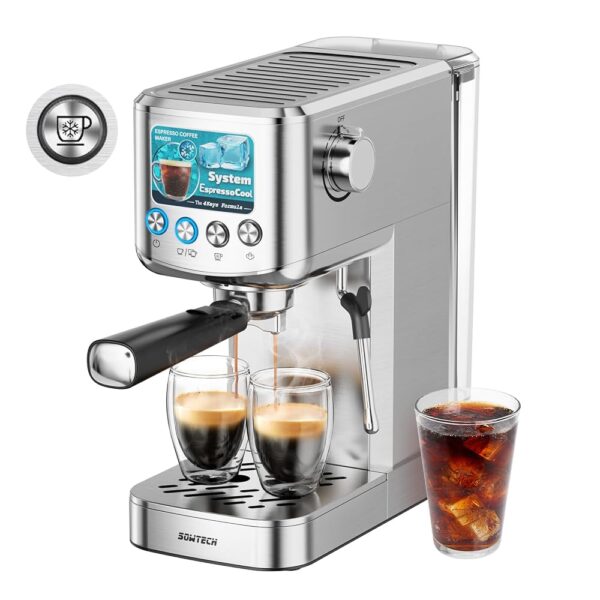
The SOWTECH JH-C5119 is a stainless steel pump espresso machine specified with a 20 bar pump, a 1350 watt motor, a 42 ounce removable water tank and a manual steam wand. It measures 12.5 inches deep, 6.2 inches wide and 12.6 inches tall. The feature that distinguishes it from the many similar machines in this price band is a cold brew function alongside the usual espresso and steam modes.
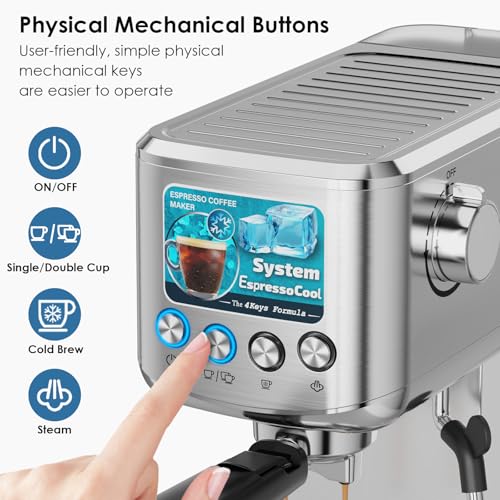
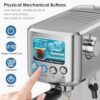
SOWTECH also states that the machine produces a single or double espresso with crema in 30 seconds, and that controls are physical mechanical buttons rather than a touch panel. That last point is a deliberate design choice the manufacturer defends in its own copy on the grounds of tactile feedback and reduced accidental activation, and on a machine that will be operated with wet hands it is a reasonable argument.
Brewing System and the 30 Second Claim
The 20 bar figure is the pump’s maximum rating rather than the pressure reaching the coffee, which settles near 9 bar during extraction on any machine of this design. The 30 second shot claim is more useful, since roughly 25 to 30 seconds is the conventional target window for an espresso extraction, and it suggests the machine is set up to deliver a normal shot rather than a rushed one.
What that claim assumes is a correctly ground and tamped dose. SOWTECH says so directly in its own listing, warning that grinding too coarsely, under dosing or under tamping will not produce satisfactory espresso. That is an unusually honest note for a listing at this price. It also confirms that the supplied baskets reward some care, so pairing the machine with a burr grinder rather than pre ground coffee changes the result significantly.
The Cold Brew Function
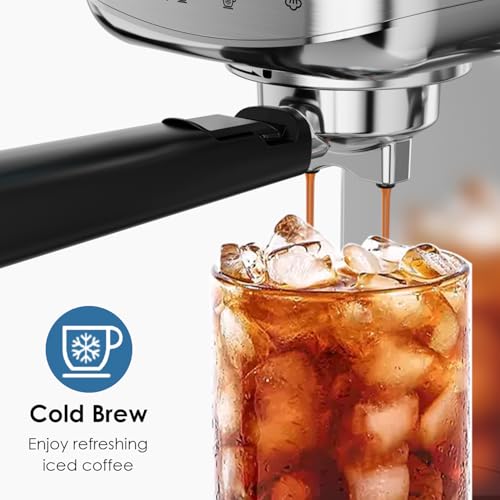
This is the headline feature and the least explained. SOWTECH describes a multi function design allowing cold brew preparation for a smoother, less acidic result. What the listing does not describe is the mechanism. There is no chiller in a machine of this size and no stated steep time, so the function is almost certainly an unheated or low temperature extraction cycle rather than true cold brew.
That distinction matters. Genuine cold brew steeps coarse grounds in cold water for twelve hours or more, which is what produces the low acidity it is known for. A machine that pushes room temperature water through a puck under pressure produces something different, closer to a cold pressed espresso concentrate. It may well taste good, but describing it as cold brew sets an expectation the mechanism cannot meet. We could not verify from the available data how the cycle actually works, and have not assumed it beyond what the listing states. Anyone whose main interest is genuine cold brew will do better with a dedicated steeping vessel from the cold brew category.
Milk, Steam and the First Use Procedure
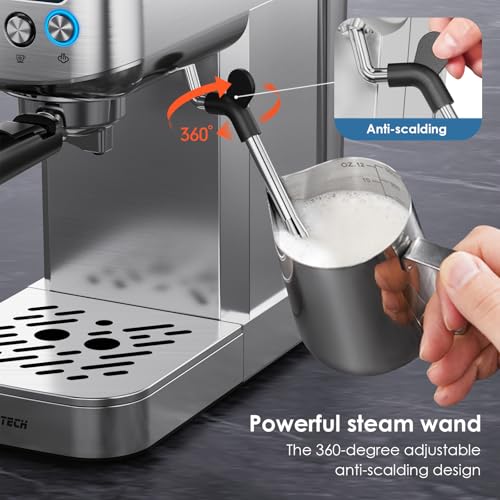
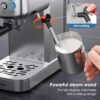
A manual steam wand handles milk. SOWTECH describes it as producing silky, soft foam suitable for cappuccino and latte, and as with all single heater machines, brewing and steaming are sequential rather than simultaneous.
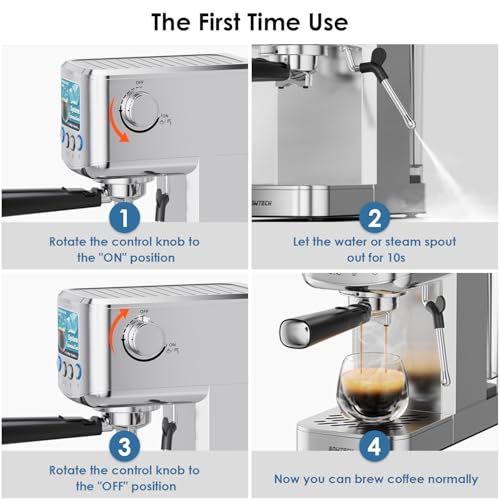
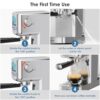
The listing carries an operating instruction that is genuinely useful and rarely stated elsewhere: on first use, and whenever the tank has run dry, the steam function should be run for around ten seconds before brewing. That primes the pump and clears air from the line. Air locked pumps are a very common cause of a machine appearing dead on arrival, and knowing this procedure before the first use avoids an unnecessary return. It is worth reading the manual on this specific point. SOWTECH’s cheaper 3.5 bar steam model uses an entirely different mechanism and does not need this step.
Water Tank, Cup Warmer and Daily Handling
The 42 ounce removable tank is generous for a machine 6.2 inches wide and should cover several drinks between refills. A cup warmer, auto shut off and single cup brewing are all listed among the special features. As on other machines of this size, the cup warmer is a passively heated top plate rather than a dedicated element, so it needs the machine to have been on for a while to be useful.
Included with the machine are a one cup filter, a two cup filter, a funnel and a tamper with an integrated spoon. Published owner feedback reports mild vibration during extraction sufficient to shift a light cup, which is normal for a vibration pump in a body of this weight, and notes that removing the portafilter can leave standing water in the basket. Neither is unusual at this price. Keeping the group and basket clean matters, and a periodic run with a descaling tablet is the maintenance that actually determines how long the machine lasts.
What the Specifications Do Not Settle
The structured data on this listing is substantially broken. Two attribute rows read as “Capacity 2.6 Pounds” and “Item Weight 8 Pounds” in both the name and the value field, which is a parsing failure; a water tank capacity expressed in pounds is meaningless in any case. The manufacturer part number is empty. The included components description contains a typo giving the tank as 342 ounces where every other reference states 42 ounces, and 42 is the figure consistent with the machine’s size.
Beyond the corrupted fields, the listing gives no brew temperature, no boiler or thermoblock designation, no portafilter diameter, no basket dose, no voltage, no country of origin and no warranty term. There is no cold brew cycle duration and no descaling interval. The model launched in 2024 with a small published review count, so there is not yet a body of long term owner feedback to indicate how it ages, and nothing in the data identifies who actually manufactures it.
Who It Suits
The JH-C5119 suits a buyer who wants a narrow pump machine with a large tank and is curious about the cold extraction mode, and who is willing to pair it with a grinder and follow the priming procedure. Mechanical buttons rather than a touch panel will suit anyone who has been frustrated by capacitive controls on wet hands, and the 42 ounce tank reduces refilling on a machine this slim.
It is the wrong choice for anyone who wants genuine cold brew, anyone who needs documented temperature behaviour, or anyone who wants a long service record behind the purchase. Buyers wanting a machine with an established history should look at longer running models such as the De’Longhi ECP3420, and buyers who want the drinks without any technique should look at the automatics in the super automatic espresso machine category.