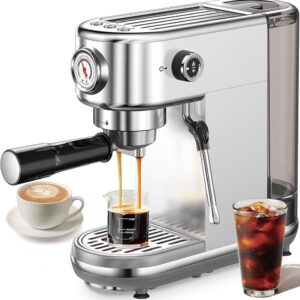
Description
The MiiCoffee Apex is a semi-automatic espresso machine specified with a 58mm commercial portafilter, PID temperature control, configurable pre infusion, a pressure gauge and a stated 9 bar extraction. It measures 11.02 inches deep, 9.06 inches wide and 14.96 inches high, weighs 19 pounds, runs on 110 volts, and ships with the 58mm portafilter, a tamper and a manual.
That specification list is unusual at this price. PID control, a barometer and a commercial portafilter format are the three things that separate a machine you learn on from a machine you replace, and finding all three together normally costs considerably more. Against the rest of our espresso machines category, the Apex is specified like a prosumer machine in a domestic body.
PID Control and the 9 Bar Claim
PID is a control method that holds a target temperature by continuously correcting rather than switching a thermostat on and off around a set point. Published specifications for this machine put the adjustable range at roughly 85 to 102 degrees Celsius, which spans everything from a very gentle extraction for dark roasts to the high end used for light ones. That figure is not in the structured specification, so treat it as a manufacturer claim.
The 9 bar figure in the special features is more honest than the 15 and 20 bar numbers most listings quote, because 9 bar is the pressure espresso is actually extracted at rather than the pump maximum. Published owner feedback notes that reaching and holding 9 bar in practice depends heavily on puck preparation, which is exactly right: the gauge shows what the puck is doing, and a poorly distributed bed will not build pressure regardless of what the pump can supply. Feedback also reports that the machine has no over pressure valve, so there is no automatic limiting if the grind is too fine, which makes the gauge a working instrument rather than a decoration.
The Barometer
The pressure gauge is the feature that makes the rest of the machine usable. Without one, a shot that runs fast and a shot that runs correctly look identical until you taste them. With one, you can see whether the grind is too coarse, whether the puck is channelling, and whether the machine is reaching working pressure.
That turns dialling in from guesswork into diagnosis, and it is why machines with gauges tend to be the ones people keep. One caveat applies to every gauge: a pressurised basket generates its own back pressure and makes the reading nearly meaningless, so the instrument is only a real tool with single wall baskets fitted. The listing does not say which baskets are supplied, which is the most consequential omission on the page given what the machine is sold on.
Dual Heating and Steam
Published specifications describe a 550ml stainless steel boiler for brewing paired with a dedicated thermoblock for steaming. That is an unusual and sensible arrangement: the boiler gives brewing stability and thermal mass where it matters, while a separate thermoblock supplies steam without forcing the brewing circuit through a temperature swing. The practical result is that you can steam without the purge and wait routine a single boiler machine imposes.
Owner reports do note a specific quirk: the steam wand spits water for the first forty to sixty seconds before delivering dry steam. That is characteristic of a thermoblock steam circuit clearing condensate, and the answer is to purge the wand into the drip tray before putting a pitcher under it. It is a routine rather than a fault, but it is worth knowing because a pitcher of milk ruined by water is a wasted drink. Heat up from cold is reported at around five minutes, which is consistent with a real boiler rather than a thermoblock on the brew side.
The 58mm Portafilter and Pre Infusion
A 58mm portafilter is the commercial standard, and every published dosing guide, precision basket, puck screen, distribution tool and bottomless portafilter is made for it first. On a machine with a gauge and PID control that compatibility is the point: you can change one variable at a time using parts made for the format.
Configurable pre infusion is the other adjustment. Pre infusion wets the puck at low pressure before full pressure arrives, letting the bed settle and reducing channelling, and being able to set it rather than accept a fixed profile is a genuine prosumer feature. Owner reports mention that pre infusion behaviour differed on earlier revisions of this machine, which connects to a data point on the listing itself: the colour field reads Stainless Steel with a version one suffix. That suggests the Apex has been revised, and anyone buying should confirm which revision is shipping.
Tank, Build and Footprint
Published specifications put the removable water tank at 1.7 litres, which is generous for a machine of this footprint and enough for a long session without refilling. The figure is not in the structured specification.
Nineteen pounds is respectable rather than heavy, and it is enough mass to keep the machine still when a 58mm portafilter is locked in, which takes more torque than a smaller format. The brushed stainless body and the absence of visible plastic are consistent with owner reports describing a solid build. At 14.96 inches high with a top filled tank, the real clearance requirement is higher than the stated figure, so this will not sit under a standard wall cabinet comfortably.
What the Specifications Do Not Settle
The listing does not state whether the supplied baskets are single wall or pressurised, the water tank capacity, the boiler capacity or material, the wattage, the heat up time, the PID adjustment range, the pre infusion range, whether an over pressure valve is fitted, the cup clearance, or the warranty term. It does not state whether a milk pitcher, a cleaning brush or a blind basket for backflushing are included, and a blind basket matters because a machine with a gauge and a three way path is one you would want to backflush.
It also does not confirm whether a three way solenoid valve is fitted, which decides whether the used puck comes out dry and knocks cleanly or wet and needs scraping. And there is no hot water outlet mentioned, so americanos need a kettle. Descaling remains the maintenance job that determines lifespan, and products for it are covered in our cleaning and descaling section.
Who It Suits
This suits someone who wants to learn espresso properly, already owns or intends to buy a burr grinder, and would rather spend on temperature control and instrumentation than on a built in grinder. PID control, a gauge, configurable pre infusion and a 58mm format together describe a machine you improve rather than outgrow, and the dual heating removes the wait that makes single boiler machines tedious. The Diletta Bello answers the same brief with a steel boiler and more mass.
It suits you poorly without a grinder, because a machine with a gauge and single wall baskets has nothing to hide behind and pre ground coffee will simply produce bad shots you can now watch happen. It suits you poorly under a low cabinet, and poorly if you want a hot water tap. Anyone who wants the grinder built in should look at a machine such as the Breville Barista Express, and anyone who wants no process at all should consider a bean to cup from our super automatic espresso machine section. The HiBREW H10A is another 58mm machine with adjustable temperature and pre infusion.