Description
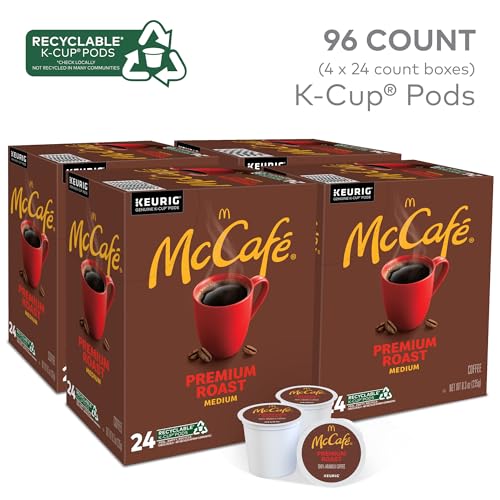
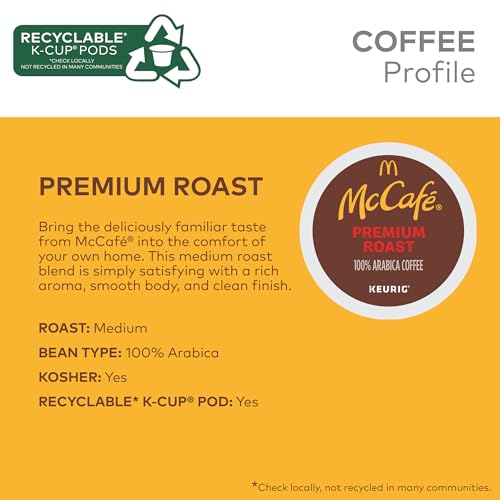
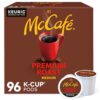
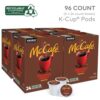
McCafe Premium Roast in K-Cup format is a 96 count box listed at 43.38 dollars, a medium roast made from 100 percent Arabica beans, certified Orthodox Union Kosher and described by McDonald’s as the same coffee served in its restaurants. At 96 pods for 43.38 dollars it works out at about 45 cents a cup, which puts it at the cheaper end of the branded pods covered on this site.
The pitch is straightforward. McDonald’s sells an enormous amount of coffee and has spent two decades making it consistent, and this is that coffee moved into a format you can brew at home. It is not a speciality product and it does not pretend to be. What it offers is a familiar, unchallenging medium roast at a price per cup that undercuts most of the coffee shop brands in the pod section here.
The Same Coffee in Two Box Sizes
This is worth checking before you buy anything else on this page. McCafe Premium Roast appears twice in this catalogue: as this 96 count box at 43.38 dollars, and as a 32 count box at 18.63 dollars. The manufacturer description on both listings is word for word identical, down to the roast statement, the recyclability paragraph and the sourcing claim.
The arithmetic is not identical. Ninety six pods at 43.38 dollars is 45 cents each. Thirty two pods at 18.63 dollars is 58 cents each. That is a 29 percent premium for buying the small box, on what the listings themselves describe as the same coffee. Over a year of daily drinking the difference is roughly forty five dollars. Unless you are buying the small box to try the coffee before committing, there is no argument for it, and this pattern repeats across most brands in the category.
The Recyclable Pod Claim, and the Caveat Attached
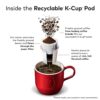
McCafe states that its K-Cup pods are now made from recyclable material, and immediately adds check locally, not recycled in all communities. Both halves matter.
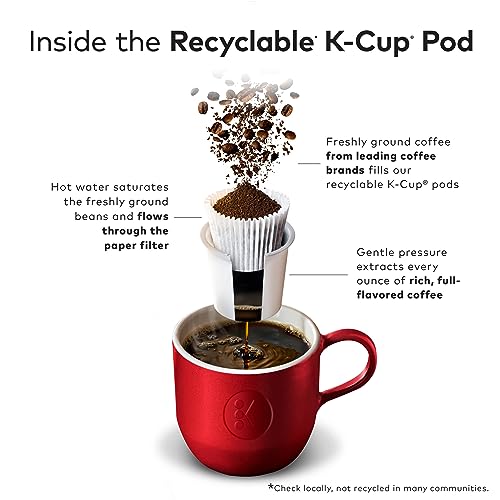
The pod body on recyclable K-Cups is polypropylene, resin code 5. Polypropylene is genuinely recyclable as a material and many kerbside schemes accept it in principle. The problem is not chemistry, it is size and contamination. A K-Cup is small enough to fall through the sorting screens at many facilities, and it arrives full of wet coffee grounds with a foil lid bonded to the rim. The instruction most brands give, peel the lid, empty the grounds, then recycle the cup, exists to deal with the second problem and does nothing about the first.
So the honest position is that the pod is made of a recyclable plastic, that whether it is actually recycled depends on your local facility, and that the manufacturer’s own wording concedes exactly that. It is a real improvement on the older non recyclable pods and it is not the same thing as a pod that gets recycled.
Kosher Certification and Sourcing
McCafe states Orthodox Union Kosher certification, marked with the letter U. That is a specific, verifiable certification from a recognised body rather than a general claim, and it is the same certification carried by most of the Keurig Dr Pepper brands in this category. For coffee it is a straightforward certification to hold, since plain roasted coffee has no complicating ingredients, but flavoured coffees are a different matter and the mark is worth having on those.
The sustainability claim is 100 percent responsibly sourced coffee, described as supporting a healthier planet and improved quality of life for farming communities. That phrasing is a corporate programme rather than a third party certification. It is not the same as Fair Trade Certified or Rainforest Alliance, which involve external auditing against published standards, and the listing does not name a scheme, an auditor or a standard. Some brands do state a third party certification: the Green Mountain Colombia Select pods are Fair Trade Certified, which is a genuine difference in what the claim rests on.
Roast Level and What to Expect in the Cup
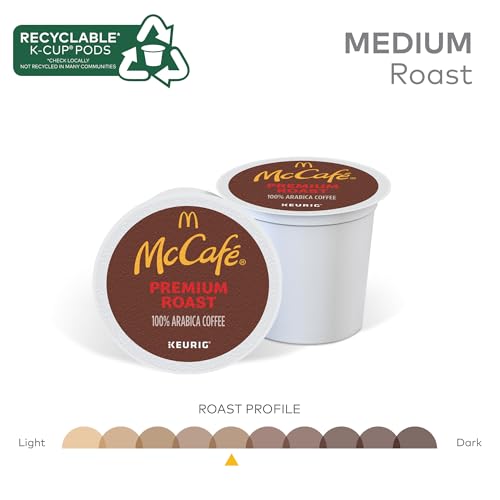
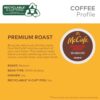
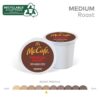
McCafe describes the blend as having a rich aroma, smooth body and clean finish, roasted in a temperature controlled environment for consistency. Medium roast from 100 percent Arabica at this price point generally means a Latin American blend, sweet towards caramel and nut rather than fruit, with moderate acidity and a finish that does not linger.
A brew size caution applies to any medium roast in a pod. The dose is fixed at nine to twelve grams and the machine only varies the water, so a 12 ounce cup from this pod is the same coffee as an 8 ounce cup with half again as much water in it. On a blend built around smoothness rather than intensity, that thinning is more obvious than it would be on a dark roast, and 8 ounces is the size that shows this coffee at its best.
Consistency is the honest selling point here and it is not a small one. A restaurant chain roasting at this volume has a strong commercial incentive to make every batch taste the same, and temperature controlled roasting is how that is achieved. Speciality roasters chase distinctiveness; volume roasters chase repeatability. If you want the cup to taste the same in March as it did in January, the volume roaster is the safer purchase.
What the Specifications Do Not Settle
The specification block contains five fields and all five are category labels: brand, item form, flavour, caffeine content and roast level. There is no weight, no dimensions, no date first available and no country of origin. There is no coffee dose per pod in grams, which is the single figure that would let you calculate a brew ratio.
There is no origin for the beans beyond 100 percent Arabica, no roast date and no best before guidance. There is no caffeine content in milligrams, only the description Caffeinated. Nothing states whether the 96 pods arrive as one box or several smaller ones, which affects how you store them. And the compatibility bullet claims the pods work with all Keurig K-Cup coffee makers without noting that machines using the older Keurig 2.0 lid reading system were designed to reject unlicensed pods, a restriction Keurig has since abandoned but which occasionally still confuses owners of that generation.
Who It Suits and Who Should Look Elsewhere
This suits a household that drinks a lot of ordinary, dependable coffee and wants it cheap in pod form. At 45 cents a cup this is one of the better value branded boxes in the category, the recyclable pod is a genuine if qualified improvement, and the kosher certification is a real credential. Ninety six pods is around three months for one daily drinker. The Folgers Classic Roast pods are the closest rival on that basis.
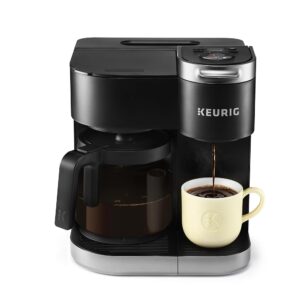
It suits you poorly if you want a distinctive cup, since consistency and distinctiveness pull in opposite directions and this brand has chosen consistency. It suits you poorly if you want third party audited sourcing rather than a company programme, in which case the Fair Trade Certified options in the same category are the ones to look at. And at 45 cents a cup it is still four or five times the cost of the same coffee ground, which is worth weighing against a machine that brews both pods and a carafe. The Keurig K-Duo Essentials is one machine that does both.