Description
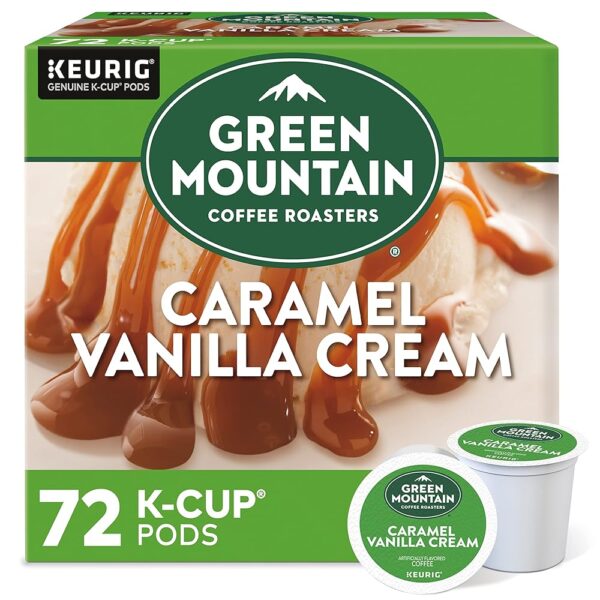
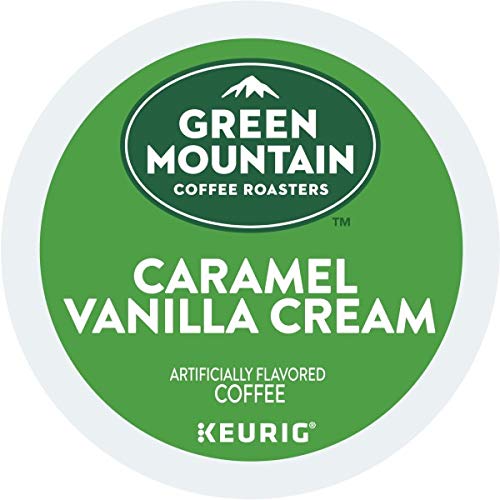
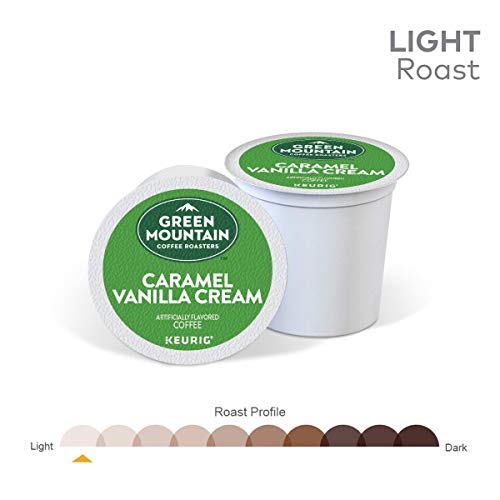
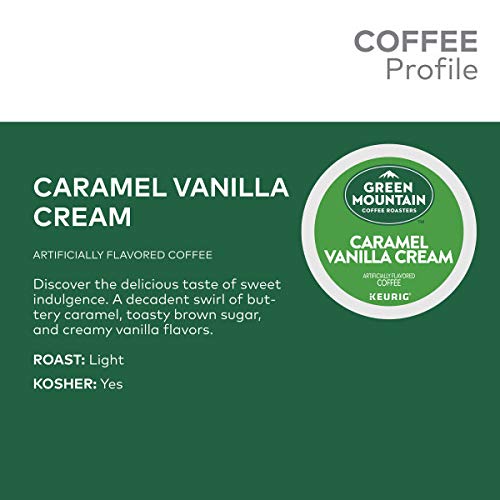
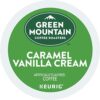
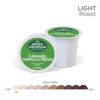
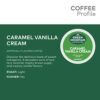
Green Mountain Coffee Roasters Caramel Vanilla Cream in Keurig K-Cup format is a 72 count box listed at 37 dollars, a flavoured light roast described as a swirl of buttery caramel, toasty brown sugar and creamy vanilla, certified Orthodox Union Kosher. That works out at about 51 cents a cup.
Flavoured coffee is a category people either dismiss or drink exclusively, and it is worth understanding on its own terms rather than judging by speciality standards. It is not trying to express origin or roast craft. It is a sweet, aromatic drink built on a coffee base, and it competes with syrups and creamers rather than with the black coffees elsewhere in the pod category. Judged against what it is trying to be, it succeeds or fails on the quality of the flavouring and the base coffee underneath it.
How Flavoured Coffee Is Actually Made
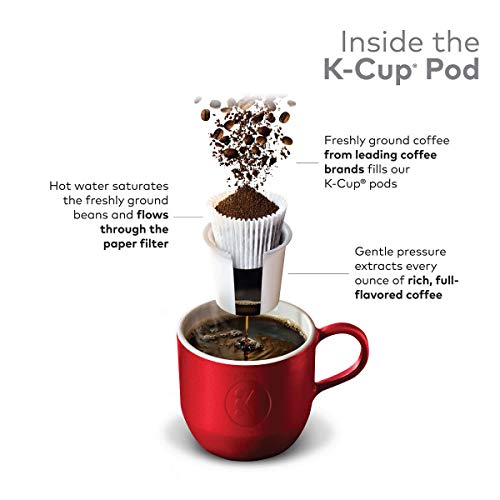
The flavour does not come from the beans. Caramel, vanilla and brown sugar notes in a coffee at this price are added, and the process is standard across the industry: after roasting and cooling, the beans are tumbled in a drum while a measured quantity of flavouring is sprayed on. The flavouring compounds are carried in a solvent, usually propylene glycol, which evaporates and leaves the aromatics bound to the bean’s oily surface.
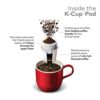
Two things follow from that. First, the flavour lives on the outside of the bean, which is why flavoured coffee smells far more strongly in the bag than it tastes in the cup, and why it fades faster than the coffee itself goes stale. In a sealed pod that is less of a problem than in a bag, which is one of the few genuine advantages of the format for this style.
Second, flavouring oils leave residue. They coat everything they touch, including the brew chamber and the needle of your machine, and they are the main reason a brewer used mostly for flavoured pods develops a taste that carries over into plain coffee. Running a rinse cycle after a flavoured pod helps, and the products in the machine cleaning section deal with what a rinse cannot shift.
Why the Base Is a Light Roast
The roast level field reads light roast, and that is a deliberate choice rather than an accident. A dark roast carries strong smoky and bitter character of its own, which fights with added sweetness and muddies it. A light roast is comparatively neutral, which leaves room for the flavouring to be the dominant note.
That has a consequence for how you brew it. A light roast at a fixed pod dose thins out quickly as brew size rises, and while the flavouring will still be present at 12 ounces, the coffee underneath it will not. The result is sweet water rather than flavoured coffee. Six or eight ounces is the right size for this pod, and if you take it with milk the smaller size matters more still.
There is a practical argument for buying flavoured coffee in pods rather than by the bag for exactly this reason. A bag of flavoured beans loses its aromatics steadily once opened, and by the second week the smell is stronger than the taste. A sealed pod holds the flavouring until the moment it is brewed, which is the format doing something useful rather than merely convenient. The same logic applies to the flavoured pods elsewhere in the range, including the Crazy Cups flavoured variety packs.
Kosher Certification Matters More Here
The listing states Orthodox Union Kosher certification with the letter U. On plain black coffee that mark is close to routine, since there is one ingredient and the certification largely covers the facility.
On a flavoured coffee it is doing considerably more work. Flavouring compounds are formulated products with their own ingredient lists and their own supply chains, and they can include carriers, emulsifiers and natural or artificial flavour components derived from a wide range of sources. A kosher certification on a flavoured coffee means an external body has looked at those ingredients as well as the facility. For anyone who cares about the mark, that is a more meaningful assurance than the same mark on an unflavoured pod, and it is one of the few points where this product is better documented than the plain coffees beside it.
A Sustainability Pledge That Has Expired
The sustainability bullet reads: committed to 100 percent responsibly sourced coffee by end of 2020. That deadline is now several years in the past, and the listing still presents the commitment as a future intention.
Green Mountain’s sibling listings in this same catalogue, including the Breakfast Blend box, carry the same claim without the date, phrased simply as committed to 100 percent responsibly sourced coffee. The dated version on this page appears to be older text that was never updated.
Whether the target was met is not something this page establishes, and a claim written as a pledge rather than an achievement tells you nothing about the present state of the supply chain. It is also worth remembering that responsibly sourced is a company defined programme rather than an audited third party certification, so even in its updated form it rests on the company’s own criteria. Brands in this category that carry Fair Trade Certified marks are making a different and externally verified claim.
What the Specifications Do Not Settle
The specification block runs to five category labels and nothing else: brand, item form, flavour, caffeine content and roast level. There is no weight, no dimensions, no country of origin and no date first available.
Most significantly for a flavoured product, there is no ingredient list. A flavoured coffee contains something beyond coffee, and neither the flavouring type nor whether it is natural or artificial appears anywhere on this page. There is no allergen statement. There is no calorie or sugar information, which matters because people reasonably assume a caramel and vanilla coffee contains sugar; flavoured coffee of this kind generally does not, since the sweetness is aromatic rather than actual, but the listing never says so. There is no bean type, no origin, no dose per pod and no recyclability statement.
Who It Suits and Who Should Look Elsewhere
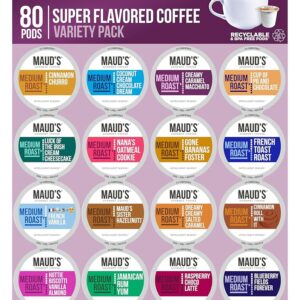
This suits someone who takes their coffee sweet and would otherwise be adding syrup, and who wants that without keeping a bottle on the counter. The light roast base is the correct choice for the style, the kosher certification carries more weight on a flavoured product than on a plain one, and 51 cents a cup is the ordinary going rate in this category rather than a premium for the flavouring. The Maud’s flavoured coffee pods are another option in the same style.
It suits you poorly if you drink large mugs, since the base coffee thins out and leaves the flavouring stranded. It suits you poorly if you want to know what is in it, because no ingredient or allergen information appears. And it suits you poorly if the same machine is used for plain coffee by someone else in the household, because flavouring residue carries over and a rinse cycle only partly deals with it. Anyone who wants sweetness without flavoured pods should look at an unflavoured medium roast and add their own syrup, which costs less and leaves the machine alone. The Green Mountain Colombia Select pods are one unflavoured medium roast to start from.