
Description
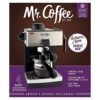
The Mr. Coffee ECM160-RB is a steam espresso machine, which is a different appliance from a pump espresso machine even though both are sold under the espresso label. A steam machine heats a sealed boiler until the pressure of the steam itself pushes water through the coffee bed. A pump machine uses an electric pump to reach the roughly nine bar reference pressure that modern espresso recipes assume. That distinction decides almost everything about what this machine can and cannot do.
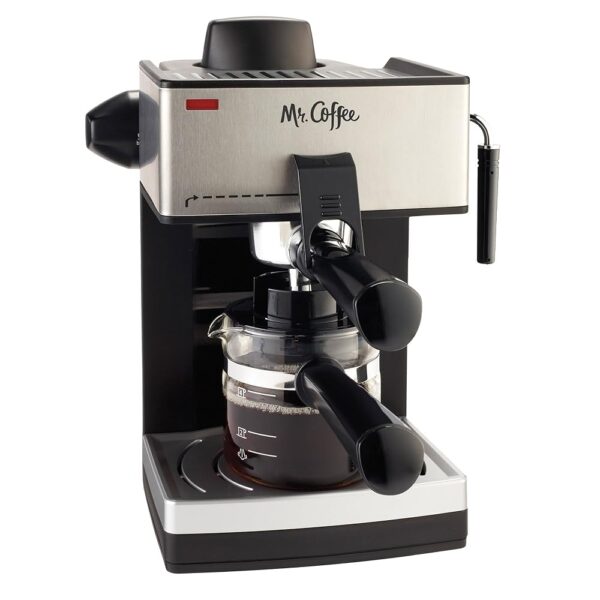
The listing records a four cup capacity, a reusable filter, a removable tank, a milk frother, dimensions of 6.5 inches deep by 8 inches wide by 10.5 inches high, and a first availability date of October 2007. It is one of the oldest listings covered on this site, and it sits firmly at the entry end of the espresso category, well below the pump machines that dominate the rest of the catalogue.
How a Steam Machine Differs from a Pump Machine
Steam pressure is limited by what a small sealed boiler can safely hold, so extraction happens far below the pressure a pump delivers. The practical result is a darker, thinner shot with a lighter crema than a pump machine produces from the same coffee, and a brew that responds more to roast level than to grind adjustment. Steam machines also brew until the boiler empties, so the water loaded at the start sets the volume in the cup; there is no stopping mid shot. Anyone expecting the behaviour of the De’Longhi ECP3420 pump espresso machine will find the operating logic here genuinely different rather than simply weaker.
Boiler, Dose and the Four Cup Rating
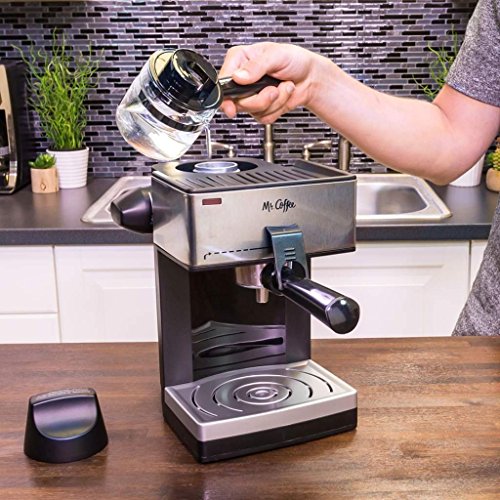
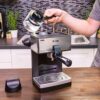
The four cup figure counts espresso sized servings measured against the marks on the glass decanter, not four mugs of coffee. Loading the boiler is therefore the main control the operator has: fill to the two cup mark and the machine makes two small servings and stops. The included components list names the machine, a measuring scoop and a recipe sheet, and the filter type is recorded as reusable, so there are no consumable baskets or capsules to buy. The safety cap on the boiler is the part that demands respect, because it seals a pressurised vessel and should never be opened while the machine is hot. Owner manuals for steam machines are unusually insistent on that point, and it is the one instruction on the machine that is a safety matter rather than a preference.
Grind and dose behave differently here as well. Because the water is pushed by steam rather than driven by a pump, a grind fine enough for a pump machine will choke the basket, while a grind that is too coarse produces something closer to strong drip coffee. Baskets in this class are usually a simple design with a single outlet rather than a precision basket, which is why the machine is forgiving of supermarket pre ground coffee and why a better grinder improves the cup less here than it would on a pump machine. The listing does not state the basket diameter, so no aftermarket basket can be assumed to fit.
The Frothing Arm and Milk Work
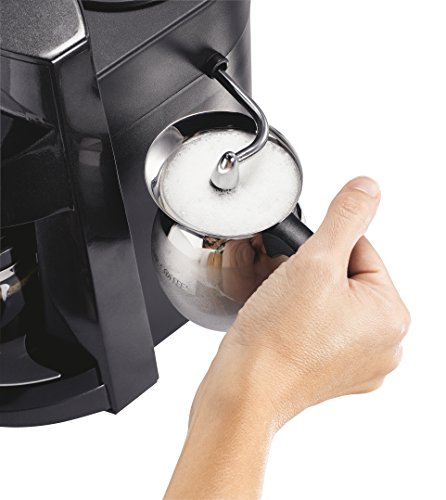
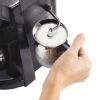
The special feature field lists a milk frother, and on this class of machine that means a short steam arm fed by the same boiler that brews the coffee. Two limits follow from the design. The arm is short, which restricts how tall a frothing pitcher can be slid underneath it, and boiler capacity is shared, so steaming milk and pulling shots compete for the same heat. A small pitcher matched to the arm height, something like a 12 ounce stainless frothing pitcher, is the sensible pairing rather than a large one.
Build, Footprint and Materials
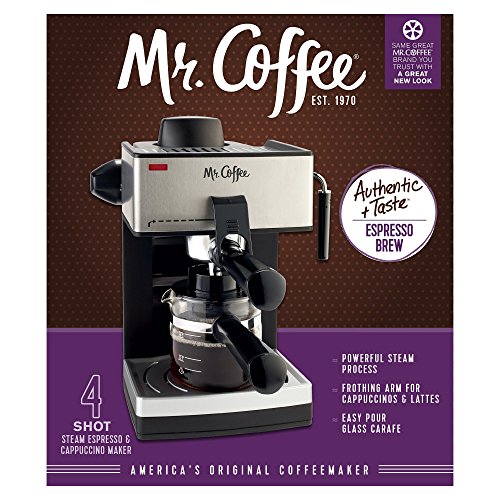
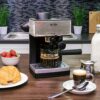
At 8 inches wide and 10.5 inches high this is a small machine by espresso standards, finished in silver and black, with a glass decanter and a stay cool handle. The item weight field claims 1.65 pounds, which is not the weight of a machine containing a metal boiler, a portafilter and a glass carafe; that figure is packaging data rather than real mass. Build expectations should be set by the position of the product rather than by the finish: this is a budget appliance on a long running listing, and the same is true of the BELLA steam espresso maker at the same end of the category.
Two smaller details affect daily use. The drip tray is removable, which is the difference between wiping a counter and rinsing a part, and the glass decanter has a stay cool handle, which matters on a machine that pours directly from a vessel sitting under a hot group. Glass is also the vulnerable component: a dropped decanter usually ends the machine unless a replacement can still be sourced, and nothing in the listing confirms that one can. For a design first catalogued in 2007, that is a question worth asking before the purchase rather than after.
What the Listing Gets Wrong
The operation mode field reads Fully Automatic on a machine whose entire interface is one control knob and a boiler filled by hand. Nothing here is automatic. The model name field reads Mr. Coffee Old Version Espresso, which is a catalogue artefact rather than a model name; the real designation, ECM160-RB, appears only in the item model number field. No bar pressure figure is published anywhere in the specification block, which for a product sold as an espresso machine is a conspicuous omission rather than an oversight. The price field in the imported record has overflowed into scientific notation and carries no usable value.
What the Specifications Do Not Settle
The listing does not state boiler capacity in millilitres, heat up time, recovery time between a shot and steaming, or the diameter of the filter basket, which governs whether any aftermarket basket or tamper fits. It gives no warranty term and no statement on parts availability for a design first listed in 2007, which matters because gaskets and safety caps are the components that fail on steam machines. Noise is not addressed either. Buyers who want documented pressure and temperature numbers will find more of them across the espresso machines covered on this site, though the entry tier is thin on data throughout.
Who It Suits and Who Should Buy Another Format
This suits someone who wants strong, small, milk based drinks at home for the lowest possible outlay, who accepts that the result will not match a cafe shot, and who is happy operating a knob and a boiler. It also suits a second kitchen, a caravan or a dorm room where footprint beats performance. It does not suit anyone chasing crema, repeatable extraction or single origin clarity, and it does not suit anyone who wants to steam milk for several drinks in a row. Those buyers should move up to a pump machine, and anyone who simply wants concentrated coffee without electricity should consider the IMUSA B120-42V stovetop espresso maker, which works on the same low pressure principle with far fewer parts.