Description
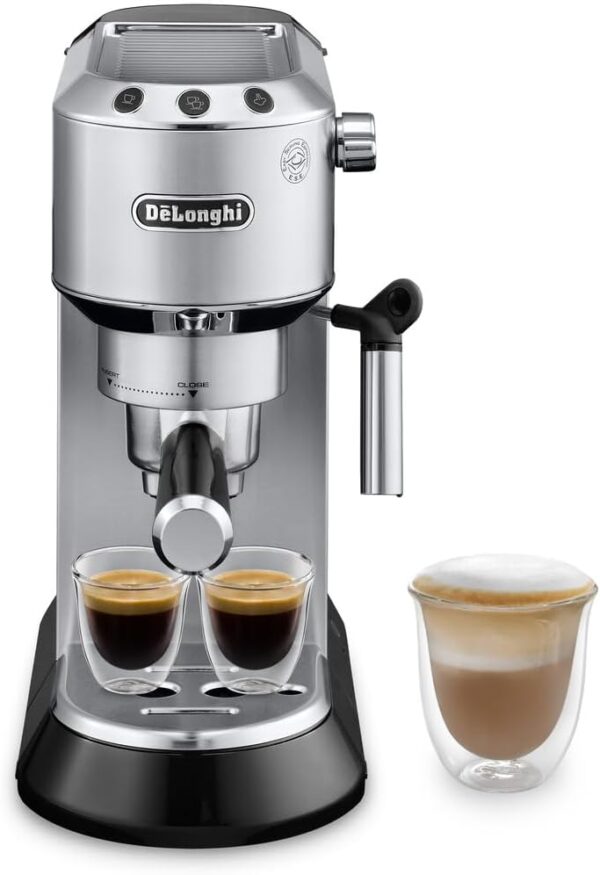
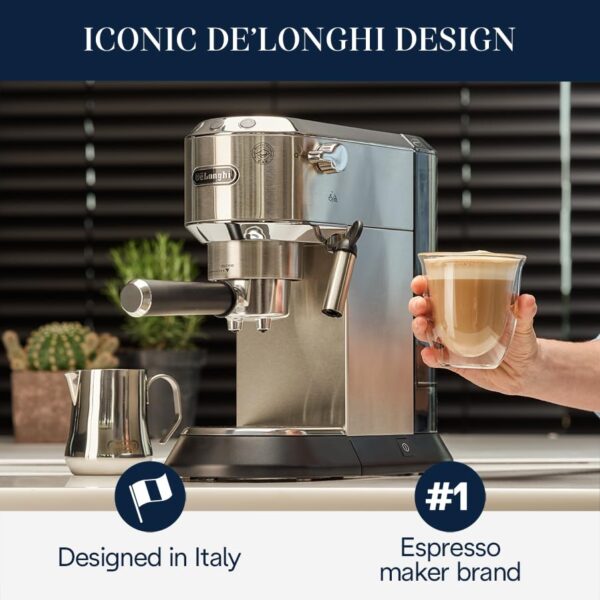
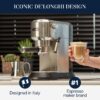
The De'Longhi Dedica EC680M is built around one number: 5.9 inches of width. De'Longhi describes it as its slimmest espresso machine, and at that width it fits into gaps where no other portafilter machine will go. The specification is otherwise conventional for an entry level pump machine: a 15 bar thermoblock, a manual milk frother, an illuminated control panel and three filter options including an ESE pod carrier. It measures 13 inches deep and 12 inches tall, and weighs 9.3 pounds.
On sale since 2014 with several thousand published reviews, the Dedica has a long service record and a well documented set of behaviours. That matters more than any single specification, because it means the recurring themes in owner feedback are based on years of use rather than first impressions. The operation mode field on this listing also reads manual, which is correct and unusual: most machines in this catalogue carry an incorrect fully automatic label.
The Three Filter Options
The Dedica ships with a single coffee filter, a double coffee filter and an ESE pod filter, along with a combined measuring scoop and tamper and a water hardness test strip. The pod option is worth understanding because it is frequently confused with proprietary capsules.
An Easy Serving Espresso pod is 44 mm of ground coffee pressed into a paper filter. It is an open industry standard made by many roasters rather than a system locked to one manufacturer, so a machine that accepts them gains a convenience mode without the recurring lock in that a capsule machine such as the Nespresso CitiZ imposes. The coffee baskets are pressurised, which is why the machine tolerates supermarket pre ground coffee and why the improvement from a good grinder is smaller than you might expect.
Thermoblock Heating and the Heat Up Question
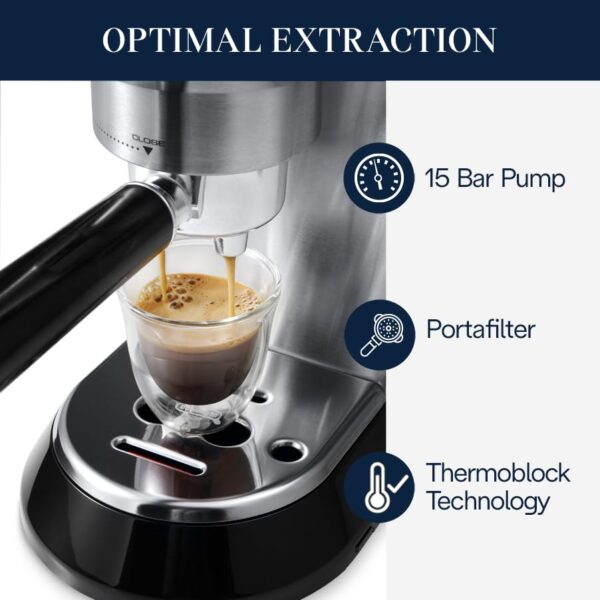
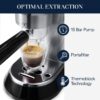
De'Longhi describes a high performance thermoblock delivering 15 bar of pressure. A thermoblock heats water as it passes through rather than storing a hot volume, which is what allows a machine 5.9 inches wide to exist: there is no room for a boiler. The consequence is fast readiness and low thermal mass, so temperature stability across consecutive shots depends on the control electronics rather than on stored heat.
No brew temperature, stability figure or heat up time appears in the manufacturer data. Published owner feedback commonly reports readiness in around 40 seconds, which is consistent with a thermoblock at this size but should be treated as an owner observation rather than a published specification. The practical implication is the same either way: preheat the group and the portafilter with a blank shot before the real one, because a cold 9 pound machine pulls a lot of heat out of the first cup.
Milk and the Manual Frother
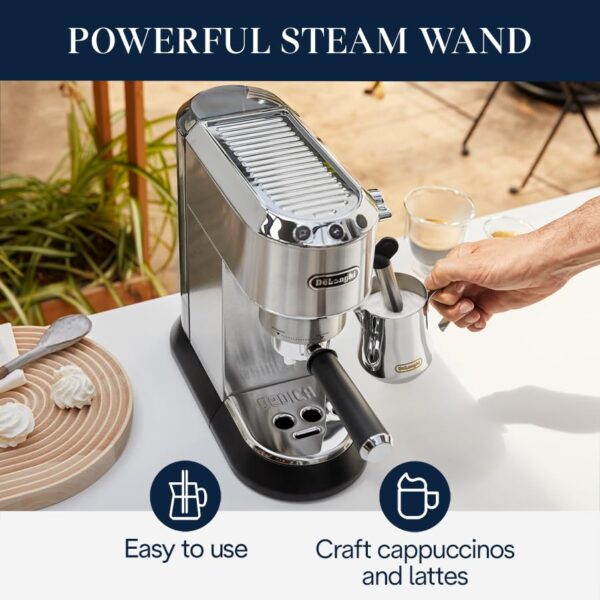
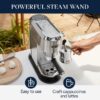
The frother is manual, described by De'Longhi as producing rich, creamy froth through a powerful steam output. On the Dedica this is a bare wand rather than the panarello sleeve fitted to some cheaper De'Longhi machines, which gives more control at the cost of requiring more technique.
Owner feedback identifies the wand length as the main limitation: it is short, which restricts how deeply it reaches into a taller milk jug and makes larger pitchers awkward. A shorter, wider jug works better here than a tall one. The same feedback reports that the pump and the frothing system are both noticeably loud, which is characteristic of a vibration pump in a light body with little material to damp it. Neither point affects the coffee.
Build, Tank and Daily Handling
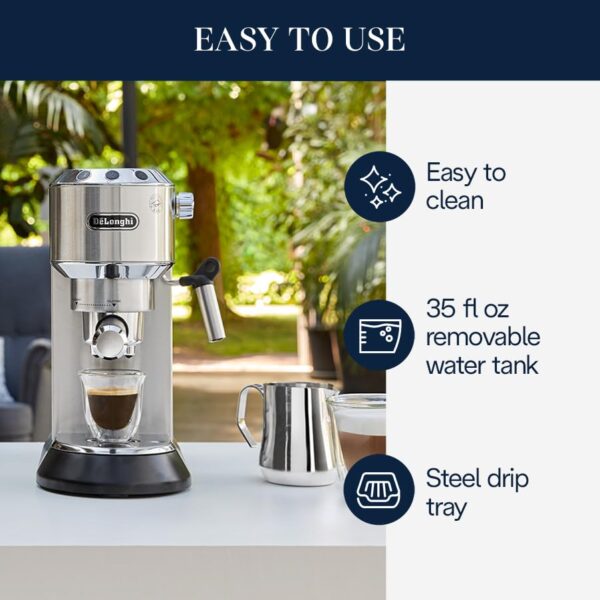
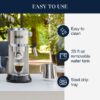
The stainless body carries illuminated control buttons and a dial. De'Longhi states the water tank and drip tray are removable and dishwasher safe, which is specific and genuinely useful; washable parts are the difference between a machine that stays clean and one that develops a stale taste. The machine will brew into cups up to five inches tall, which covers most mugs but not travel tumblers.
Two ergonomic points recur in owner feedback. The water tank has no proper handle, which makes it awkward to lift out and carry to a tap, and getting consistent shots takes trial and error because there is no gauge, no timer and no temperature adjustment to guide you. Both are consequences of the narrow body and the price. Anyone wanting feedback while learning should compare a machine with a pressure gauge instead.
Running Costs and What You Add Later
Beyond coffee and descaler there is nothing this machine requires. The filter is reusable, there is no water cartridge and no capsule, so the running cost is whatever you spend on beans. Over two years that difference against a capsule machine is substantial, and it is the strongest financial argument for a portafilter machine at any price.
What most owners add later is a grinder and a better tamper. The supplied scoop and tamper combination is light and small, and a separate 51 mm tamper costs very little and improves consistency immediately. A burr grinder matters less here than on a machine with non pressurised baskets, since the pressurised baskets supplied flatten the difference between fresh and pre ground coffee, but it still improves the cup. A milk thermometer is the third cheap addition worth making if you steam regularly, since judging milk temperature by hand takes months to learn.
What the Specifications Do Not Settle
The water tank capacity is absent from the data, which is the figure a buyer most needs on a machine this narrow, since tank size determines how often you refill. Also missing are the brew temperature, the heat up time, the wattage, the portafilter diameter, the basket dose in grams and the warranty term.
The special features field contains a run together string reading Milk FrotherDrip Tray, Removable Tank, Twin Brewing Cycle, which is a parsing failure rather than product information. Twin Brewing Cycle is not explained anywhere in the manufacturer description and most likely refers to the single and double shot filters rather than to a separate function. The published rating on this listing sits lower than most De'Longhi machines despite the volume of reviews, which is worth reading as a signal that the machine divides opinion rather than that it fails.
Who It Suits
The Dedica suits a buyer whose constraint is counter width above everything else. At 5.9 inches it fits where nothing else does, it takes ESE pods when the routine is too much, and it has a decade of parts availability and owner knowledge behind it. Dishwasher safe components and a bare steam wand make it more capable than its size suggests. The Dedica Maestro EC900M is the current machine in the same narrow format.
It is the wrong machine for anyone who wants instrumentation, since there is no gauge, timer or temperature control, and for anyone making large milk drinks given the short wand. Buyers with more counter space should compare the De'Longhi ECP3420 or the cheaper Stilosa EC260BK, and buyers who want more control should look across the espresso machine category. The De’Longhi EC155 is the other long running entry machine in the range.