
Description
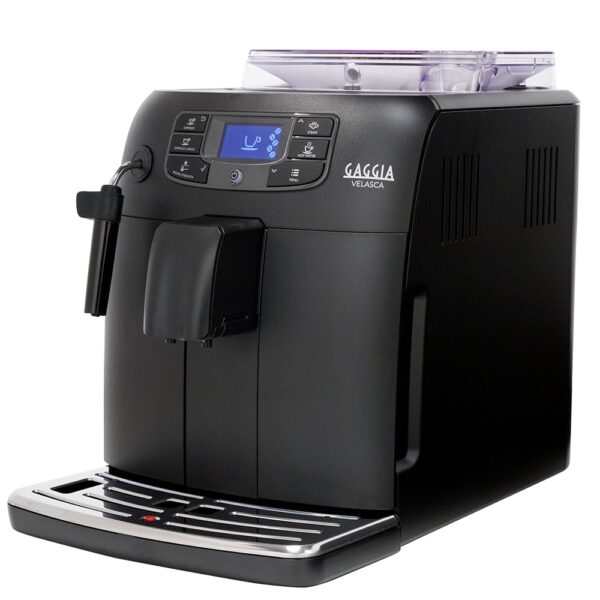
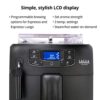
The Gaggia Velasca, model RI8260/47, is a bean to cup machine with a removable brew unit, a front loading 54 ounce water reservoir, a ceramic burr grinder and a manual milk wand rather than an automated milk system. It measures 17 inches deep, 10.25 inches wide and 17.63 inches high, in a matte black finish, and ships with a decalcifier, a Mavea Intenza water filter, a water hardness test strip, a tube of brew group lubricant and a combined coffee scoop and grinder key.
That accessory list is the most informative thing on the listing, because it tells you exactly what kind of machine this is. A brew group lubricant tube and a grinder key are supplied to machines the owner is expected to maintain. A water hardness strip is supplied because the machine wants configuring to your supply. This is a serviceable bean to cup rather than a sealed one, and among the machines in our super automatic espresso machine section that is the distinction that most affects how long one lasts.
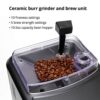
The Removable Brew Unit
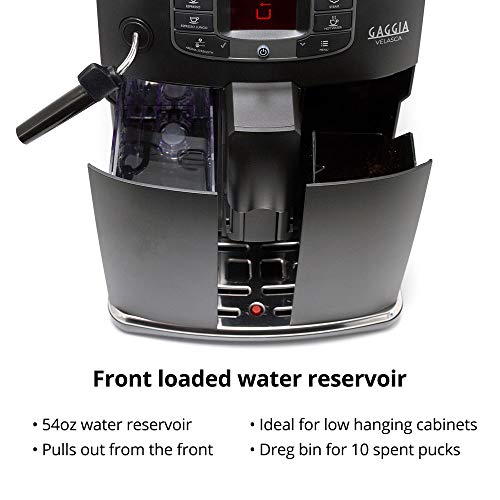
The brew unit is the assembly that receives the ground coffee, compresses it, passes water through it and ejects the puck. On a sealed machine it stays inside and can only be flushed with cleaning tablets; when it eventually fails or clogs, the machine goes to a technician. On the Velasca it slides out through the front service door, rinses under a tap and goes back in.
That difference is worth more than most features on any bean to cup specification sheet. A brew unit rinsed weekly does not accumulate the rancid coffee oils that cause the stale taste owners of sealed machines report after a year or two. The supplied lubricant tube exists because the unit’s seals need greasing periodically, which is a five minute job and the main reason these machines run for a decade. The front service door means none of this requires pulling the machine off the counter.
Grinder and Drink Control
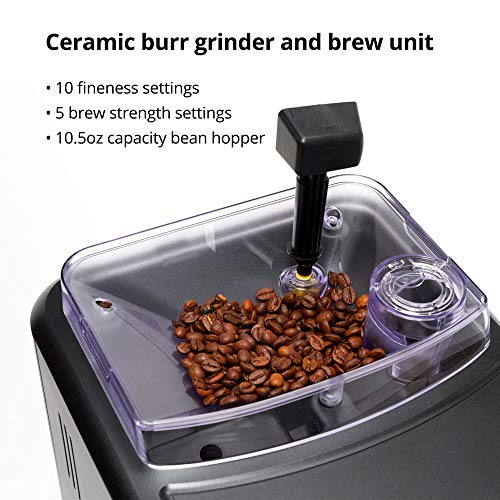
The Velasca uses a ceramic burr grinder, adjusted with the supplied grinder key rather than an external dial. Ceramic burrs hold an edge far longer than steel and transfer less heat into the grounds, which is the right choice on a machine expected to grind twice a day for years. The listing does not state the number of grind settings.
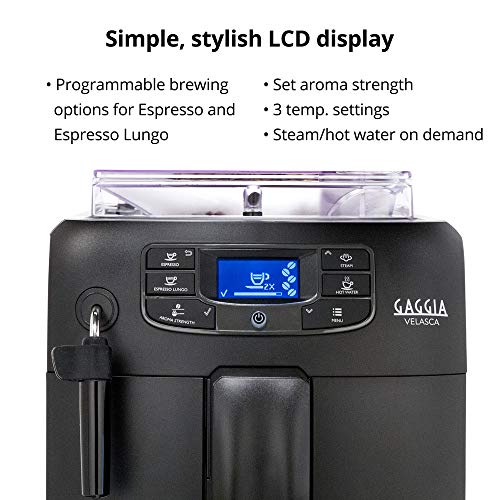
The marketing describes customisable brewing settings covering temperature, strength and volume, which on this platform means selecting from preset levels rather than entering numbers. That is more control than most machines at this level offer and it is the practical answer to the main complaint about bean to cup coffee, which is that it is weaker than espresso from a portafilter. Raising the strength setting and lowering the volume gets closer. It will not match a properly dialled 58mm basket on a machine such as the CASABREWS 4700Gense, but that is the trade the format asks you to accept.
The Milk Wand
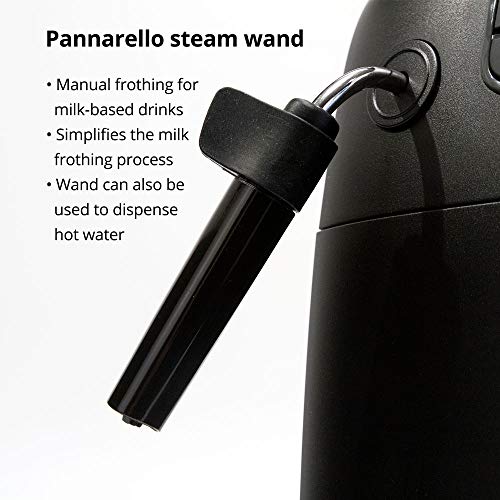
The Velasca has a manual milk wand rather than an automated carafe system, and that is a deliberate positioning decision rather than an omission. You hold a pitcher under it and steam the milk yourself, exactly as on a pump machine.
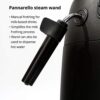
The wand is the panarello type, which injects air into the milk automatically through a side hole in a sleeve. That makes foam easily and forgivingly, which is why manufacturers fit them, but it also means the foam is bubbly rather than the flowing microfoam a latte needs, and it will over aerate if you leave it too long. Latte art is not achievable with a sleeved wand. The advantage over an automated milk system is that there is no milk carafe to store, no tube to purge and nothing proprietary to replace: you wipe the wand and purge it, and that is the entire routine. For many households that is the better bargain.
The 54 Ounce Front Loading Tank
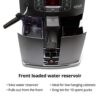
Fifty four ounces is roughly 1.6 litres, which is a reasonable capacity for the class. The specification that matters more is that it loads from the front. Most bean to cup machines take their tank out of the back or the side, which means pulling the machine forward on the counter every time it needs filling, and on a machine this size that is a daily annoyance. Front loading removes it entirely and it is one of the strongest practical arguments for this model.
The Mavea Intenza filter sits inside the tank and reduces the minerals that form scale. It is a consumable and needs replacing on a schedule, and it works alongside rather than instead of descaling. The supplied hardness test strip exists so you can set the machine’s descale interval correctly, and getting that right is the difference between descaling every couple of months and every six. Replacement descaler is covered in our cleaning and descaling section.
Errors in the Listing Data
Two fields on this listing are wrong and both are worth flagging. The item weight reads 17.63 pounds, which is exactly the same number as the height in inches. That is not a coincidence: the weight field has been populated from the height figure. A bean to cup machine of these dimensions with a metal brew unit weighs substantially more, so do not plan around it.
The voltage field reads 240 Volts. That is a European or commercial supply figure rather than a standard North American domestic outlet, and Gaggia sells 120 volt versions of this machine for the United States market. A 240 volt unit would not run on a normal household circuit there without a transformer and would very likely carry no local warranty. Anyone ordering should confirm the voltage of the specific unit before it ships. Separately, the global trade identification and UPC fields each contain two different numbers, which suggests the listing has absorbed data from more than one variant.
What the Specifications Do Not Settle
The listing does not state the bean hopper capacity, the grounds container capacity, the number of grind settings, the brewing temperature range, the number of temperature or strength levels, the pump pressure, the cup clearance, the noise level, or the warranty term. It does not enumerate the drinks on the menu, which on a bean to cup with a manual wand is likely to be a short list of black coffee options rather than the milk drinks an automated machine offers.
It also does not state how many drinks the grounds container holds before emptying, which determines how often you interact with the machine, and it does not confirm the weight of the machine at all given the field is corrupted. The item was first listed in 2017, so check whether the Mavea filter cartridge remains available, since a discontinued filter format is a slow problem rather than an immediate one.
Who It Suits
This suits someone who wants bean to cup convenience, intends to keep the machine for years, and would rather steam milk themselves than maintain an automated milk system. The removable brew unit, the supplied lubricant and the front loading tank together describe a machine designed to be looked after rather than replaced, and the ceramic grinder supports that. The Gaggia Velasca Prestige RI8263/47 is the same platform with an automatic milk carafe.
It suits you poorly if you want one touch milk drinks, since the wand is manual and sleeved. It suits you poorly if you want latte art, which a panarello cannot produce. And it suits you poorly on a shallow counter or under a low cabinet, given 17 inches of depth and 17.63 inches of height with a top loading bean hopper. Anyone who wants the milk automated should look at a machine with an integrated carafe system such as the De’Longhi Magnifica Evo instead. The Gaggia Magenta Plus RI8700/46 is the carafe machine inside the same brand’s range.


