![Quick & Clean [12-Pack] Keurig Cleaning Pods - K Cup Cleaner Pod For Keurig - 2.0 Coffee Machine Compatible, Removes Stains, Non-Toxic and Eco-Friendly](https://idealcoffeeshop.com/wp-content/uploads/2025/04/quick-clean-12-pack-keurig-cleaning-pods-k-cup-cleaner-pod-for-keurig--600x600.jpg "Quick & Clean [12-Pack] Keurig Cleaning Pods - K Cup Cleaner Pod For Keurig - 2.0 Coffee Machine Compatible, Removes Stains, Non-Toxic and Eco-Friendly")
![Quick & Clean [12-Pack] Keurig Cleaning Pods - K Cup Cleaner Pod For Keurig - 2.0 Coffee Machine Compatible, Removes Stains, Non-Toxic and Eco-Friendly](https://idealcoffeeshop.com/wp-content/uploads/2025/04/quick-clean-12-pack-keurig-cleaning-pods-k-cup-cleaner-pod-for-keurig--100x100.jpg "Quick & Clean [12-Pack] Keurig Cleaning Pods - K Cup Cleaner Pod For Keurig - 2.0 Coffee Machine Compatible, Removes Stains, Non-Toxic and Eco-Friendly")

Description
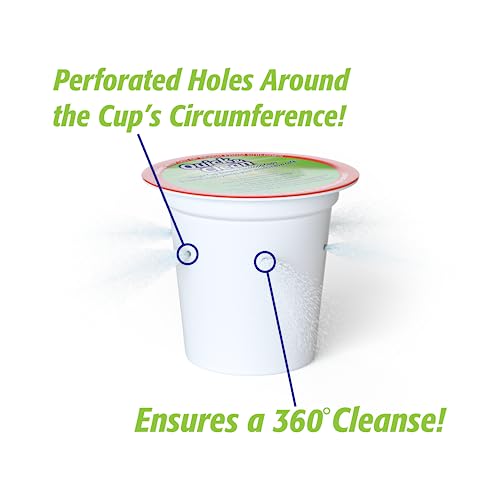
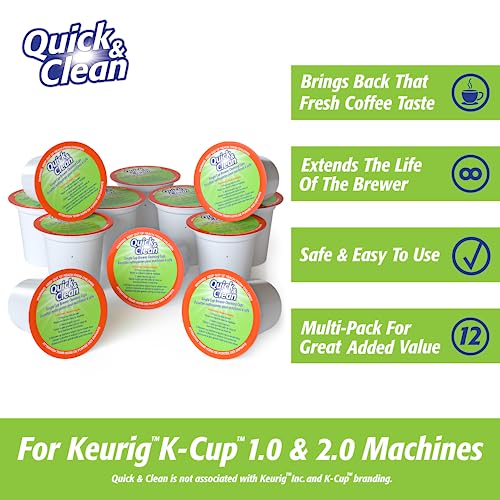
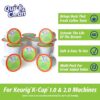
These are cleaning pods for Keurig style brewers, sold in a 12 pack under the Quick & Clean name. They load into the pod holder and run like an ordinary K-Cup, and their job is to flush old grounds, oils and residue out of the parts the water actually touches on its way to your cup.
The most important thing to understand about this product is what it is not. It is not a descaler. The listing says so plainly, recommending use alongside a Keurig descaling solution and noting that the solution is not included. Cleaning pods and descalers solve two different problems in two different parts of the machine, and buying one when you needed the other is the most common mistake in this whole category.
Cleaning Pods Versus Descaler
Scale is mineral. It forms inside the boiler and the tubing where hot water sits, and it is removed by acid. Nothing you put in the pod holder ever reaches it, because the pod holder is downstream of the boiler.
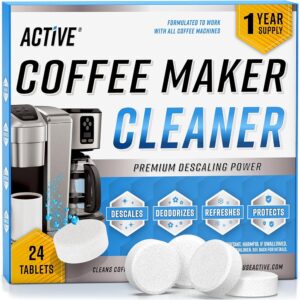
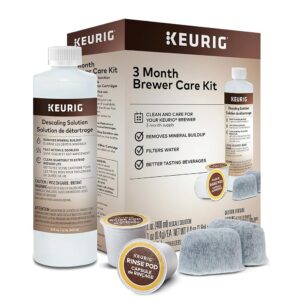
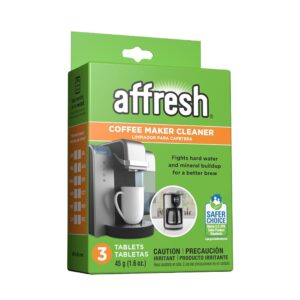
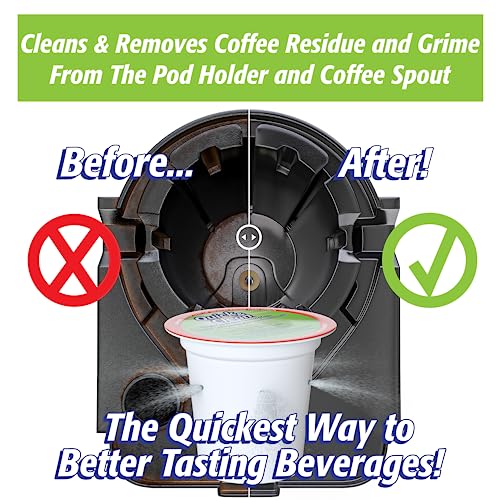
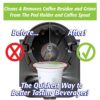
Residue is organic. Coffee oils, fine grounds and flavouring compounds collect in the pack holder, the funnel and around the exit needle, which is where the water arrives after it has been heated. That is exactly the area a cleaning pod is designed to flush, and it is why the listing names those three components specifically. If your coffee tastes of yesterday, that is residue and this product addresses it. If your machine pours short or slow, that is scale and this product will not help. The Keurig maintenance kit bundles both jobs into one purchase, and the Affresh tablets handle the descaling side on its own.
How It Is Used
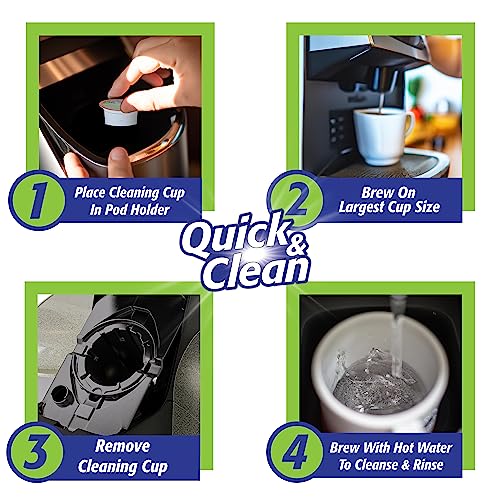
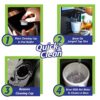
The procedure given is short and worth following exactly. Brew one large cycle with the cleaning pod in place, then brew a second large cycle with water only. Discard both the liquid and the used pod. That is it.
The second cycle is the part people skip and it is the part that matters, because a cleaning agent left in the brew path will be tasted in the next coffee. Running the largest cup size on both cycles is deliberate: it puts the most water through the funnel and the pod holder, which is where the residue sits. On a machine with a small reservoir such as the Keurig K-Mini Plus, that means filling twice.
Frequency and Pack Size
Quick & Clean states that 12 pods provide more than three months of cleaning based on daily use, which works out to roughly one pod a week. That is a considerably lighter schedule than the twice monthly descaling some tablet sellers recommend, and it is a more defensible one, because residue accumulates with every brew regardless of your water hardness.
The people who need it most are flavoured coffee drinkers. Flavouring oils coat the brew chamber and carry over into the next cup far more noticeably than plain coffee residue does. If you run something like the Crazy Cups flavoured variety pack through your machine, a weekly rinse pod is a reasonable habit rather than an upsell. If you drink one plain roast every morning, monthly is likely enough and a 12 pack will last a year.
What Residue Actually Does
It is worth being concrete about why any of this matters. Coffee oils oxidise. Left in a warm brew chamber they turn rancid, and rancid oil has a distinct stale, slightly bitter character that transfers into every subsequent cup regardless of how good the coffee is. Fine grounds compound it by sitting in the funnel and going through the same process.
That is why a machine that has never been cleaned makes worse coffee than the same machine did when new, even with fresh pods and fresh water. It is also why the improvement after a cleaning cycle is usually obvious rather than marginal.
Compatibility and the Aftermarket Question
The listing states compatibility with Keurig 1.0 and 2.0 brewers. That covers the great majority of Keurig machines in circulation, including the classic and office models, and the 2.0 reference relates to the era when Keurig brewers scanned pods and rejected unlicensed ones.
Quick & Clean also includes an explicit disclaimer that this is an aftermarket product with no affiliation with or endorsement from any of the manufacturers named. That is a legal necessity for any third party consumable and it is worth reading rather than skipping. The practical consequence is that if your brewer is under warranty and the manufacturer specifies its own cleaning products, using a third party pod is a decision you are making rather than one the manufacturer has approved.
The Formula and What Is Not Disclosed
The material feature is recorded as non-toxic, and the listing adds biodegradable and gentle on the brewer. The scent is recorded as odourless, which is what you want in anything that passes through a machine that then makes your coffee.
What is not published is any ingredient list. Non-toxic is a term with no fixed regulatory meaning in this context, and biodegradable is not accompanied by a standard or a certification. Compare that with the USKICH descaling tablets, which publish their full formula, or with products carrying a named EPA certification. The formula here is described as proprietary, which is a commercial position rather than a technical one.
What the Listing Does Not Settle
No ingredient list is given. No pH is stated, so there is no way to know whether the pod is working alkaline against oils or acidic against minerals, which would tell you a great deal about what it can and cannot do. The pods are described as biodegradable with no standard named and no indication of whether the outer cup, the lid and the contents are all covered by that claim.
The listing does not state whether the pods work in third party brewers built around the K-Cup format, only in Keurig machines. It does not say what to do about the exit needle, which collects fine grounds mechanically and needs the supplied tool rather than any cleaning agent. And it does not give a shelf life for unused pods.
Who It Suits
This suits anyone whose coffee has started tasting of the last cup, and particularly anyone who alternates between flavoured and plain pods in the same machine. It is a cheap and low effort fix for a specific problem, and 12 pods covers a long stretch at a sensible frequency.
It is the wrong purchase if your machine is pouring short, pouring slowly or stalling, because those are scale symptoms and a rinse pod does nothing for them. In that case a descaler is what you need, and the wider cleaning and descaling range we cover includes both tablet and liquid options. Ideally you keep one of each, because a machine that only ever gets one of the two treatments is only half maintained.