

Description
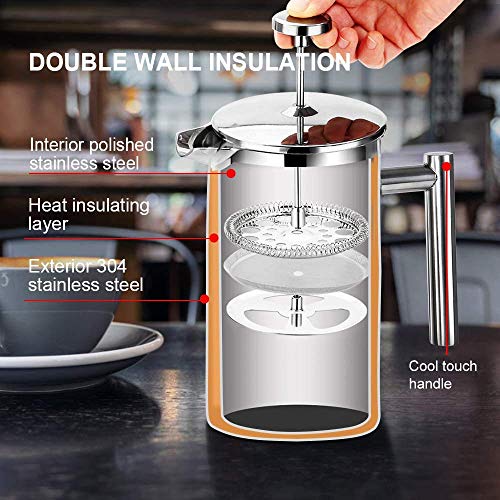
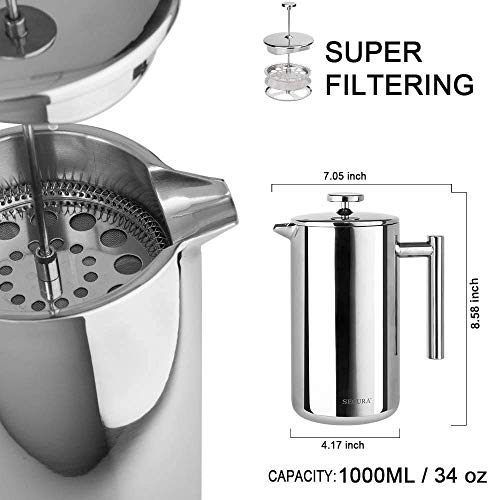
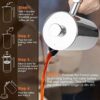
The Secura SFP-34DS is a 34 ounce French press with no glass in it at all. Body, interior, lid and filter screens are 18/8 grade 304 stainless steel, and the title describes the construction as insulated, which on a press of this type means a double wall with an air gap between the two skins. It is listed at 25.99 dollars, and it ships with two extra filter screens on top of the one fitted.
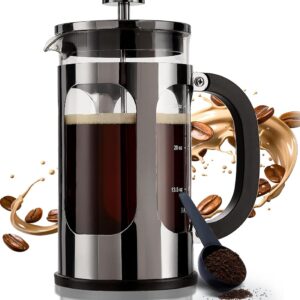
That construction is the entire argument for this press over a conventional one. A glass French press loses heat immediately, and since a press holds coffee on the grounds unless you decant it, a slow drinker gets a cup that is both cooling and continuing to extract. A double walled stainless body slows the first problem considerably and makes the second more manageable, at the cost of not being able to see the brew. Anyone who wants to watch the bloom should be looking at the glass designs such as the Bodum Chambord instead.
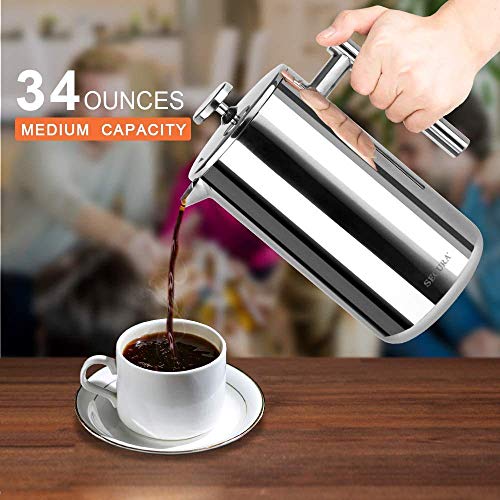
Capacity and Daily Use
Secura states 34 ounces and 1000 millilitres, which is the standard large press volume and is usually described as eight cups on a four ounce cup convention. In mugs it is two large ones or three modest ones. The listing does not give a dose or a ratio, so the recipe is left to the owner; the widely used convention of roughly sixty grams of coffee per litre puts a full brew at around sixty grams.
The insulated body changes how you use a press in one specific way. With a glass press the correct habit is to decant immediately after plunging, because coffee left on the bed keeps extracting and turns bitter. That advice does not disappear here, but the practical urgency is lower, since the coffee will still be hot in twenty minutes and you are not racing the temperature as well as the extraction. It is still better to press and pour.
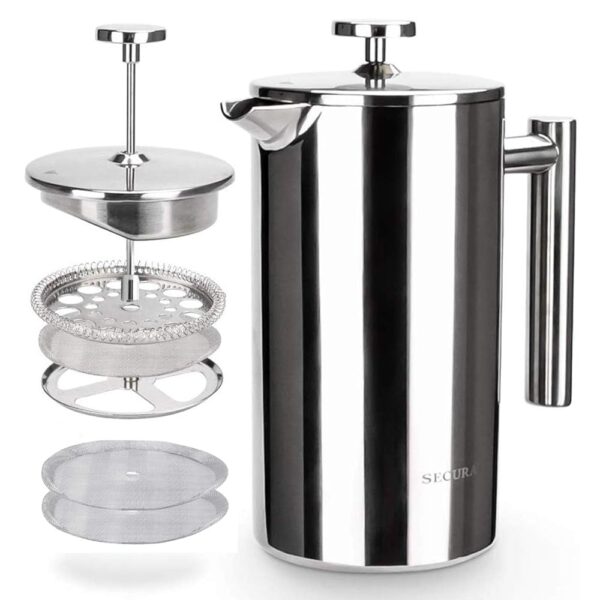
The Three Layer Filter and What Stacking Screens Does
Secura describes a three layered stainless steel filter structure and includes two extra screens beyond the one in use, which is unusual generosity at this price. The screens are described as easy to disassemble and clean, and the listing states that stacking one or more screens together gives a more refined result.
That last claim is mechanically true and worth explaining, because the listing does not. Each additional screen adds another barrier between the grounds and the pour, so more fines are caught and less sediment reaches the cup. The cost is flow: a stacked filter is harder to press and slower to pour, and it can trap enough grounds that the plunge becomes a fight. Being able to choose one, two or three screens is genuinely a control the owner has, and it is the only adjustable variable on the product. Readers who want the cleanest possible cup should note that even three stacked metal screens do not approach what a paper filter does, which is what the pour over brewers here are for.
Grind, Steeping and Sediment
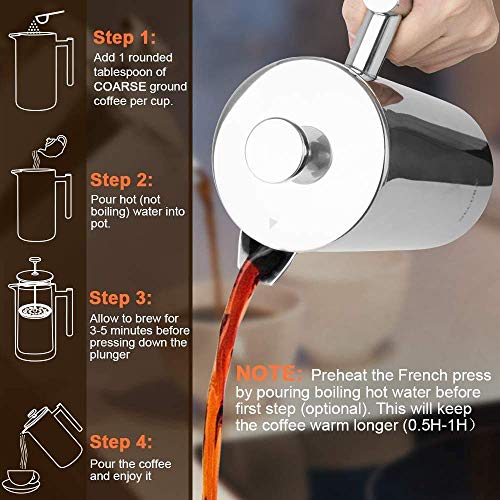
Coarse grind remains essential. A metal screen has no chance against fine particles, and a fine grind in a press produces a gritty cup, a plunger that is hard to push and over extraction from all that exposed surface area. A burr grinder set coarse is the right tool, and a blade grinder is the usual reason people conclude that press coffee is muddy.
The listing gives no steeping time. Four minutes before plunging is the standard convention, and after plunging the coffee should be poured out rather than left standing. The insulated body makes leaving it tempting, which is precisely the trap: the coffee stays hot and keeps extracting, so the second cup poured from a standing press is measurably more bitter than the first even when it is still at drinking temperature.
Stainless Steel, Cleaning and Longevity
Grade 304 stainless with 18/8 chromium and nickel content is the standard food grade specification and it is genuinely corrosion resistant. Secura specifies it for both the interior and exterior, which is worth noting because some cheaper presses use stainless only on the visible outer skin. All parts are stated to be dishwasher safe, which matters on a press because the filter screens hold coffee oils in every opening and those oils turn rancid within days.
The durability case for stainless over glass is straightforward: there is nothing to break. A dropped glass press is finished, while a dropped stainless one is dented. The tradeoff is that a double walled vessel is very hard to inspect. You cannot see whether the interior is clean, whether coffee has collected in the base, or how far up the beaker you have filled, and none of the fill guidance most glass presses print on the side is available to you.
Loose Language on This Listing
One line in the manufacturer copy deserves correcting plainly. It states that stacking screens gives your coffee espresso a more refined taste. A French press does not make espresso and cannot: espresso requires around nine bars of pump pressure through a compacted bed, and a press is an unpressurised steeping vessel. The phrase coffee espresso is not a thing, and the sentence appears to be an attempt to attach a premium word to a filtration claim.
The title and the description also disagree slightly about the filter. The title says two extra screens, implying three in total, and the description says a three layered filter structure and separately that a stainless steel screen is included. Those are compatible readings but they are not the same statement, and a buyer counting parts before opening the box has no firm number.
What the Specifications Do Not Settle
This is the thinnest specification block of any product in this group and the omissions are substantial. There are no dimensions at all: no height, no diameter, no footprint. There is no weight. There is no date first available and no country of origin. A buyer cannot tell whether this fits under a cabinet, whether it is heavy enough to be stable, or where it was made.
There is no mesh fineness for the screens, which is the number that determines sediment. There is no statement of heat retention, which is the product’s central claim: a double wall is not a vacuum wall, and without a stated hold time in hours or a temperature drop figure, insulated is a description rather than a measurement. There is no warranty length. Nothing says whether replacement screens are sold separately once the two spares wear out, and nothing states whether the lid seals well enough to make the press safe to tip into a bag. Anyone who wants documented heat retention rather than an implied claim should compare it against a vacuum insulated carafe brewer from the drip machine range.
Who It Suits and Who Should Look Elsewhere
This suits a household that likes press coffee, drinks it over half an hour rather than in five minutes, and has broken a glass press before. Two spare screens is a real practical advantage, 304 stainless inside and out is a proper specification rather than a claim, and 34 ounces covers two or three people. The ability to stack screens gives you a genuine adjustment that no glass press offers. The Bodum Brazil is the plain glass press at the same capacity.
It suits you poorly if you want to watch the brew, if you want a sediment free cup, or if you need to know the dimensions before buying, since the listing does not provide them. It also suits you poorly if you want a press you can leave standing indefinitely, because insulation preserves the heat and the over extraction equally. Anyone brewing for one should consider a smaller press such as the MuellerLiving 20 ounce insulated press, which applies the same construction at a size that suits a single drinker. The Utopia Kitchen 34 ounce press is the glass bodied alternative at the same size.