

Description
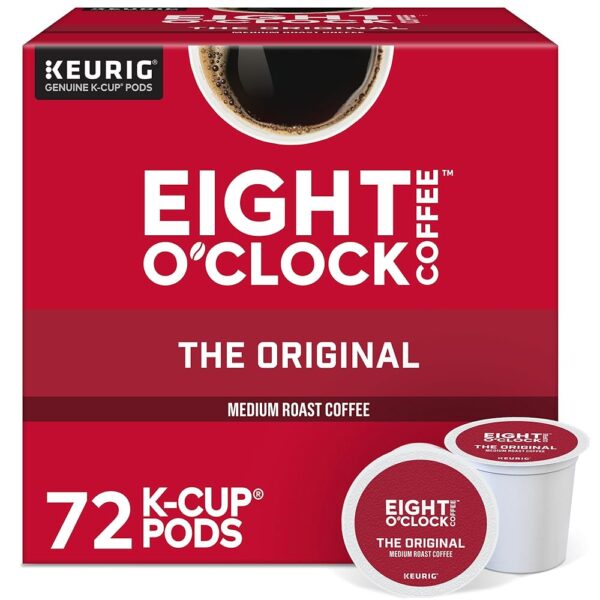
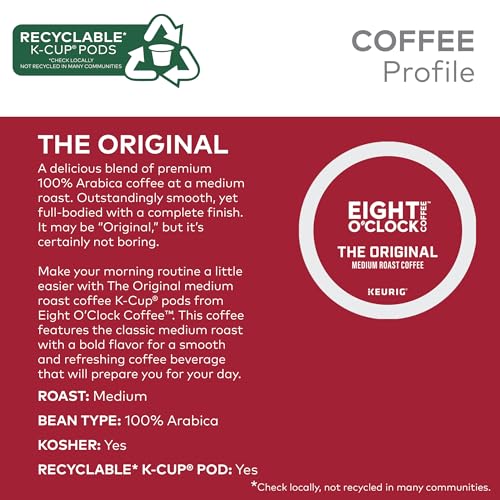
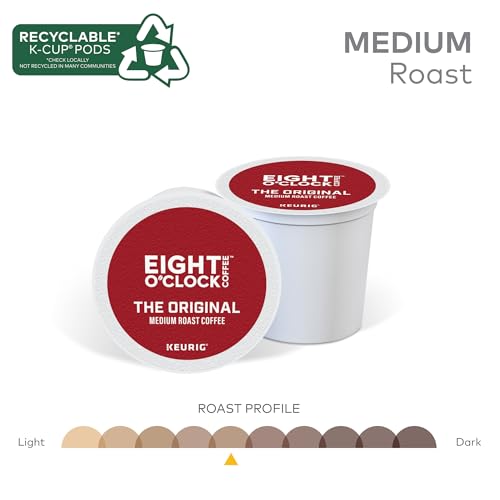
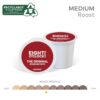
Eight O’Clock Coffee The Original in Keurig K-Cup format is supplied as six packs of twelve pods, 72 in total, listed at 28.07 dollars. It is a medium roast, certified Orthodox Union Kosher, and the pods are described as recyclable with the usual instruction to peel the lid, empty the grounds and recycle the cup. Eight O’Clock describes the coffee as outstandingly smooth yet full bodied with a complex finish.
The number that matters here is 39 cents a pod. Across every pod covered on this site, running from small boxes of restaurant brand coffee to premium single origins, the range is roughly 39 cents to 73 cents. This is the bottom of it. That makes this listing worth attention regardless of whether the brand is on your radar, because the difference between the cheapest and the most expensive pod in the pod category here is nearly double, on a product you buy hundreds of times a year.
What 39 Cents a Cup Actually Means
A single daily drinker gets through roughly 365 pods a year. At 39 cents that is 142 dollars. At 58 cents, which is what the small 32 count boxes in this category cost, it is 212 dollars. At 73 cents, the top of the range, it is 266 dollars. The gap between the cheapest and the dearest pod is more than a hundred dollars a year for one person, and considerably more for a household.
Set against ground coffee the picture is starker still. The same volume of coffee bought as beans and ground at home costs somewhere between 30 and 60 dollars a year depending on the brand. The pod premium is therefore roughly a hundred dollars a year at the cheap end and two hundred at the expensive end, which is what you are paying for the convenience. That is a defensible thing to buy. It is worth knowing what it costs, and it is worth knowing that the refillable pod filters remove most of it without changing the machine.
Six Packs of Twelve
The 72 pods arrive as six separate twelve count packs rather than one tray, and that structure has a practical benefit the listing does not mention. K-Cups are individually sealed so the coffee itself does not stale once a carton is open, but the outer pack protects the foil lids from being crushed and keeps the pods away from cupboard odours.
Opening one twelve pack at a time means five stay sealed while you work through the first, which over the two and a half months a 72 count box lasts is genuinely useful. Twelve is also a sensible unit: it is roughly a fortnight for one drinker, so nothing sits open long. The specification block records the flavour field as The Original :12 Count (Pack of 6), which is the pack configuration written into a field meant for the coffee name, but it does at least confirm the structure.
The Recyclable Pod and the Peel Instruction
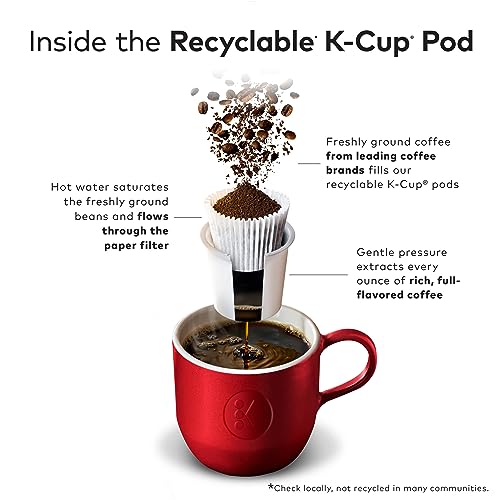
Eight O’Clock states the pods are recyclable and gives the standard three step instruction: peel, empty and recycle. It also carries the caveat that they are not recycled in all communities and that packaging may vary.
The three steps exist because a pod is a composite. The cup body is polypropylene, resin code 5, which is a widely accepted recyclable plastic. The lid is foil laminate, which is not, and it is bonded to the rim. Inside is a paper filter and wet coffee grounds. A pod thrown in a recycling bin intact is contaminated and undersized, and most sorting facilities will reject it on both counts. Peeling the lid and emptying the grounds turns it into a clean plastic cup, which is the only form in which it has a realistic chance of being processed.
The check locally caveat is doing real work. Even a clean, empty polypropylene cup is small enough to fall through the screens at many material recovery facilities. The claim on the box is about what the pod is made of; whether it gets recycled depends on where you live.
The Taste Description, and What Is Behind It
Outstandingly smooth yet full bodied with a complex finish is the whole tasting note, and it is repeated verbatim as the first bullet of the description. That is thinner than it looks: smooth and full bodied are close to opposites in coffee vocabulary, and complex finish is a claim without content unless you say what the complexity consists of.
What can be said with more confidence is what a medium roast at this price generally is. The listing does not state 100 percent Arabica, which is notable because most competing brands do state it explicitly, and its absence leaves open the possibility of a blend including Robusta. It gives no origin and no blend composition. Compared with the McCafe Premium Roast box, which states both the bean type and a sourcing programme at a similar price per pod, this page tells you materially less about what is in the cup.
What the Specifications Do Not Settle
The specification block holds five fields and all five are category labels. There is no weight, no dimensions, no country of origin, no date first available and no manufacturer beyond the brand.
There is no dose per pod in grams, no caffeine content in milligrams and no bean type. There is no sourcing or sustainability statement of any kind, where most brands in this category state at least a corporate programme and some state a third party certification. The kosher mark is real and verifiable. Everything else about how this coffee is grown, bought or blended is absent, and at the cheapest price per pod in the category that is not entirely surprising.
Who It Suits and Who Should Look Elsewhere
This suits a household that drinks pods every day and wants the running cost down without changing how they brew. At 39 cents a cup it is the cheapest way to keep a Keurig fed that appears anywhere on this site, the six pack structure is better for storage than a single tray, and the kosher certification is a genuine credential. For a two person household getting through 700 pods a year, choosing this over a 58 cent box saves around 130 dollars. The Folgers Classic Roast pods are the other bulk box bought for the same reason.
It suits you poorly if you want to know what is in the coffee, since the bean type, the origin and the sourcing are all unstated. It suits you poorly if you want a distinctive cup rather than a dependable one. And it suits you poorly if 72 pods of a coffee you have not tried feels like a commitment, in which case a smaller box of something better documented is the safer first purchase. Anyone whose real objection is the cost of pods rather than the choice of brand should look at a machine that brews both pods and ground coffee from the single serve brewer range. The Hamilton Beach 49981A is one machine that takes both.