Description
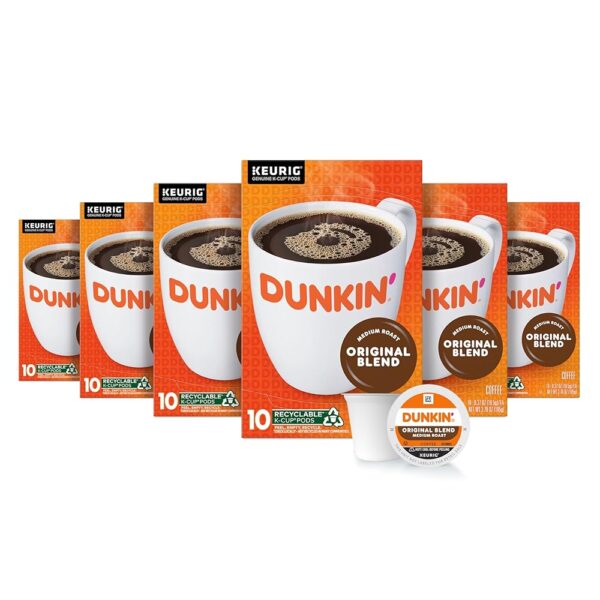
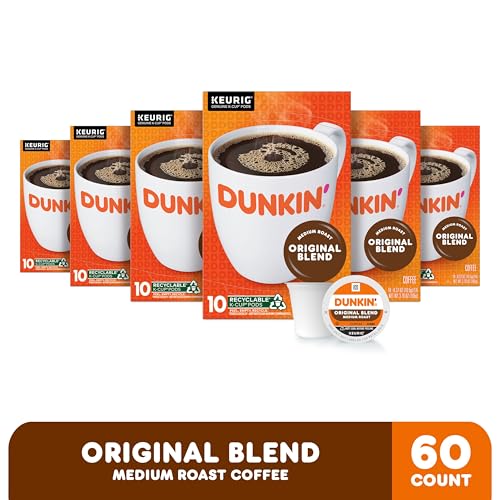
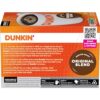
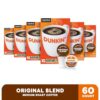
Dunkin Original Blend in Keurig K-Cup format is supplied as six ten count boxes making 60 pods in total, listed at 41.34 dollars. It is a medium roast described as being made with premium coffee beans and as delivering the taste that made the brand famous. At 60 pods for 41.34 dollars it works out at about 69 cents a cup, which places it near the top of the price range across every pod covered on this site.
Original Blend is a genuinely famous coffee and the reason for that is worth stating: it is built to be drunk in large quantities from a paper cup, which means moderate acidity, moderate body and nothing sharp enough to tire the palate over sixteen ounces. That is a specific and well executed design brief, and it puts this in the same territory as the other American chain coffees in the pod category here rather than in competition with speciality roasters.
Sixty Nine Cents, and What Drives It
Across the pods reviewed on this site, price per pod runs from about 39 cents to about 73 cents. At 69 cents this sits second from the top. For a single daily drinker that is roughly 250 dollars a year against about 142 dollars for the cheapest option in the same category, a difference of over a hundred dollars for one person.
Two things push it up. The first is box size: 60 is small by the standards of this category, where 96 and 128 count boxes are common and consistently cheaper per pod. The second is the brand, which commands a premium the way the other chain names do. There is a third factor worth noting, which is that these 60 pods arrive as six separate ten count boxes rather than one carton, and small retail boxes cost more to make and ship than a single tray of the same quantity.
The six box structure does have a real benefit. Each stays sealed until you open it, which over the two months a 60 count pack lasts keeps the pods away from crushing and cupboard odours. Whether that is worth the packaging premium is a judgement, but it is not purely a marketing decision.
Three Statements This Listing Does Not Make
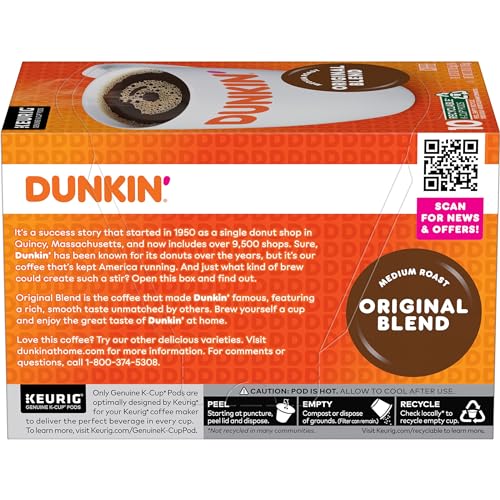
Most branded pods in this category carry three claims as a matter of course: a bean type, a sourcing or sustainability statement, and a recyclability statement with a local scheme caveat. This listing carries none of them, and the omissions are worth listing plainly because they are the questions most buyers now ask.
There is no statement of 100 percent Arabica anywhere on the page. Competing brands including the McCafe Premium Roast box state it explicitly, and its absence here is not evidence of Robusta content but does mean the claim is not made. The description says premium coffee beans, which is a description of quality rather than of species.
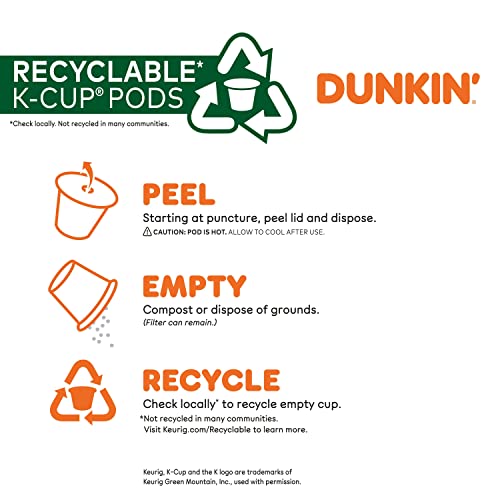
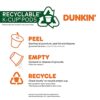
There is no sourcing programme, no certification and no sustainability language of any kind. There is also no kosher certification, which most of the Keurig manufactured brands in this category carry. And there is no recyclability statement, so nothing on the page tells you whether the pod body is the newer polypropylene construction or the older non recyclable type. For a product at this price that is a thin disclosure.
The Unmatched Claim
One bullet describes the rich, smooth and unmatched Dunkin coffee taste that made the brand famous. Unmatched is doing a lot of work in a sentence that otherwise contains two ordinary descriptors.
It is worth reading as brand assertion rather than as information. Rich and smooth are the two most common adjectives in this entire category and appear on the majority of medium roast pod listings; they narrow the field almost not at all. What the tasting description does not include is any of the specifics that some competitors do offer: no origin, no blend composition, no acidity description and no flavour note beyond the two adjectives. The listing tells you that this is Dunkin coffee, which for the intended buyer is the point, and tells you nothing else about the cup.
Brew Size and How This Coffee Behaves
The pod dose is fixed at somewhere between nine and twelve grams and your machine varies only the water, so brew size determines strength entirely. On a coffee designed for large servings, that interacts in a specific way.
Original Blend was formulated to be palatable at large volumes, which means it is comparatively forgiving of a 10 or 12 ounce brew where a light roast would thin out badly. It will still be weaker than an 8 ounce brew of the same pod, because the coffee quantity has not changed, but the flavour profile survives dilution better than a brighter coffee would. If you want the fullest cup this pod can give, brew 8 ounces and add hot water rather than brewing 12 directly, which preserves the extraction ratio while giving the volume.
What the Specifications Do Not Settle
The specification block contains five fields, all of them category labels: brand, item form, flavour, caffeine content and roast level. There is no weight, no dimensions, no country of origin, no date first available and no manufacturer named beyond the brand.
There is no dose per pod in grams and no caffeine content in milligrams, only the description Caffeinated. There is no roast date or best before guidance. The compatibility bullet says the pods are made to work with your Keurig coffee maker without using the licensing term genuine that most brands in this category use, and without addressing the Keurig 2.0 generation of machines that were built to reject unlicensed pods, a restriction Keurig abandoned years ago but which still confuses owners of that hardware. Anyone with a machine from that era should check the lid marking rather than assume.
Who It Suits and Who Should Look Elsewhere
This suits someone who drinks Dunkin coffee and wants it at home without going out for it. The blend is genuinely good at what it sets out to do, the six box packaging protects the pods better than a single tray, and for the person buying on brand familiarity none of the missing information is actually missing, since they already know how the coffee tastes. The Eight O’Clock The Original pods are the plainer everyday box in the same style.
It suits you poorly if cost per cup matters, since 69 cents is near the top of the category and the same money buys 50 percent more coffee from several competitors. It suits you poorly if bean type, sourcing certification or recyclability affect your decision, since this listing documents none of the three. And it suits you poorly if you want a distinctive cup, which this deliberately is not. Anyone drinking pods daily and troubled by the price should compare the Tim Hortons Original Blend, which occupies the same chain coffee position at about 47 cents a pod, or look at a machine that takes ground coffee from the single serve brewer range. The Hamilton Beach 49981A is one such machine.