
Description
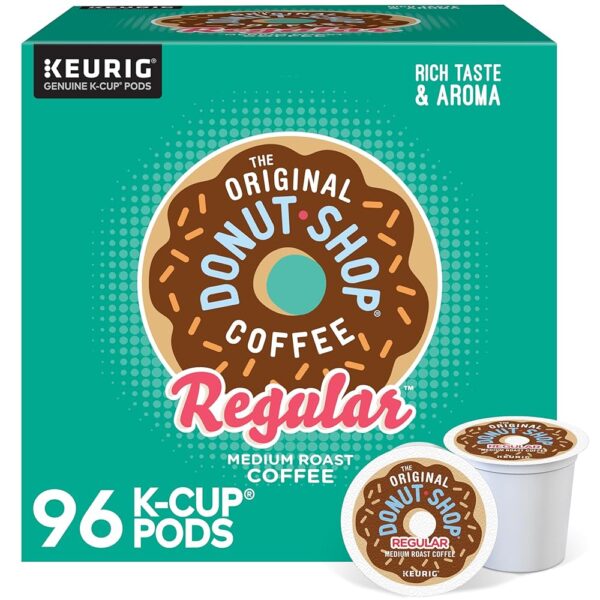
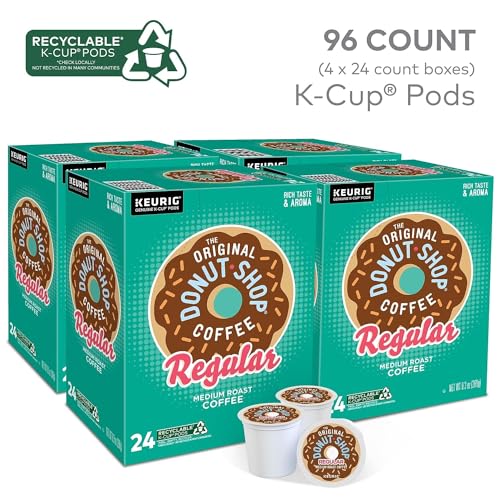
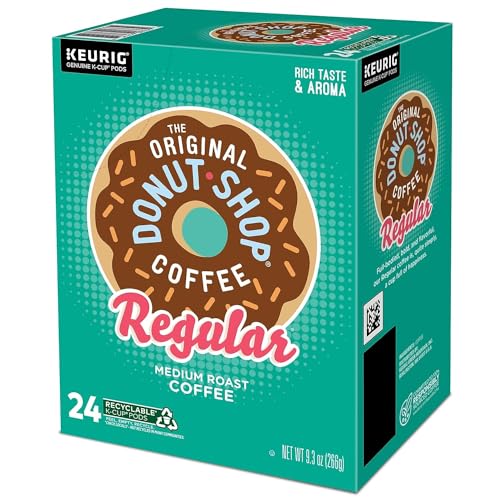
The Original Donut Shop Regular in Keurig K-Cup format is a 96 count box listed at 49.94 dollars, described as a medium roast, certified Orthodox Union Kosher and compatible with all Keurig K-Cup machines including the 2.0 generation. At 96 pods for 49.94 dollars it works out at about 52 cents a cup, which places it in the middle of the branded pods covered on this site.
The Original Donut Shop is a Keurig owned brand rather than a licensed restaurant name, which is worth knowing because it explains the product. It was created to occupy a specific taste position: the strong, unfussy, drink it by the pot coffee that American diners and doughnut shops serve, aimed at people who find speciality coffee fussy and cheap supermarket coffee thin. Several brands in the pod category chase the same territory from different directions.
Extra Bold, and Why It Contradicts the Roast Field
This listing describes the coffee two different ways. The title, the roast field and one bullet all say medium roast. A separate bullet says medium roast extra bold coffee. Those are not the same product description, and the difference is worth understanding because Extra Bold is a real specification rather than an adjective.
In Keurig’s system, Extra Bold designates a pod containing more ground coffee than a standard one, historically around 30 percent more. A standard K-Cup holds roughly nine to eleven grams; an Extra Bold holds closer to twelve or thirteen. Since your machine varies the water and never the coffee, that extra dose is the only thing that makes a large brew size taste like proper coffee rather than a weak one.
If these pods really are Extra Bold it is the most useful fact on the page, because it means a 10 or 12 ounce brew will hold up where a standard pod would thin out. The listing does not repeat the designation in the title or the specification block, so it appears once and is contradicted by implication everywhere else. It is worth checking the box before relying on it, but the claim is specific enough that it was probably true at some point in this product’s history.
A Garbled Ingredient Line
One bullet on this listing reads, in full: Trans fat, kosher and gluten free. As written that is a list of three things the coffee is, which would make it trans fat and kosher, which is nonsense.
The intended sentence is almost certainly trans fat free, kosher and gluten free, with the word free having been lost from the first item and left to serve all three from the end. All three claims are unremarkable for black coffee, which contains no fat and no gluten and needs no complicated certification, but the line as published says something different from what was meant. It sits next to a correctly formed bullet stating Orthodox Union Kosher certification, so the kosher claim is at least corroborated elsewhere on the page.
The Keurig 2.0 Line and What It Dates
Two bullets address compatibility. One says the pods work with all Keurig K-Cup pod coffee makers, the other that they are also compatible with the new Keurig 2.0 brewer. The word new dates this text precisely.
Keurig launched the 2.0 machines in 2014 with a system that read a marking on the pod lid and refused to brew pods that lacked it. The intention was to exclude unlicensed pods after the original K-Cup patents expired. It generated substantial customer complaint, workarounds circulated widely, and Keurig dropped the restriction within about two years. Machines from that window still turn up in kitchens and offices.
A compatibility statement of this kind is therefore a promise that the pod carries the lid marking. Since this is a Keurig owned brand, that was never in doubt. On any current machine, including the models in the single serve brewer range, the question does not arise at all, and the bullet is a decade old reassurance that has simply never been removed.
What the Brand Copy Actually Says
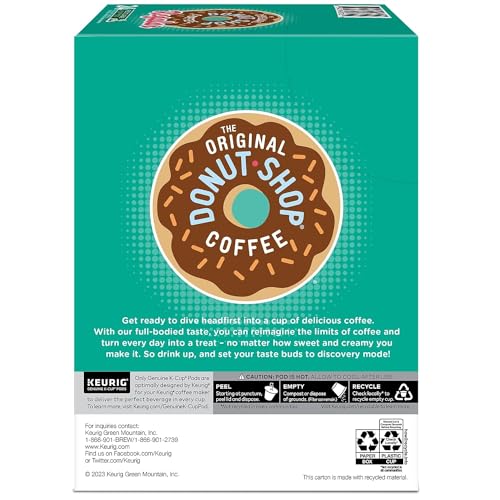
The description opens with a brand story inviting you to dive headfirst into a cup of coffee, reimagine the limits of coffee and set your taste buds to discovery mode. The taste bullet calls the coffee full bodied, bold and flavourful, and a cup full of happiness.
None of that is a tasting note. There is no origin, no blend composition, no acidity description and no flavour descriptor beyond bold. Compared with the brands in this category that name specific characteristics, such as the caramel and cocoa notes claimed for other medium roasts here, this page describes a mood rather than a coffee. What can be inferred is the roast position: full bodied and bold at a medium roast level generally means a Brazilian heavy blend roasted towards the darker end of medium, which is exactly the diner coffee profile the brand is built around.
What the Specifications Do Not Settle
The specification block contains five category labels and nothing more: brand, item form, flavour, caffeine content and roast level. There is no weight, no dimensions, no country of origin, no date first available and no manufacturer named beyond the brand itself.
There is no bean type. Unlike several competing pods, this listing never says 100 percent Arabica, which in a category where that claim is standard is a conspicuous silence. There is no dose per pod in grams, which is what would settle the Extra Bold question. There is no origin, no sourcing programme and no sustainability statement, where most of the Keurig owned brands in this category state at least a responsibly sourced commitment. The recyclability bullet is present and carries the correct check locally caveat, which is more than some listings manage.
Who It Suits and Who Should Look Elsewhere
This suits someone who wants strong, straightforward coffee in volume and finds most pod coffee thin. If the Extra Bold dose is genuine it is the right pod for anyone brewing 10 or 12 ounce mugs, which is where standard pods fall apart, and 96 pods at 52 cents is a middling but not unreasonable price. The kosher certification is real and the recyclability statement is properly qualified. The Peet’s French Roast pods are the darker cup for those same large mugs.
It suits you poorly if you want a bright or delicate cup, since bold is the entire design brief. It suits you poorly if bean type and sourcing matter to you, neither of which appears. And it suits you poorly if you brew small cups, because a larger dose in a 6 ounce brew is heavy rather than balanced. Anyone who wants the same diner style coffee at a lower price per pod should compare it against the Krispy Kreme Classic pods and the larger boxes in the same category, and anyone brewing big mugs should look at a machine with a strength control such as the Keurig K-Elite. The Eight O’Clock The Original pods are one of those larger boxes.