
Description
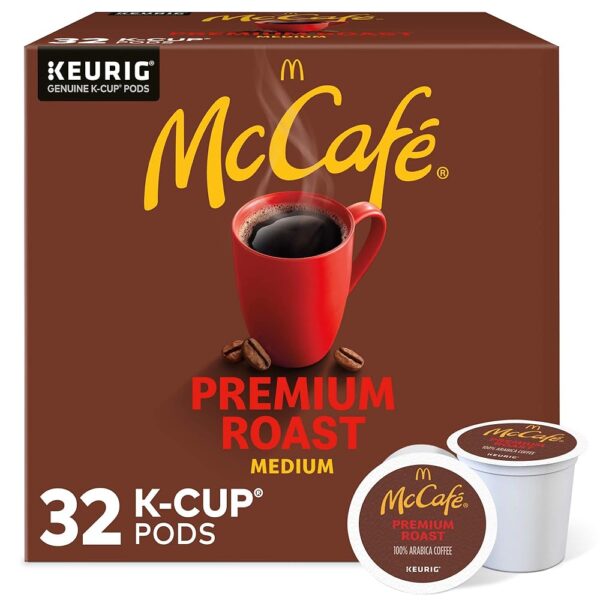
McCafe Premium Roast in Keurig K-Cup format, 32 count box, listed at 18.63 dollars. It is a medium roast made from 100 percent Arabica beans, certified Orthodox Union Kosher, described as 100 percent responsibly sourced and supplied in what McCafe calls recyclable pods. At 32 pods for 18.63 dollars it works out at about 58 cents a cup.
Everything above also describes a different listing in this catalogue. McCafe Premium Roast is also sold as a 96 count box at 43.38 dollars, and the manufacturer description on that page is identical to this one, word for word, from the taste paragraph through the roast statement, the recyclability caveat, the sourcing claim and the compatibility line. Same coffee, same words, different box. The one thing that differs is the arithmetic, and it differs by a lot.
The Small Box Premium, Quantified
Thirty two pods at 18.63 dollars is 58 cents each. Ninety six pods at 43.38 dollars is 45 cents each. That is a 29 percent premium for buying the small box of what the listings themselves present as the same product.
For a single daily drinker the difference is about 48 dollars a year. For a two person household it is closer to a hundred. Nothing about the coffee changes; you are paying for cardboard, for the retail shelf slot and for the option of not committing to three months of one roast.
This pattern is not unique to McCafe. Across the pods covered on this site, the same coffee in a larger box is consistently a quarter to a third cheaper per pod, and the effect is large enough that box size matters more to your annual coffee spend than brand choice does. Comparing pods on sticker price rather than price per pod is the single most expensive habit in this category.
When the Small Box Is the Right Purchase
There are three cases where 58 cents a pod is a sensible thing to pay, and it is worth being fair about them.
The first is trying a coffee. Committing 43 dollars and three months to a roast you have never drunk is a real risk, and 18 dollars to find out is cheap insurance. The second is variety. A household that keeps four different coffees beside the machine cannot buy any of them in 96 counts without the boxes going stale on the counter, and small boxes are how you maintain choice. The third is space. Ninety six pods take up considerably more cupboard than 32, and in a small kitchen or an office that is a genuine constraint. The pod storage drawers covered here hold thirty, which is roughly one small box, and that is not a coincidence.
What is not a good reason is habit. Buying the 32 count repeatedly, month after month, is simply paying the premium every time for no benefit.
What Is In the Cup
McCafe describes the blend as having a rich aroma, smooth body and clean finish, roasted from premium Arabica beans in a temperature controlled environment. That last detail is the most substantive thing in the taste description.
Temperature controlled roasting is how a large operation achieves batch to batch consistency, and consistency is the honest selling point of a restaurant chain coffee. A speciality roaster chases distinctiveness and accepts that one lot will differ from the next; a chain roaster chases repeatability because a customer in one city has to get the same cup as a customer in another. If you want the coffee to taste the same in November as it did in June, that industrial discipline is exactly what you are buying.
What the description does not give is an origin, a blend composition or an acidity description. Medium roast 100 percent Arabica at this price generally means a Latin American blend with sweetness towards caramel and nut rather than fruit, but the page never says so.
Freshness is not the argument for the small box, incidentally, and it is worth saying so because people assume it is. K-Cups are individually sealed and flushed to displace oxygen before the lid is bonded on, so a pod at the bottom of a 96 count carton is as fresh on the day you brew it as the first one was. What the outer carton protects is the foil lids from crushing and the pods from cupboard smells, and that is a storage question rather than a staling one.
The Recyclable Claim and the Caveat
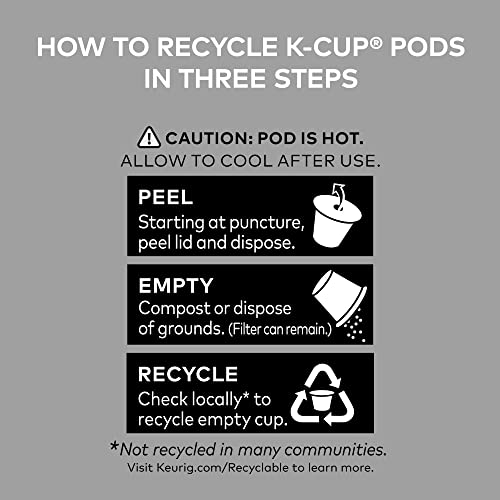
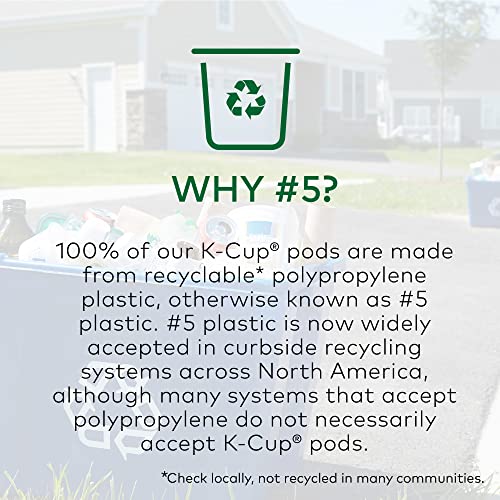
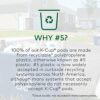
McCafe states that the pods are now made from recyclable material and immediately adds check locally, not recycled in all communities. Both halves are accurate and both matter.
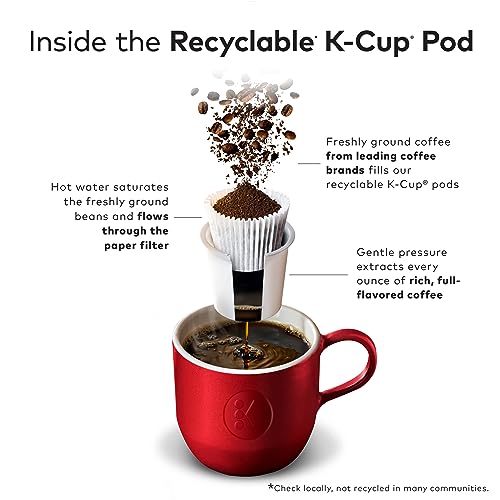
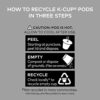
The pod body on recyclable K-Cups is polypropylene, resin code 5, which is a genuinely recyclable plastic accepted by many kerbside schemes in principle. The obstacles are practical. A pod arrives full of wet grounds with a foil lid bonded to the rim, which makes it contaminated, and even cleaned it is small enough to fall through the sorting screens at many facilities. The industry instruction to peel the lid, empty the grounds and recycle the cup addresses the first problem and cannot address the second.
So the claim describes the material rather than the outcome, and McCafe’s own wording concedes exactly that. It is a real improvement on non recyclable pods and it is not a promise that the pod gets recycled.
What the Specifications Do Not Settle
The specification block contains five category labels and nothing more: brand, item form, flavour, caffeine content and roast level. There is no weight, no dimensions, no country of origin and no date first available.
There is no dose per pod in grams, which is the figure that would let you calculate a brew ratio, and no caffeine content in milligrams. There is no bean origin beyond 100 percent Arabica. The sustainability claim, 100 percent responsibly sourced, is a company defined programme rather than an externally audited certification, and no scheme, standard or auditor is named. The kosher certification is the one genuinely external credential on the page. Anyone wanting a third party sourcing certification rather than a corporate commitment will find it in the Fair Trade Certified options elsewhere in the pod category.
Who It Suits and Who Should Look Elsewhere
This suits someone trying McCafe for the first time, running a small kitchen or office where 96 pods will not fit, or keeping several coffees beside the machine at once. As a small box it does its job, the kosher certification is real, the recyclability claim is honestly qualified, and the coffee itself is a dependable everyday medium roast. The Krispy Kreme Classic pods are the other small box in the category.
It suits you poorly as a repeat purchase, since the identical coffee in a 96 count box costs 29 percent less per cup and the listings themselves make no distinction between them. It suits you poorly if you want a distinctive rather than a consistent cup. And at 58 cents a cup it is still five or six times what the same coffee costs ground, which is worth weighing against the refillable pod filters before settling into a pod habit. The GoodCups reusable filter is one of them.