
Description
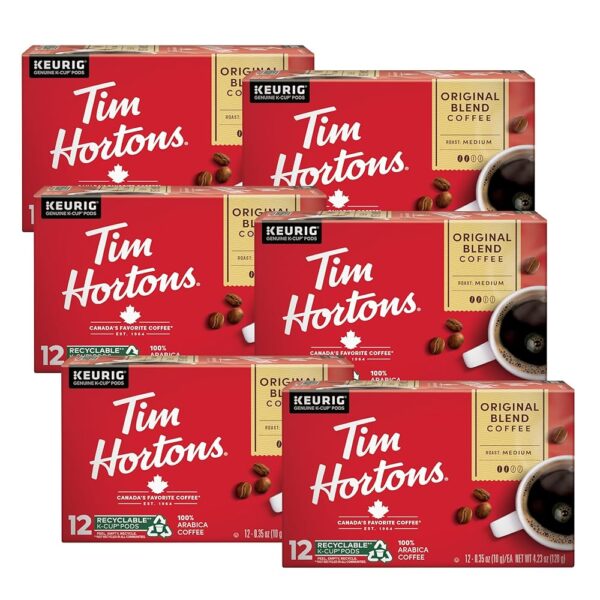
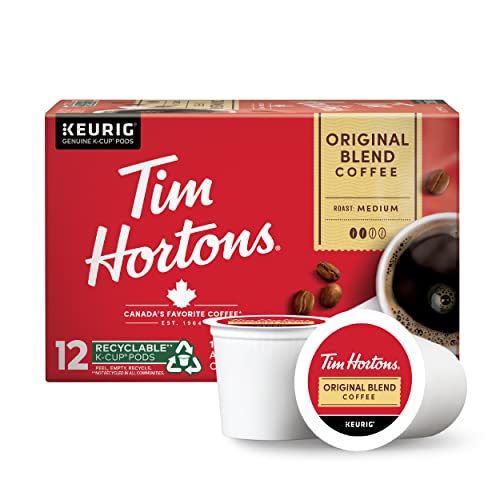
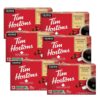
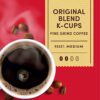
Tim Hortons Original Blend in single serve pod format is supplied as six packs of twelve, 72 pods in total, listed at 33.92 dollars. It is a medium roast made from 100 percent Arabica beans that Tim Hortons says are sourced from Central and South America, and the company states the recipe has not changed in over fifty years. At 72 pods for 33.92 dollars it works out at about 47 cents a cup.
Forty seven cents places this towards the cheaper end of the branded pods covered on this site, where the range runs from roughly 39 to 73 cents, and it undercuts the American chain brands in the same position by a wide margin. The Dunkin Original Blend pods occupy almost exactly the same market slot at about 69 cents, which is nearly 50 percent more for a comparable everyday medium roast.
The Origin Statement, and Why It Is Unusual Here
Tim Hortons says it uses 100 percent Arabica beans from renowned regions of Central and South America, carefully selected by its experts. That is more specific than most listings in this category, which typically stop at 100 percent Arabica or say nothing about the bean at all.
Central and South American arabica is the backbone of North American blended coffee, and it produces the profile most people recognise as ordinary good coffee: clean acidity, sweetness towards caramel and nut, moderate body and nothing challenging. A blend drawn from that region at a medium roast is doing exactly what a chain coffee should do. Naming the region does not narrow it much, since it covers everything from Mexico to Brazil, but it is a real statement about where the coffee comes from and it is more than several competitors in the pod category offer.
The Fifty Year Recipe Claim
The description says the signature blend has not changed in over fifty years and that only three lucky people know the recipe. The second half is brand mythology of a familiar kind and should be read as such.
The first half is a real claim about a real thing, which is consistency. A blend held stable over decades means the roaster is buying to a cup profile rather than to a fixed origin list, adjusting the components as harvests and prices move so that the result stays the same. That is a considerable operational discipline and it is why chain coffee tastes identical from year to year. It also means the phrase the recipe is slightly misleading, since what is preserved is the taste rather than a fixed set of ingredients.
Whichever way you read it, the practical implication for a buyer is straightforward: if you have drunk this coffee before, this is that coffee. Unpredictability is not on the menu.
A Recycling Statement That Claims Much Less
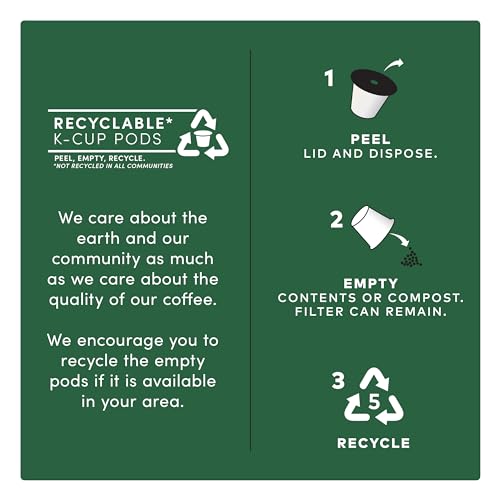
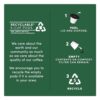
The environmental bullet on this page reads: we encourage you to empty the grounds of your used pods and recycle them if it is available in your area. That wording is materially weaker than what most competitors in this category state, and the difference is worth setting out.
The standard industry claim, used by the Keurig manufactured brands, is that the pod is made from recyclable material, followed by a peel, empty and recycle instruction and a caveat that not all communities accept it. Tim Hortons makes no claim about what the pod is made of. It asks you to empty the grounds and to recycle if you can, which is advice rather than a specification.
That is not necessarily a worse pod. It may simply be a company declining to make a claim it cannot support everywhere it sells. But a buyer choosing on the strength of recyclability should note that this page never says the pod body is recyclable material, where several competing pages do, and that the difference between encouraging recycling and stating the pod is recyclable is a real one.
Compatible With Keurig, Not Genuine K-Cup
The compatibility bullet says the capsules are made for use with Keurig single serve brewers. Most competing listings in this category use the phrase genuine K-Cup pods instead, and the wording difference reflects a licensing distinction.
Keurig licenses the K-Cup design to other roasters, and licensed pods are described as genuine. That mattered acutely between 2014 and about 2016, when Keurig sold machines under the 2.0 designation that read a marking on the pod lid and refused to brew anything without it. The restriction was unpopular, workarounds circulated, and Keurig dropped it, but machines from that window still exist.
Anyone with a 2.0 era machine should check compatibility rather than assume it. On any current Keurig and on the third party machines in the single serve brewer range, compatible with Keurig means exactly what it says and the licensing question does not arise.
What the Specifications Do Not Settle
The specification block runs to five category labels: brand, item form, flavour, caffeine content and roast level. There is no weight, no dimensions, no country of origin and no date first available.
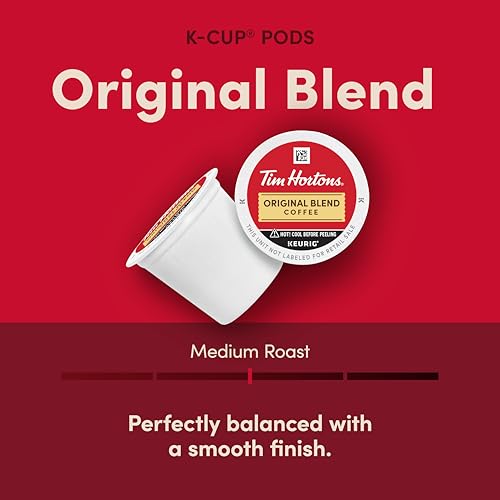
There is no dose per pod in grams and no caffeine figure in milligrams. There is no sourcing or sustainability certification of any kind, and no kosher mark, both of which several competitors carry. There is no tasting note beyond perfectly balanced with a smooth finish, which uses two adjectives that appear on most listings in this category and narrows nothing. And nothing states whether the six twelve packs are individually sealed, which is the detail that determines whether the multi pack structure protects the pods over the two and a half months a 72 count box lasts. Buyers who want documented certification alongside a low price per pod will find both on the Green Mountain Colombia Select box.
Who It Suits and Who Should Look Elsewhere
This suits someone who wants a dependable chain coffee at a price that does not punish daily drinking. At 47 cents a cup it is well under what the comparable American brands charge, the origin statement is more specific than the category norm, and the twelve pod packs are a sensible unit for storage. For anyone who grew up with this coffee, the fifty year consistency claim is the whole proposition and it is a credible one. The Eight O’Clock The Original pods sit at a similar level on cost per cup.
It suits you poorly if you want a distinctive cup, since the entire design intent is the opposite. It suits you poorly if certification matters, because none appears. And it suits you poorly if you rely on the pod being recyclable material, which this listing never claims. Anyone brewing 12 ounce mugs should note that any pod at a fixed dose thins out at that size, and that brewing 8 ounces and topping up with hot water gives a better cup than brewing large directly. The Keurig K-Elite is one machine with a strength control for exactly that.


