
Description
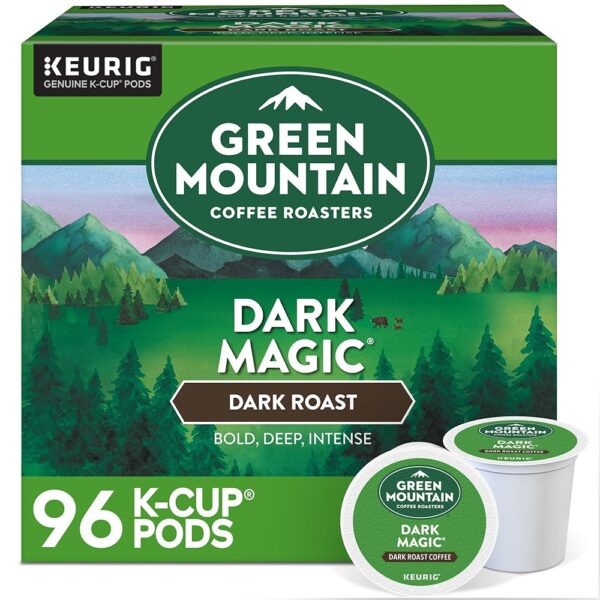
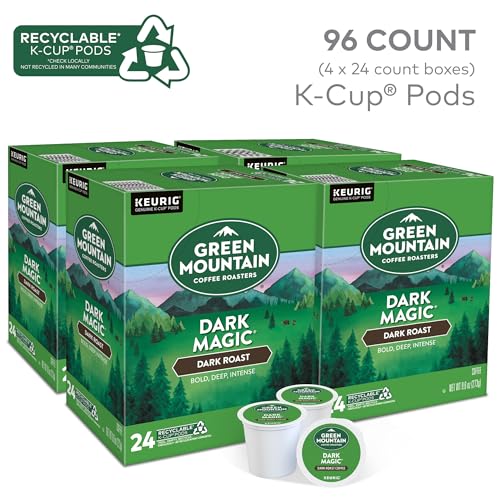
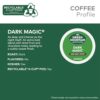
Green Mountain Coffee Roasters Dark Magic in Keurig K-Cup format is a 96 count box listed at 49.96 dollars, a dark roast certified Orthodox Union Kosher and described by the company as 100 percent responsibly sourced. At 96 pods for 49.96 dollars it works out at about 52 cents a cup, which sits in the middle of the pods covered on this site.
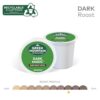
Dark Magic is Green Mountain’s answer to the intensity end of the market, and dark roasting is the most consequential decision a roaster makes about how a coffee will behave in a pod. Roasting past the second crack burns off origin character and substitutes roast derived bitterness, body and smoke. What you lose is delicacy. What you gain is a coffee that survives being diluted, which matters a great deal in a format where the dose is fixed and only the water changes.
Why Dark Roast Suits the Pod Format
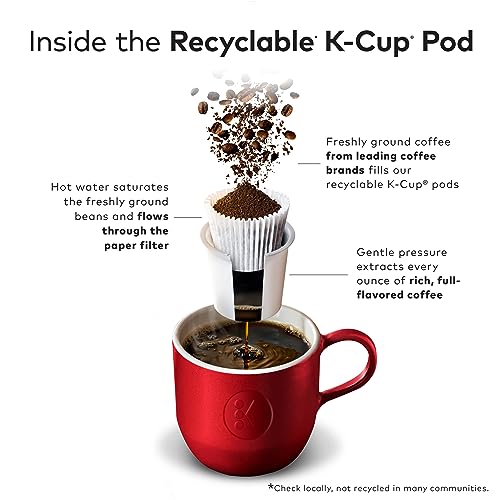
Every K-Cup holds somewhere between nine and twelve grams of coffee, set at the factory. Your machine’s brew size button varies the water and never the coffee, so a 12 ounce cup is the same coffee as a 6 ounce cup with twice as much water through it.
A light roast falls apart under that treatment. Its appeal rests on acidity and aromatic delicacy, and dilution turns those into thinness and sourness. A dark roast does not have that problem, because the flavour is carried by roast compounds that remain assertive even at a weak brew ratio. The result at 12 ounces is a less concentrated coffee that still reads as coffee.
That makes dark roast the pragmatic choice for anyone who drinks large mugs from a single serve machine. If your usual brew is 10 or 12 ounces and you have been disappointed by pods, roast level is more likely to be the cause than brand, and moving from a light roast such as the Breakfast Blend pods to this one will change more than switching manufacturers would.
The Flavour Field Says Dark Chocolate
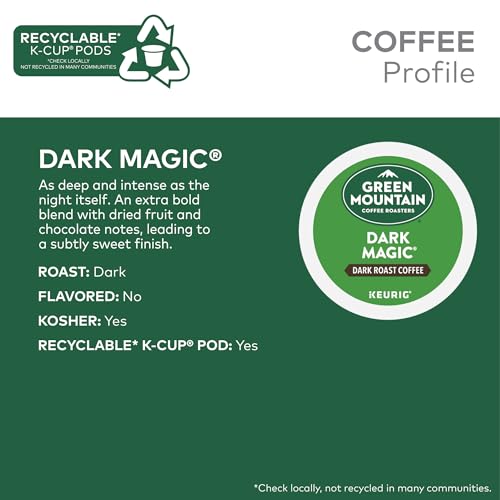
The specification block on this listing records the flavour as Dark Chocolate. The product is called Dark Magic, the roast level field says dark roast, and nothing in the manufacturer description mentions chocolate at all.
That matters because flavour has a specific meaning in this category. Green Mountain sells genuinely flavoured coffees, where flavouring compounds are sprayed onto the beans after roasting, and a buyer scanning the specification block would reasonably read Dark Chocolate as one of them. This is not a flavoured coffee. It is a dark roast with a name that begins with the word Dark, and someone appears to have completed the flavour field by guessing from the product name.
The consequence for a buyer is straightforward: expect a plain dark roasted coffee, not a chocolate flavoured one. If a chocolate note is what you want, the flavoured pods in the pod category are where to look and they say so explicitly.
No Tasting Note At All
Every other Green Mountain listing in this catalogue carries a TASTE bullet describing the cup. The Breakfast Blend gets clean and bright with balanced sweetness and a silky mouthfeel. The Colombia Select gets caramel and cocoa against plums and apricots. This page has no taste bullet whatsoever.
What survives is a brand story about mountains and adventurous spirit, a roast statement, a sustainability line, a compatibility line and a recyclability paragraph. Nothing describes what the coffee tastes like. The tasting notes that appear in this site’s own highlight text, dried fruit and chocolate, come from somewhere other than the manufacturer description on this page and should be treated as unverified rather than as Green Mountain’s claim.
What can be said from the roast level alone is that dark roast coffee is characterised by low acidity, heavy body, and bitterness rather than brightness, with smoke and dark caramel replacing whatever the bean brought with it. That is a description of the roast rather than of this particular blend, and the page does not let you get any closer.
A One Word Change in the Recycling Caveat
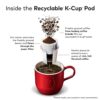
The recyclability paragraph on this listing reads: simple, delicious and recyclable, peel, empty and recycle, check locally, not recycled in many communities.
Every sibling listing in this catalogue carries the identical paragraph with one word different. They say not recycled in all communities. This one says not recycled in many communities. Those two sentences mean substantially different things. Not recycled in all communities implies most schemes accept it with exceptions. Not recycled in many communities implies a large number do not.
The second phrasing is closer to the truth. A K-Cup body is polypropylene, which is recyclable as a material, but the pod is small enough to fall through sorting screens at many facilities even after the lid is peeled and the grounds emptied. Whether the wording on this page is a typographical slip or a more candid version of the same disclosure, it is the more accurate of the two, and it is worth noticing that the same company publishes both.
What the Specifications Do Not Settle
The specification block holds five fields, one of which is wrong. There is no weight, no dimensions, no country of origin and no date first available. There is no dose per pod in grams and no caffeine content in milligrams.
There is no bean type stated, and unlike the Colombia Select listing from the same brand, this page does not say 100 percent Arabica. There is no origin. The sustainability claim, 100 percent responsibly sourced, is a company defined programme rather than an audited third party certification, and no scheme or auditor is named; the Colombia Select box in the same range carries an actual Fair Trade certification, which is a different instrument entirely. The kosher mark is a genuine external credential.
Who It Suits and Who Should Look Elsewhere
This suits someone who drinks large mugs from a single serve machine and wants a cup that holds up at 10 or 12 ounces. Dark roast is the right technical answer to the fixed pod dose, 96 pods at 52 cents is fair rather than cheap, and the kosher certification is real. It is also the sensible choice for anyone taking their coffee with a lot of milk, since a lighter roast disappears into it. The Original Donut Shop regular capsules are the other pod built for large mugs.
It suits you poorly if you want to know what the coffee tastes like before buying, since the page contains no tasting note at all and one incorrect flavour field. It suits you poorly if you dislike bitterness, which at this roast level is structural. And it suits you poorly if third party sourcing certification matters, since none is offered. Anyone who wants an intense cup with more documentation should compare the Peet’s French Roast pods, which are darker still and better described, though considerably more expensive per cup. The Peet’s Major Dickason’s pods are the dark blend that does state its bean type.